
Why Shingle Brand Names Come Up So Often in Missouri
Homeowners across the Branson and Springfield area hear a handful of shingle brand names tossed around during quotes, and it's easy to assume the name on the wrapper tells you everything you need to know. It doesn't. Most major manufacturers make several product lines, and a budget line from one brand can be nearly identical in materials and warranty to a budget line from a competitor.
What actually matters for a roof in this part of Missouri is how a specific product performs against wind, how the warranty is structured if something fails early, and whether that product is readily available for repairs down the road. This guide walks through the real differences between shingle products so a brand name stops being the deciding factor.
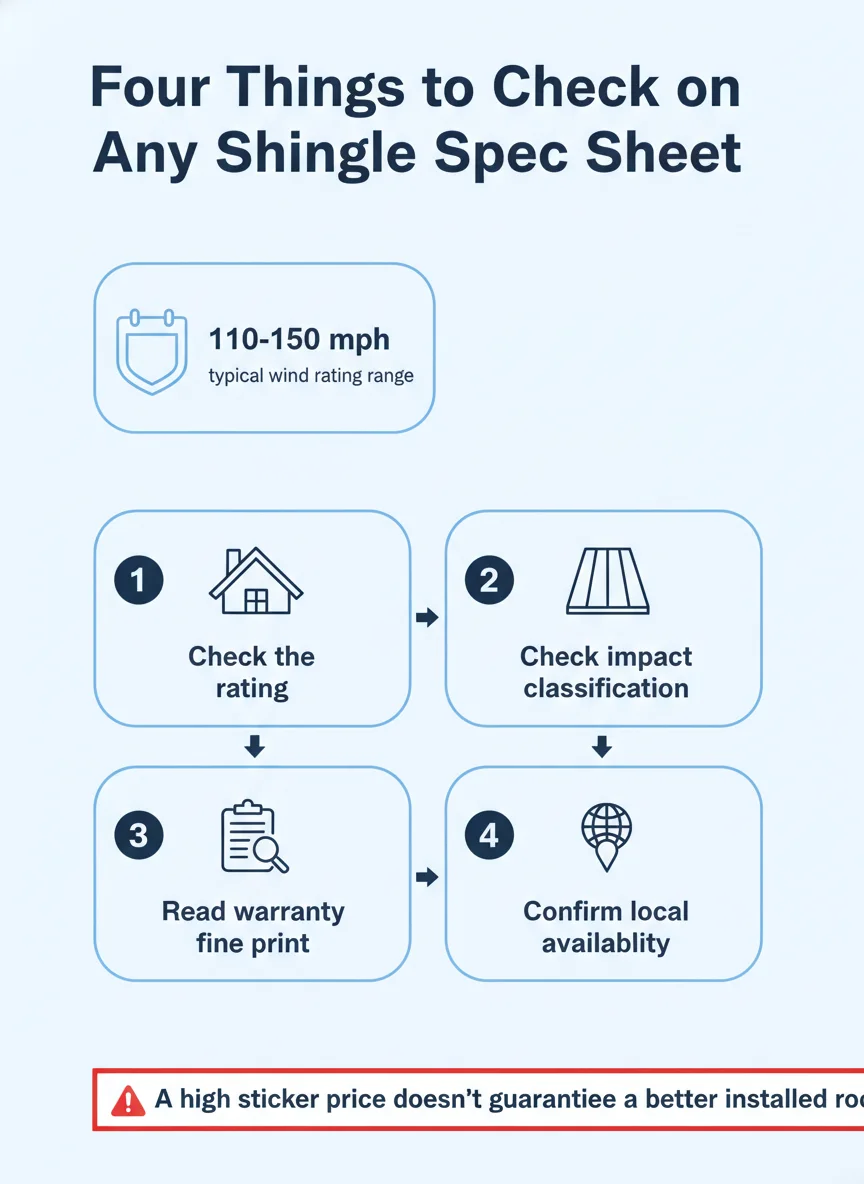
What Actually Separates One Shingle Product From Another
Strip away the marketing and most asphalt shingles are built from the same basic components: a fiberglass mat, asphalt coating, and mineral granules. The differences that matter show up in three places: how the product is rated for wind resistance, how the manufacturer structures its warranty, and whether the product includes algae-resistant granules.
Material Composition and Wind Ratings
Standard three-tab shingles tend to carry lower wind ratings than architectural or laminated shingles, since the heavier laminated construction holds a better seal under gusts. Most architectural-grade products on the market today carry wind ratings in the 110 to 130 mph range, with some premium lines rated higher.
The wind rating on a spec sheet is tested under specific lab conditions, so it's a useful apples-to-apples comparison tool between products, but it isn't a guarantee of real-world performance. Fastening pattern, deck condition, and roof exposure all affect how a shingle actually holds up once it's installed.
Warranty Structure and Algae Resistance
Warranty length is the number most homeowners focus on, but the structure behind that number matters more. Many manufacturer warranties cover the full replacement cost for a set early period, then shift to a prorated amount based on the shingle's age. Reading past the headline term to the proration schedule is worth the five minutes it takes.
Algae resistance is a separate feature from the base warranty and usually applies to a specific product line within a brand, not the whole catalog. These lines use copper or zinc granules to resist the black streaking that shows up on roofs over time, a topic covered in more depth in Black Streaks on the Roof.
| Shingle Tier | Typical Wind Rating | Warranty Structure |
|---|---|---|
| Three-tab (economy) | 60-80 mph | Shorter term, often prorated from early on |
| Architectural (standard) | 110-130 mph | Longer limited-lifetime term with a full-coverage window |
| Designer/premium | 130 mph and up | Extended limited-lifetime term, may include enhanced wind coverage |
How Manufacturer Warranties Are Actually Structured
A manufacturer warranty covers defects in the shingle material itself, like premature granule loss or cracking that isn't caused by installation error or storm damage. It does not cover labor to replace the shingles unless you've paid for an enhanced warranty tier through a certified installer program, and it doesn't cover damage from wind events beyond the rated speed.
This is a separate document from a workmanship warranty, which covers installation errors and is issued by the roofing contractor rather than the manufacturer. The two warranties work together but answer different questions if something goes wrong, which is covered in more detail in Manufacturer Warranty vs Workmanship Warranty.
Step-by-Step: How to Compare Shingle Products Before You Buy
Comparing shingle products doesn't require memorizing every manufacturer's catalog. A short checklist applied to any quote will tell you what you're actually paying for.
- Get the spec sheet: Ask for the actual product spec sheet, not just the brand name, so you can see the wind rating and material weight in writing.
- Check the wind rating: Compare the tested wind rating against other quotes you've received for the same tier of shingle.
- Read the warranty document: Look past the advertised term length to find when coverage starts prorating and what it excludes.
- Confirm algae resistance: If staining is a concern, verify the specific product includes algae-resistant granules rather than assuming it by brand.
- Ask about local availability: Confirm the product is one your contractor can source again easily if a future repair needs matching shingles.
- Compare installed, not listed: Weigh the installed price and workmanship warranty together, since labor quality affects performance as much as the shingle itself.
What You'll Find When You Put Products Side by Side
Availability and Regional Distribution
Not every manufacturer distributes every product line to every region, and availability can shift from year to year based on supplier relationships in a given area. A product that looks great on a spec sheet does you little good if your contractor can't get matching shingles for a repair five years from now.
Asking a contractor which lines they actually install regularly is more useful than researching every brand's full lineup online, since it tells you what's realistically stocked and supported in the Branson and Springfield area.
Impact and Wind Ratings on Spec Sheets
Impact resistance is tested separately from wind resistance and is rated on a class system, with Class 4 being the highest rating commonly available on asphalt shingles. This rating is a different line item on the spec sheet than the wind rating, and the two don't always move together across product lines.
A full breakdown of what that classification means and how it's tested is covered in What Does an Impact-Resistant Class 4 Shingle Rating Mean in Missouri?, which is worth a read before comparing quotes that mention it.
DIY Research or Calling a Pro: Who Should Make the Brand Decision
Reading spec sheets and comparing wind ratings is something any homeowner can do on their own time, and it's a worthwhile exercise before getting quotes. Manufacturer websites publish this information publicly, and it's the same information a contractor would pull up to answer your questions.
Where a licensed roofer earns their keep is matching the product to your actual roof: the pitch, the deck condition, the attic ventilation, and the local wind exposure all affect which product makes sense. A contractor who installs a given line regularly also knows how it behaves over years in this climate, not just what the spec sheet promises on paper.
The installation itself matters just as much as the product choice. A premium shingle installed with poor fastening or inadequate underlayment and ventilation detailing will underperform a mid-tier shingle installed correctly, which is why workmanship warranty terms deserve as much attention as the manufacturer warranty.
Picking a Product With Confidence
Once you know what to look for, comparing shingle products stops being a guessing game based on brand recognition. Wind rating, warranty structure, algae resistance, and local availability tell you far more than a name on the wrapper, and asking a contractor to walk through a spec sheet is a reasonable request on any quote.
Full Life Roofing Construction can walk through those spec sheets with you and explain which product lines make sense for your roof's pitch and exposure before you sign anything.
Frequently asked questions
Is one shingle brand really better than another?
No single brand is universally better, since most major manufacturers make products in similar tiers with similar materials. The bigger differences usually come down to specific product lines within a brand, not the brand name itself.
Do more expensive shingle brands last longer?
Not automatically. A higher price often reflects a heavier shingle, a thicker laminate, or a longer warranty term, but how long a roof actually lasts depends just as much on installation quality and attic ventilation.
What does a shingle's wind rating actually mean?
A wind rating is a lab-tested figure showing the speed at which a shingle is rated to stay sealed under test conditions. It's a useful comparison point between products, but real-world performance also depends on how the shingles are fastened and how exposed the roof is.
Why do shingle warranties vary so much between brands?
Shingle warranties vary because manufacturers structure coverage differently, some offering full coverage for a set number of years before prorating, others prorating from day one. Reading the warranty document itself matters more than the headline term advertised.
Does the brand of shingle affect algae staining?
Most manufacturers now offer an algae-resistant line using copper or zinc granules, and this feature matters more for staining resistance than the brand name attached to it. Check the product spec sheet for an algae-resistance designation rather than assuming it by brand.