
Why This Decision Matters for Southwest Missouri Homes
Homeowners across the Branson and Springfield area eventually land on the same fork in the road: stick with asphalt shingles or step up to metal roofing. Both materials show up on homes throughout Merriam Woods, Ozark, and Springfield, and both can perform well here, but they do not age the same way or cost the same way over a 20 or 30 year window.
The region sees a mix of summer heat, winter freeze-thaw cycles, and wind-driven storms, all of which test a roof differently. Picking the right material up front saves money and headaches later, especially if you plan to stay in the home long enough to see the roof through a couple of harsh seasons.
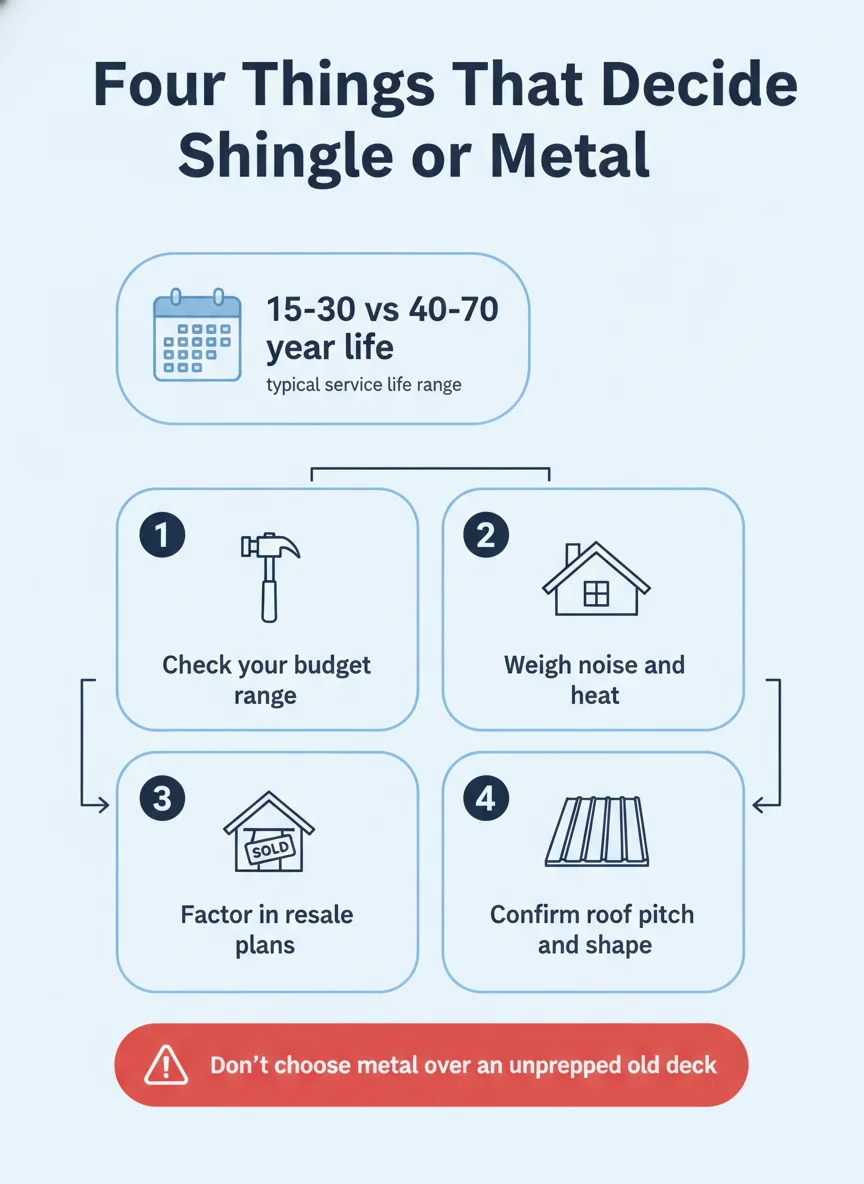
How Each Material Actually Performs Over Time
The core difference comes down to what the material is made of and how it sheds water, wind, and impact. Asphalt shingles are a layered composite that flexes and seals with heat, while metal panels are a single rigid surface that relies on fastening and seam design rather than adhesive sealing.
Asphalt Shingles
Asphalt shingles, installed through our Shingle Roofing service, are the most common roofing material in the country for good reason: they are familiar, relatively affordable to install, and easy for most roofers to repair if only part of a slope is damaged. Industry service life for asphalt shingles generally runs in the 15 to 30 year range depending on the shingle grade and how well the attic underneath is ventilated.
Their weak points are UV breakdown over decades of sun exposure and granule loss, which shows up as bald patches and curling edges as the material ages. Wind-rated shingles have improved a lot over the years, but a shingle roof still relies on each individual tab staying sealed down.
Metal Roofing
Metal roofing, covered under our Metal Roofing service, is built from standing seam panels or screw-down panels fastened over solid decking. Public industry figures put metal roof service life commonly in the 40 to 70 year range, well beyond a typical asphalt shingle, which is why many homeowners view it as a once-in-a-lifetime roof.
Metal sheds snow and rain fast, resists impact better in a lot of conditions, and does not lose granules the way shingles do. The tradeoff is a higher material and labor cost up front, and panel seams or fasteners need to be installed correctly the first time since repairs are more specialized than patching a shingle.
| Factor | Asphalt Shingles | Metal Roofing |
|---|---|---|
| Typical service life | 15-30 years industry range | 40-70 years industry range |
| Upfront cost | Lower material and labor cost | Higher material and labor cost |
| Repair approach | Easy to patch a small section | Requires matching panel and seam work |
| Noise and heat | Naturally quiet, moderate heat gain | Quiet with solid decking, reflects heat well |
What's Actually Being Installed Underneath Either Material
Whichever surface you choose, the decking, underlayment, and ventilation underneath do most of the real work protecting the house. Solid, dry decking is what both shingles and metal panels get fastened to, and poor attic ventilation will shorten the life of either material by trapping heat and moisture against the underside of the roof.
Flashing around chimneys, skylights, and vent pipes also matters just as much with metal as it does with shingles, since that's where most leaks start regardless of the surface material. A good installer treats the system as a whole rather than just laying one product over the old one.
Step-by-Step: How to Decide Between Shingles and Metal
Walking through these questions in order helps narrow the decision down to what actually fits your home and your plans, rather than just picking based on looks.
- Set your budget range: Decide what you're comfortable spending up front, since that alone rules out one option for a lot of homeowners.
- Check your timeline in the home: If you plan to sell within a few years, factor in how each material is viewed by local buyers and appraisers.
- Look at your roof's pitch: Steep, complex rooflines can affect installation cost and complexity differently for metal panels versus shingles.
- Ask about noise and heat: A solid deck and proper underlayment reduce both concerns with metal, so ask how the install handles this.
- Review the warranty terms: Compare manufacturer coverage and workmanship coverage offered for each material before you commit.
- Get both options quoted: A straightforward quote comparing shingle and metal costs for your actual roof makes the decision concrete.
What Each Option Tends to Look Like Years Down the Road
An Aging Asphalt Roof
A shingle roof nearing the end of its life typically shows curling or lifting edges, bald spots where granules have worn away, and darker streaking in shaded areas. These are cosmetic at first but eventually turn into leaks once the mat underneath is exposed to direct sun and moisture.
Because shingles are modular, a roofer can often replace a damaged section without touching the rest of the roof, which keeps repair costs down for isolated damage from a fallen branch or localized wear.
An Aging Metal Roof
A metal roof further along in its life mainly shows wear at fastener points and seams rather than across the whole panel surface. Exposed fastener systems can loosen over decades of expansion and contraction, which is why periodic fastener checks matter more with metal than with shingles.
Panel finish can also fade or chalk slightly over many years of UV exposure, though the structural performance of the panel itself usually holds up well past the point where a comparable shingle roof would already need full replacement.
What You Can Evaluate Yourself vs What Needs a Pro
You can reasonably judge your own priorities around budget, how long you'll stay in the home, and the general look you want from the ground or from photos of similar homes. Walking the attic to check for daylight, water stains, or musty smells is also something most homeowners can do safely before calling anyone out.
What you shouldn't try to judge on your own is the condition of the decking, the adequacy of the current ventilation, or whether your roof's pitch and framing can handle the weight and fastening pattern either material requires. Those calls need someone who can get up there and actually look.
A licensed roofer should also be the one making the final material recommendation once they've seen the roof in person, since photos and general guides like this one can only get you so far. The right material for your neighbor's house isn't automatically the right one for yours.
Making the Call for Your Roof
There's no universal right answer between asphalt shingles and metal roofing. Both are proven materials across Missouri, and the better choice comes down to your budget, how long you're keeping the house, and what condition the roof deck is actually in underneath the old surface. Reading up on metal roofing standing seam and screw-down options or getting ready for winter roof maintenance can round out the picture before you decide.
If you're weighing this decision for a home in Branson or anywhere nearby, a straightforward conversation about your actual roof beats guessing from a brochure. Full Life Roofing Construction can walk through both options on site and help you land on the one that fits your home and your plans.
Frequently asked questions
Is metal roofing worth it over asphalt shingles in Missouri?
It depends on how long you plan to stay in the home and your tolerance for upfront cost. Metal generally lasts far longer and handles wind and hail better in many cases, but asphalt shingles cost less to install and are easier to patch if only a section is damaged.
Does metal roofing make more noise during rain or hail?
A properly installed metal roof with solid decking and underlayment is not noticeably louder than shingles from inside a finished attic. The noise reputation mostly comes from older barn-style installs without insulation or a solid deck underneath.
Which roofing material lasts longer in Missouri's climate?
Metal roofing typically outlasts asphalt shingles by a wide margin, often rated for several decades longer under normal conditions. Both materials still depend heavily on proper installation and attic ventilation to hit their expected lifespan.
Does a metal roof hurt or help resale value?
Metal roofing is generally viewed as a selling point because of its longevity and lower long-term maintenance, though it varies by local buyer expectations. Asphalt shingles remain the most familiar option to most buyers and appraisers in the region.
Can you install metal roofing over existing shingles?
In many cases a metal roof can go over one layer of existing shingles, but a full tear-off is usually recommended so the installer can check the decking underneath. Skipping that step can hide rot or ventilation problems that shorten the life of either material.