
A Small Roof Problem Still Needs the Right Eyes on It
Homeowners across the Branson and Springfield area run into the same moment every year: a single shingle lifts in a windstorm, a small stain shows up on a ceiling, or a gutter corner starts dripping somewhere it shouldn't. The damage looks minor, so the instinct is to call whoever's handy and cheapest, which usually means a general handyman rather than a licensed roofing contractor.
That instinct isn't wrong every time. Plenty of small fixes, like resealing a vent boot or replacing a cracked shingle that popped loose in a storm, are well within a skilled handyman's range. The trouble starts when the visible damage is only the part you can see, and the actual cause is sitting underneath it where a handyman isn't trained to look.
Why the Size of the Damage Doesn't Tell the Whole Story
Roofs are a layered system. Shingles are just the top piece. Underneath sits underlayment, decking, and flashing at every joint, valley, and penetration point, and water rarely stays where it enters. A leak that shows up over a bedroom can trace back to a flashing gap several feet away, which is why a repair that only addresses the visible spot can fail again within a season.
What a Licensed Roofer Brings to a Small Job
A roofer who works on these systems daily knows how to trace a leak back to its source instead of just patching where water is showing up. They also carry the right materials to match your existing shingles or metal panels, which matters more than it sounds for keeping a roof watertight and keeping its appearance consistent.
Licensed roofing contractors typically carry insurance that covers the work itself, so if a repair doesn't hold, there's a path to get it corrected. That coverage, paired with training specific to roofing systems, is the main thing separating a roofer from a general contractor who happens to own a ladder.
Where a Handyman Is a Reasonable Choice
For surface-level cosmetic work, a handyman is often a fine and faster option. Re-caulking a joint that's clearly dried out, replacing a gutter bracket, or tightening a loose downspout are tasks that don't require specialized roofing knowledge and rarely involve climbing onto a steep or high section of roof.
The line gets crossed when the job moves from cosmetic to structural, or when it requires removing and replacing roofing material rather than just sealing or tightening something that's already there. At that point, the risk of a mismatched repair or a missed underlying cause goes up quickly.
| Task | Handyman | Licensed Roofer |
|---|---|---|
| Loose gutter bracket or downspout | Usually fine | Also fine, less common call |
| Cracked or missing shingle | Risky without matching material | Matches material, checks surrounding area |
| Flashing around a chimney or vent | Not recommended | Trained for this specific failure point |
| Recurring leak with no visible source | Can't diagnose the cause | Traces the leak to its source |
What's Actually Involved in a Roofing Repair
A roof repair that holds up isn't just about replacing what's visibly damaged. It means checking the underlayment beneath the affected shingles for water staining, confirming the decking underneath hasn't softened, and making sure flashing at nearby joints is still sealed. Skipping any of those steps is how a five-minute patch turns into a repeat call a year later.
This is also where material matching comes in. Shingle Roofing and Metal Roofing both weather and fade over time, so a patch using the wrong profile or color stands out and can even create a new water path if it's installed incorrectly against the existing material.
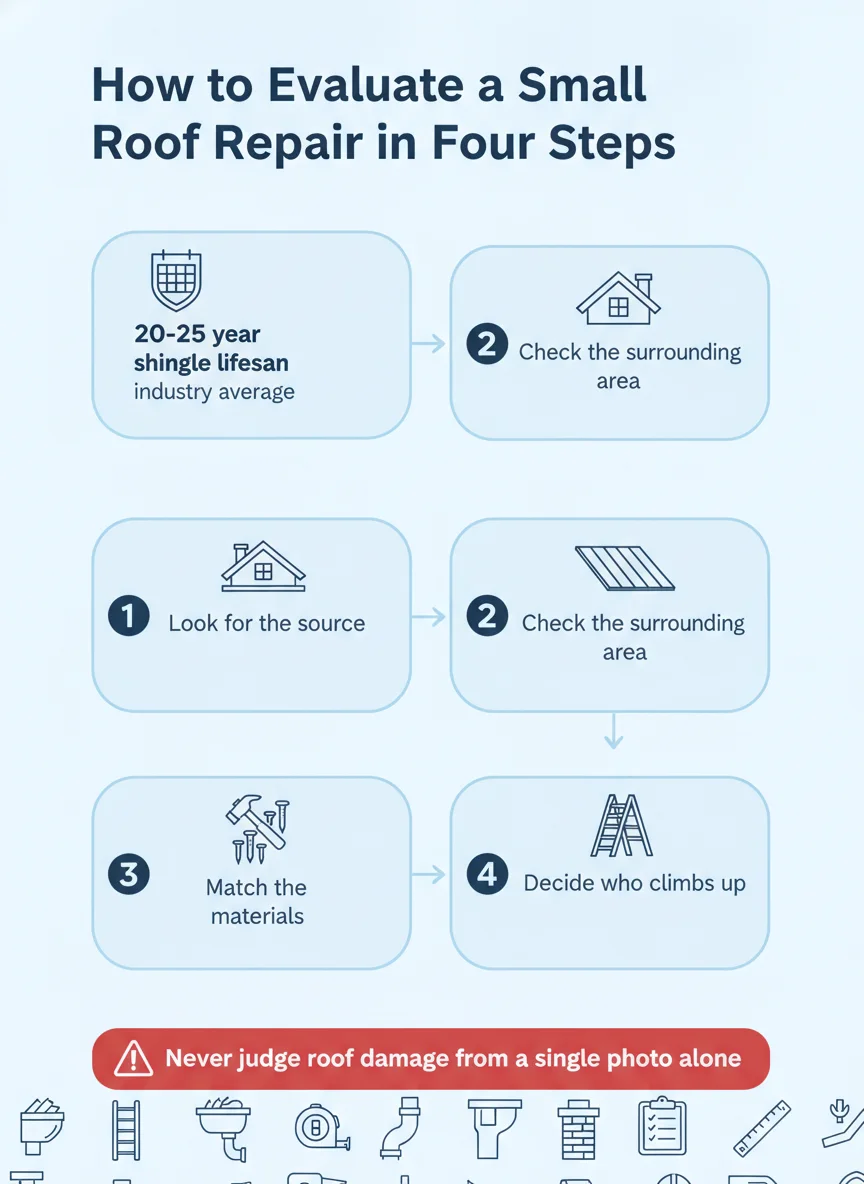
Step-by-Step: How to Evaluate a Small Roof Repair
Before deciding who to call, walk through these steps to get a clearer picture of what you're actually dealing with.
- Look from the ground: Use binoculars or walk the yard to spot missing shingles, visible dents, or gutter sections pulling away, without climbing up yourself.
- Check inside the attic: Look for daylight coming through the decking, dark staining on wood, or a musty smell, all signs the damage goes deeper than the surface.
- Note how long it's been there: A stain that's spreading or darkening over weeks points to an active leak rather than a one-time event.
- Check nearby penetrations: Chimneys, vents, and skylights are common leak points, so damage near one of these usually calls for a roofer's eye.
- Get a second opinion: If a handyman isn't sure of the cause, that's the signal to bring in a licensed roofer before any material gets replaced.
- Ask about the warranty: Confirm what's covered if the repair doesn't hold, since that answer differs a lot between a handyman and a licensed contractor.
Is It Safe to Call a Handyman for a Roof Leak?
It can be safe for a handyman to handle a leak only when the source is already confirmed and the fix is a simple reseal or caulk job. The risk comes in when the leak's source hasn't been identified yet, because a handyman without roofing-specific training may seal the spot where water is dripping out rather than where it's actually getting in.
Signs the Leak Needs a Roofer's Diagnosis
A ceiling stain that grows after rain, water showing up in more than one room, or a smell of mildew in the attic are all signs the leak has been active longer than a quick patch can address. These situations usually mean checking the Gutters and flashing together, not just the spot directly above the stain.
If the damage followed a specific storm or wind event, it's worth having a roofer check the full slope rather than just the one visible spot, since wind-driven damage often scatters across a wider area than it first appears.
How Do I Know If a Repair Is Too Big for a Handyman?
A repair is too big for a handyman once it involves removing roofing material, working near the roof's edge, or touching flashing around a penetration point. These jobs require both the training to install flashing correctly and the fall protection and insurance coverage that licensed roofing crews carry as standard practice.
If you're still unsure after a walk-around, it's worth reading up on when a roof is past repair, since the signs that separate a quick fix from a bigger project are often visible from the ground.
DIY, Handyman, or Roofer: Who Should Actually Do the Work
There's a short list of roof-adjacent tasks a reasonably handy homeowner can do themselves: clearing debris from valleys, checking gutters for clogs from the ground with a hose, and visually scanning the roof after a storm with binoculars. None of these involve climbing onto the roof or touching the roofing material itself, which keeps the risk low.
A handyman is the right call for simple, surface-level fixes with a known cause, like tightening a gutter hanger or re-caulking a joint that's clearly just dried out from age. These jobs don't require specialized roofing knowledge, and a competent handyman can usually handle them safely and quickly.
A licensed roofer is the right call anytime the cause isn't confirmed, the repair touches flashing or structural decking, or the work requires matching existing roofing material. Climbing a steep or high roof also isn't something to hand off to someone without the right fall protection and training, regardless of how small the visible damage looks.
Getting the Right Call the First Time
The cheapest fix isn't always the one with the lowest bill, it's the one that actually solves the problem without a repeat visit a season later. Taking a few extra minutes to check the attic, note how long the damage has been there, and look at what's nearby usually makes the roofer-or-handyman decision pretty clear.
For homeowners anywhere from Branson to Merriam Woods weighing a small repair, Full Life Roofing Construction can take a look and tell you plainly whether it's a quick fix or something that needs a closer eye.
Frequently asked questions
Can a handyman fix a small roof leak?
A handyman can sometimes patch a surface-level issue like a loose shingle tab or re-caulk a small gap, but most leaks trace back to flashing or decking problems a general handyman isn't trained to diagnose. If the leak keeps coming back after a handyman patch, that's usually a sign the real source was never found.
Is it cheaper to hire a handyman instead of a roofer?
A handyman visit can look cheaper upfront, but the real cost depends on whether the repair holds. A licensed roofer carries the training and insurance to fix the actual cause the first time, which often ends up costing less than paying twice.
What roof repairs are too risky for a handyman?
Anything involving flashing around chimneys, vents, or skylights, structural decking, or a repair near the roof's edge is better left to a roofer. These areas require matching materials correctly and understanding how water moves under the surface, which falls outside most handyman skill sets.
Does a handyman repair come with a warranty?
Most handymen do not offer a formal workmanship warranty on roof work the way a licensed roofing contractor does. Ask any contractor directly what's covered and for how long before they start, roofer or handyman, so you know what happens if the repair fails.
How do I know if my small roof problem is actually a big one?
If the damage shows up in more than one spot, sits near a flashing point, or has been there long enough to cause a stain inside the house, it's often bigger than it looks from the ground. A roofer can confirm the full scope before any work starts.