
Why warranty paperwork matters more than people think
A roof going up in the Branson and Springfield area usually arrives with two or three separate pieces of paper, and most homeowners sign off on all of them without reading past the first page. That's understandable since a replacement is a big, busy day with crews on the roof and dumpsters in the driveway. But those documents are the only thing standing between a future problem and a repair bill coming out of your own pocket.
Understanding the difference between what the material maker promises, what the installer promises, and what an extended plan adds on top is worth ten minutes before the job starts, not ten minutes after a leak shows up three years later. This guide lays the three types side by side so the paperwork makes sense the first time you see it.
Why there are multiple warranties on one roof
A roof has two points of failure: the product itself and the hands that installed it. No single party can honestly promise to cover both, so the industry splits the responsibility. The manufacturer stands behind the shingles, panels, or underlayment they made. The contractor stands behind the labor, flashing details, and fastening that put those products in place.
The manufacturer's side
Shingle, metal, and underlayment makers warranty their own products against manufacturing defects, meaning something wrong with the material itself rather than how it was handled on site. These terms are published by the manufacturer and typically scale with the product tier, with basic lines running shorter and premium or designer lines running longer.
Some manufacturers also offer an enhanced or system-wide warranty tier that requires the full roofing system, meaning shingles, underlayment, and ventilation components, all come from their own product line and get installed by a contractor certified in their program. That tier usually extends coverage to include labor costs for a defect claim, not just material replacement.
The contractor's side
A workmanship warranty is a promise from the company that did the install, covering things that go wrong because of how the roof was put together rather than the materials used. This includes items like flashing around a chimney or vent that wasn't sealed correctly, or fasteners that missed the decking. These terms are set by each individual contractor and should be spelled out in writing at the time of contract.
Because this warranty is only as good as the company behind it, homeowners should ask how long the business has operated and whether the warranty is honored directly or through a third party. A workmanship promise is only useful if the company backing it is still around to answer the phone when something comes up.
| Warranty Type | Who Issues It | What It Covers |
|---|---|---|
| Material | Manufacturer | Defects in the shingles, panels, or underlayment itself |
| Workmanship | Installing contractor | Install mistakes, like flashing, fastening, or sealing errors |
| Extended/Enhanced System | Manufacturer, through a certified installer | Material plus labor for defect claims, often with stricter install rules |
What each warranty actually pays for when something goes wrong
A material warranty, when it pays out, typically covers the replacement cost of the defective product, sometimes prorated based on the roof's age at the time of the claim. A roof that's 15 years into a 30-year material warranty may only get partial credit toward new materials rather than a full replacement, which surprises a lot of homeowners who assumed the warranty was all-or-nothing.
A workmanship warranty pays for correcting the installation error itself, which could mean resealing a flashing point or replacing a section that was fastened incorrectly. It generally does not cover material cost if the shingles or panels themselves are fine, since that portion falls under the manufacturer's responsibility instead. Reading both documents together is the only way to know what's actually covered in a given scenario.
Step-by-step: how to review a roof warranty before you sign
Going through the paperwork in order, rather than skimming for the warranty length on the first page, catches the details that actually matter later.
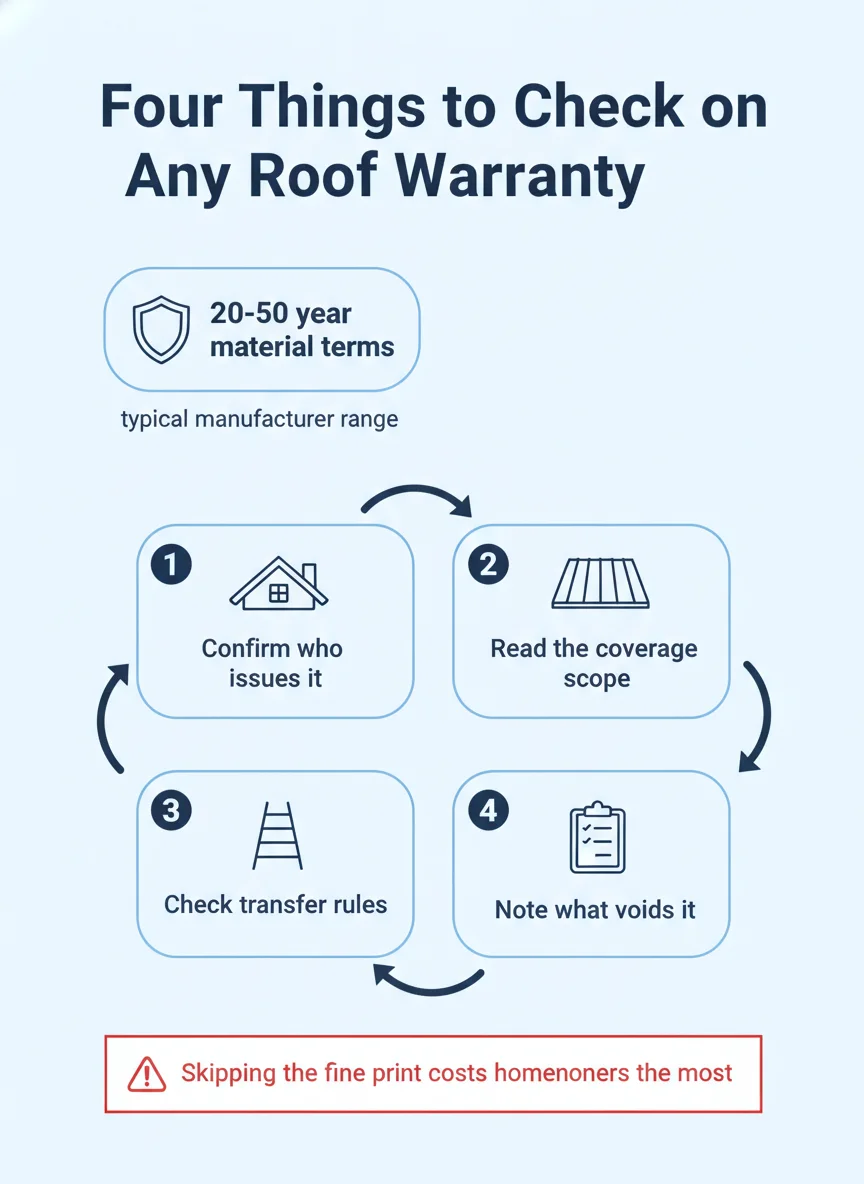
- Identify the issuer: Confirm whether each document comes from the manufacturer or the contractor, since that determines who you contact if a problem shows up.
- Read the coverage scope: Look for exactly what's included, material only, labor plus material, or install errors, so you know what each warranty responds to.
- Check the term and proration: Note the full length of coverage and whether it steps down in value over time rather than staying flat for the whole period.
- Find the transfer clause: See whether the warranty can move to a new homeowner if the house sells, and what paperwork or deadline that requires.
- List the exclusions: Review what voids the warranty, such as unapproved repairs or missing ventilation components, before those mistakes happen.
- Confirm certification requirements: For enhanced manufacturer tiers, verify the installer holds the required certification, since an uncertified install can disqualify the upgrade.
- Keep copies on file: Store both warranty documents with your closing paperwork so they're easy to find if you ever need to file a claim.
What you'll find when you compare the fine print
Transferability clauses
Most material warranties allow a transfer to a new owner, but usually only once and often within a limited window, like 30 to 60 days, after the sale closes. Some reduce the remaining term once transferred, so a 40-year warranty might become a shorter term in the new owner's hands even if no claim has ever been filed.
Workmanship warranties are less consistent. Some contractors transfer them freely with a phone call, while others don't offer a transfer option at all. This is worth asking about directly during a quote, especially if you plan to sell the home before the roof reaches the end of its expected life.
Exclusions that catch people off guard
The most common exclusion across both material and workmanship warranties is unauthorized repair work. If another contractor patches the roof later, that can void coverage on the section they touched, even if the original defect was unrelated. Improper attic ventilation is another frequent exclusion, since trapped heat and moisture can accelerate shingle wear in ways manufacturers specifically don't cover. For more on how ventilation affects a roof's lifespan, see Attic Ventilation Explained.
Storm and wind damage sit outside standard material and workmanship warranties entirely in most cases, which is why that kind of damage typically runs through a homeowner's insurance policy rather than a warranty claim.
What a homeowner can check versus what needs a professional
Reading and organizing warranty paperwork is something every homeowner can and should do on their own. Pulling the documents together after a replacement, noting the term lengths, and filing them somewhere easy to find takes no special skill, just a bit of attention.
Filing an actual claim is a different story. A manufacturer typically wants photos, proof of proper installation, and sometimes a licensed contractor's inspection report before they'll process a material defect claim. A licensed roofer can document the issue correctly the first time, which matters since a poorly documented claim can get denied or delayed.
If a question comes up about whether an issue falls under material defect or install error, a roofer who understands both sides of the paperwork is the right person to ask before filing anything. That distinction often determines which company you need to contact first.
Keeping the paperwork straight for the life of the roof
A roof warranty is only useful if someone can actually find it and understand it when a problem shows up years down the line. Keeping both the manufacturer's material warranty and the contractor's workmanship warranty together with your home's maintenance records is the simplest way to stay ahead of a claim instead of scrambling for paperwork after a leak starts.
Homeowners across Springfield and the surrounding towns who want help understanding what's covered on their current shingle roofing or metal roofing warranty can always ask Full Life Roofing Construction to walk through the documents with them.
Frequently asked questions
What's the difference between a material warranty and a workmanship warranty?
A material warranty comes from the manufacturer and covers defects in the shingles, metal panels, or other products themselves. A workmanship warranty comes from the installing contractor and covers mistakes made during the install, like a nail popping through or flashing set wrong, which are two separate things that can each fail independently.
Can a roof warranty be transferred if I sell my house?
Many manufacturer and workmanship warranties allow a one-time transfer to a new owner, but the terms vary by issuer and often require paperwork filed within a set window after closing. Always check the specific warranty document rather than assuming, since some become non-transferable after a certain number of years.
Does a warranty cover storm or wind damage?
Most standard material and workmanship warranties do not cover storm damage; that's typically a homeowner's insurance matter instead. Some manufacturers offer an extended or enhanced warranty tier that adds wind-speed coverage, but it has to be purchased or qualified for separately.
What usually voids a roof warranty?
Unapproved repairs, using an uncertified installer for a manufacturer's enhanced warranty tier, or skipping required ventilation and underlayment components are the most common ways a warranty gets voided. Reading the exclusions section before work starts, not after a claim is denied, is how homeowners avoid this.
How long does a typical roof warranty last?
Material warranties on shingles commonly range from 20 to 50 years depending on the product tier, while workmanship warranties from contractors vary by company and are usually shorter. The length alone doesn't tell the whole story since coverage often prorates down over time even within that stated term.