
Why Roof Age Keeps Coming Up for Homeowners in the Branson & Springfield Area
At some point almost every homeowner in the Branson and Springfield area gets asked the same question, either by an insurance agent, a buyer's inspector, or a roofer standing in the driveway: how old is this roof? It's a simple question with a surprisingly complicated answer, because the age of a roof and the age of a house are two completely different numbers that homeowners mix up constantly.
This matters more than it seems. Insurance companies increasingly factor roof age into premiums and coverage terms, lenders sometimes ask for it during refinancing, and a roofer can't give you a straight answer about repair versus replacement without knowing roughly how many years the current shingles have been up there. If you've never had a reason to track this number down, this guide walks through exactly where it's recorded and what to look for if the paperwork is gone.
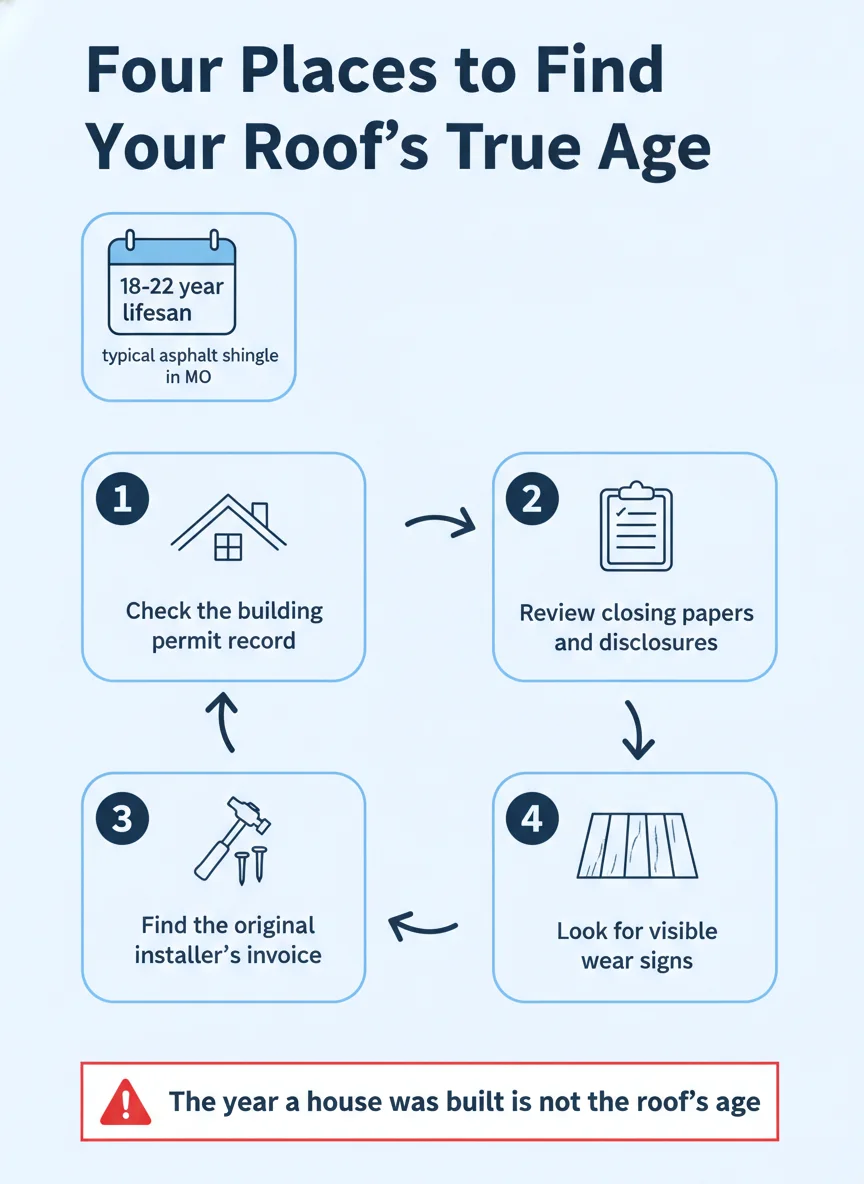
Why the House's Build Year Isn't the Roof's Age
The confusion starts with public records. County assessor sites and real estate listings almost always show the year a home was originally constructed, and homeowners naturally assume that's also the roof's birthday. In reality, most roofs get replaced at least once, sometimes twice, over the life of a house, especially a home built decades ago.
What the Build Year Actually Tells You
The construction date tells you when the foundation went in and the original structure was framed, nothing more. It's a useful historical fact, but it has no bearing on what material is currently covering the house or how many years of service life remain in it.
If a seller or a listing agent quotes the build year as the roof's age, treat that as a red flag rather than a fact. It usually means nobody has verified the actual replacement history, which is exactly the gap this guide helps you close.
Why This Mix-Up Causes Real Problems
Assuming a roof is newer than it is can mean skipping maintenance that should have started years earlier, or getting blindsided by a leak that a quick records check would have predicted. On the flip side, assuming it's older than it is can lead to an unnecessary early replacement.
Either mistake costs time and money, which is why tracking down the real install date, not the build date, should be one of the first things a new homeowner does, right alongside locating the water shutoff and the breaker panel.
| Record Type | What It Shows | How Reliable It Is |
|---|---|---|
| Building permit | Exact filing and finalization date for roofing work | Highly reliable when a permit was pulled |
| Closing disclosure | Seller's stated roof age at time of sale | Reliable if seller kept accurate records |
| Installer invoice | Exact install date and material used | Most reliable when available |
| Visual inspection | Estimated age range based on wear | Useful estimate, not an exact date |
The Records That Actually Hold the Answer
Before climbing a ladder or guessing from the ground, it's worth exhausting the paper trail first. A roof replacement is a documented event in most cases, which means the record exists somewhere, it's just a matter of knowing where to look.
Start with your local building or planning department, since roof replacements in most Missouri municipalities require a permit. Many counties now have searchable online permit databases by street address, and if the work was done legally, you'll find a filing date and often a finalization date that tells you exactly when the job wrapped up.
Step-by-Step: Tracking Down Your Roof's True Age
Work through these sources in order. Each one takes just a few minutes to check, and you can usually stop as soon as you find a confirmed date.
- Search the permit database: Check your county or city building department's online records by your address to see if a roofing permit was pulled and finalized.
- Pull your closing paperwork: Review the seller's disclosure and inspection report from when you bought the home, which often lists the roof's age or install year.
- Contact the previous owner: If you're still in touch, a quick message asking for the installer's invoice or receipt can settle the question fast.
- Call the installer directly: If a company's name or sticker is visible in the attic or on a downspout, many roofers keep job records and can confirm the date.
- Check your homeowner's insurance file: Some policies note roof age at the time coverage was issued, especially if it affected your premium or required a roof certification.
- Look for a dated attic stamp: Some installers write the install date on the decking or a rafter visible from the attic, often near the access hatch.
- Schedule a visual assessment: If all paperwork is exhausted, a roofer can estimate the age range by examining shingle wear, flashing condition, and granule loss.
What a Visual Assessment Can and Can't Tell You
Signs That Point to an Older Roof
When there's no paperwork left, a trained eye looks for specific wear patterns. Shingles that are curling at the edges, losing their granules in patches, or showing cracked tabs usually indicate a roof further along in its service life. Rust streaks around metal flashing and soft spots near valleys are also common with age.
None of these signs give an exact year, but combined they usually narrow the estimate to a reasonable range. A roofer who's seen hundreds of roofs across different ages can often tell the difference between a five-year-old roof and a fifteen-year-old one just from these visual cues.
Signs That Point to a Newer Roof
A roof that still has crisp, uniform shingle color, sharp tab lines, and flashing without rust or discoloration is usually younger. Attic decking that shows no daylight, staining, or soft wood also points to a more recent installation, since water intrusion problems tend to show up as a roof ages.
If you're weighing whether what you're seeing points to a roof nearing the end of its life, it helps to compare notes against general lifespan expectations for your shingle roofing material, which you can read more about in How Long Does a Roof Last in Missouri?
What You Can Check Yourself vs. When to Call a Roofer
The records search, permit database, closing papers, old invoices, is entirely something a homeowner can do from a laptop in an evening. None of it requires climbing anything or any special tools, just patience and knowing which office or file to check first.
The visual inspection side is a different story. Getting on a roof to check shingle condition or granule loss up close carries real fall risk, and attic inspections in tight, poorly lit spaces aren't something every homeowner is equipped to do safely. This is where bringing in a roofer pays off, since they can assess the roof and the attic deck safely and tell you with more confidence where the structure stands.
It's also worth having a professional involved if the age estimate matters for a decision, like whether to repair a small metal roofing section or move toward full replacement. A roofer who's walked the roof can give you a grounded answer instead of a guess, and can flag anything else worth knowing while they're already up there, like gutter wear covered in Gutters, Downspouts, and Gutter Guards
Getting a Clear Answer Before You Need One
Tracking down your roof's real age isn't just paperwork trivia, it's information that shapes maintenance decisions, insurance conversations, and how you plan a budget for the years ahead. Whether the answer comes from a dusty file at the county office or a quick look from a ladder, having a real number beats guessing based on when the house was built.
Homeowners anywhere from Branson to Springfield can run into the same gap in records, and if the paperwork trail runs cold, Full Life Roofing Construction can take a look and give you a grounded estimate to work from.
Frequently asked questions
Does the year my house was built tell me my roof's age?
No, and this is the most common mix-up homeowners run into. A house built in 1998 may have had its roof replaced in 2012, so the construction date on file with the county only tells you when the home was originally built, not when the current roofing went on.
Where do roofers usually find the permit record?
Most counties and municipalities keep permit records at the local building or planning department, and many now post searchable databases online by address. A roof replacement typically requires a permit, so if one was pulled, it should show the work type and the date it was finalized.
What if I can't find any paperwork at all?
If there's no permit, no closing disclosure, and no invoice, a roofer can still estimate the age by examining the shingles, flashing, and attic from the ground and up close. It won't be an exact date, but it narrows things down enough to plan ahead.
Does the home inspection report from when I bought the house help?
Yes, a standard home inspection report usually notes the estimated remaining life of the roof and sometimes an approximate install year based on visible wear. It's one of the better secondary sources if the seller's disclosure didn't include a specific date.
Why does knowing the roof's age even matter?
Knowing the age helps you plan for replacement before a leak forces the issue, and it matters for insurance too, since some policies adjust coverage or rates based on roof age. It also helps a roofer tell you honestly whether a repair or a full replacement makes more sense.