
Why Two Warranties Exist on One Roof
A new roof in the Branson and Springfield area involves two different parties taking responsibility for two different things. The company that manufactures the shingles or metal panels stands behind the material itself. The roofing contractor who installs it stands behind the labor. Homeowners often assume one warranty covers everything, and that mix-up is where a lot of frustration starts when a problem shows up a few years down the road.
It matters now more than ever because roofs in Missouri take a beating from freeze-thaw cycles, summer heat, and wind, and any of those can expose a weak point in either the material or the install. Knowing which warranty applies before you need it saves you a phone call to the wrong company and weeks of back-and-forth while a leak gets worse.
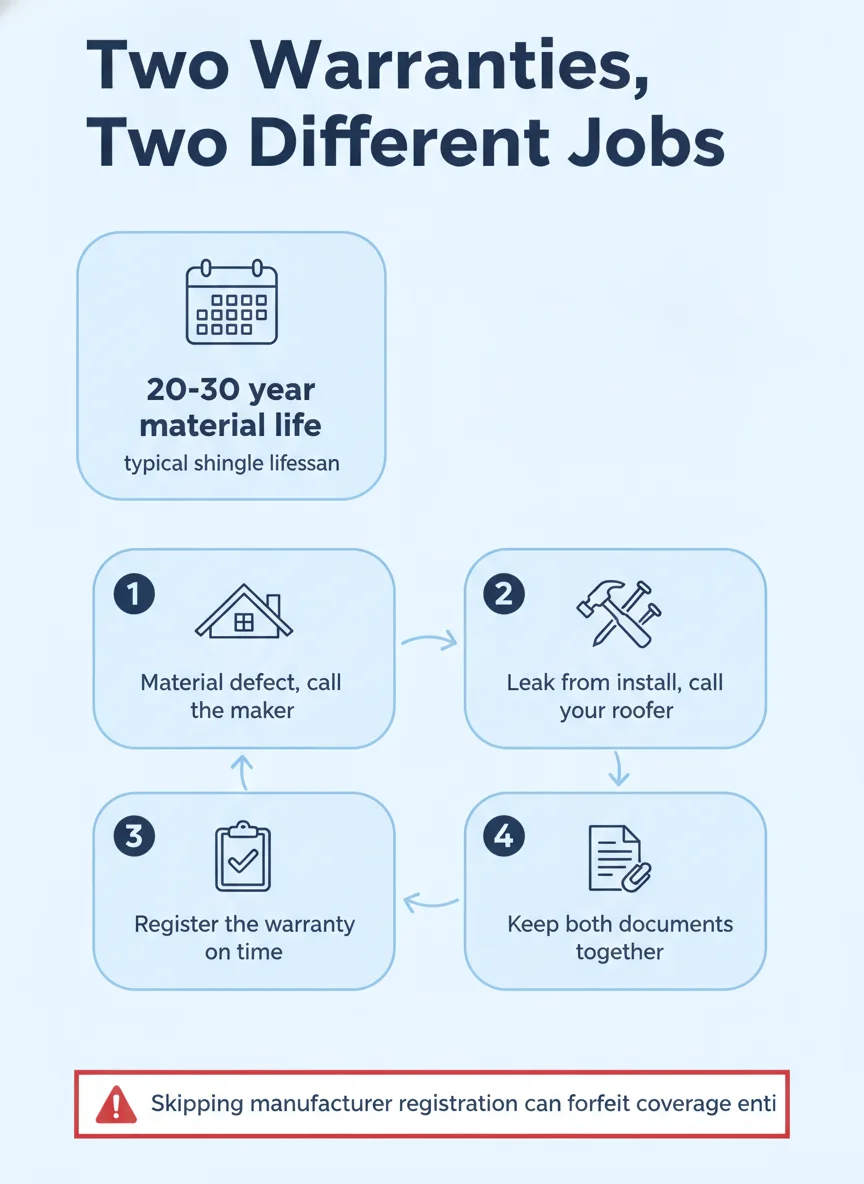
How Each Warranty Actually Works
Both warranties are legal promises, but they cover different failure points and they're triggered by different kinds of evidence. Understanding the mechanism behind each one helps you know what to document if something goes wrong.
The Manufacturer Warranty
This warranty comes from the company that made the shingles, metal panels, or underlayment, and it covers defects in the product itself; things like shingles that crack prematurely, granules that shed far faster than normal, or metal coating that fails before it should. It does not cover a leak caused by nails driven at the wrong angle or flashing installed incorrectly, because those are installation issues, not product defects.
Standard manufacturer coverage is often prorated, meaning the payout shrinks the older the roof gets. Many manufacturers also offer an enhanced or extended warranty tier when the installer is certified to install that product line and the job gets registered within a set window. That enhanced tier can include non-prorated coverage for longer, but only if the paperwork gets filed correctly after the job.
The Workmanship Warranty
This one comes from the contractor who did the install, not the factory. It covers leaks and failures caused by how the roof was put together, things like improperly sealed flashing around a chimney or vent, fasteners placed wrong, or a layer of underlayment that wasn't lapped correctly. If your roof leaks and the material itself is fine, this is almost always the warranty that applies.
Length and terms on workmanship warranties vary contractor to contractor, since there's no industry-wide standard the way there is with material warranties. Full Life Roofing Construction backs its installs with a satisfaction guarantee on top of standard workmanship coverage, which is the kind of detail worth asking about and getting in writing before any contractor starts work on your home.
| Question | Manufacturer Warranty | Workmanship Warranty |
|---|---|---|
| Who issues it | The shingle or metal panel maker | The installing contractor |
| What it covers | Product defects, premature material failure | Installation errors, leaks from the work itself |
| What can void it | Improper ventilation, layover installs, no registration | Repairs by another contractor, unauthorized changes |
| Typical length | 25 years to limited lifetime, often prorated | Set by the contractor, varies by company |
What's Actually Covered Under Each Policy
Think of the roof as two systems stacked together: the material system (shingles, panels, underlayment, flashing components supplied by the manufacturer) and the install system (how all of that gets fastened, lapped, sealed, and ventilated). A defect traces back to the first system. A leak from poor technique traces back to the second. Most real-world roof problems in Missouri end up being installation-related, which is exactly why the workmanship warranty tends to get used more often than people expect.
Attic ventilation sits right at the boundary between the two. A ventilation system that's undersized or blocked traps heat and moisture under the shingles, which accelerates wear and can look like a material defect when it's actually an airflow problem the installer should have caught. Manufacturers know this, which is why ventilation requirements show up so often in the fine print of their warranty terms.
Step-by-step: What to Check Before You Sign Anything
Before any new roof goes on, there are a handful of things worth confirming in writing so you're not guessing later about who covers what.
- Ask for both documents: Request the manufacturer's written warranty and the contractor's workmanship warranty separately, not a verbal summary of either one.
- Confirm registration responsibility: Find out whether the contractor handles manufacturer warranty registration or whether that's on you, and get confirmation once it's done.
- Check the ventilation plan: Ask how the roof's ventilation will be set up, since poor airflow is a common reason manufacturer claims get denied.
- Read the transfer clause: Look for whether either warranty transfers to a future buyer and what the time window is if you plan to sell.
- Note what voids coverage: Get a plain-language list of actions that could void either warranty, like installing solar mounts or a satellite dish without informing your roofer.
- Keep everything together: Store both warranty documents with your closing paperwork so a future owner or a future contractor can find them fast.
- Clarify the length: Write down the exact number of years for each warranty rather than relying on memory a decade from now.
Diagnosing Which Warranty Applies to Your Problem
When something goes wrong, the first job is figuring out which system failed. That determines which warranty, and which company, you need to contact.
Signs It's a Material Issue
Granule loss that's uneven across the whole roof, shingles cracking in a pattern that matches a bad batch, or metal coating peeling in spots with no clear installation cause all point toward the manufacturer warranty. These problems tend to show up roof-wide rather than isolated around one penetration or edge.
If you suspect a material defect, document it with photos and dates, then contact the manufacturer directly or through your original installer, since many manufacturers require the installing contractor to file the claim on your behalf.
Signs It's a Workmanship Issue
A leak concentrated around a chimney, skylight, or vent flashing point, a localized soft spot, or water intrusion that started shortly after install almost always points to the workmanship warranty. These issues are usually isolated to one area rather than spread across the whole roof.
In this case, contact the installing contractor first. A reputable company will send someone out to assess the spot and correct it under the workmanship warranty at no added cost, since that's exactly what the warranty is for.
What You Can Check Yourself vs When to Call a Pro
Homeowners can absolutely handle the paperwork side: reading both warranty documents closely, confirming registration happened, and keeping records of install dates and any later repairs. You can also do a visual check from the ground for obvious patterns, like granules collecting in gutters or shingles curling uniformly across the roof, which helps you describe the issue clearly when you do make a call.
What you shouldn't do yourself is get on the roof to inspect flashing, diagnose a leak source, or attempt any repair, since walking on shingles can cause damage that then gets blamed on you instead of the original install. Diagnosing whether a problem is material or workmanship related also takes trained eyes, because the two can look similar from the ground or even from the attic.
A licensed roofer can pull the specific product line and verify its manufacturer terms, inspect the actual install details against code and manufacturer specs, and tell you with confidence which warranty applies before a claim gets filed in the wrong place. That upfront diagnosis saves you from a denied claim and a wasted trip.
Keeping Your Roof's Coverage Intact
A roof warranty only protects you if you understand what it actually covers and keep the paperwork to prove it. Ask your installer upfront who handles registration, get both documents in writing, and avoid letting anyone but a licensed contractor touch the roof while either warranty is active.
If you're weighing options for a metal roofing or shingle roofing install anywhere from Branson to Springfield, Full Life Roofing Construction can walk you through exactly what's covered before the first nail goes in.
Frequently asked questions
What's the difference between a manufacturer warranty and a workmanship warranty?
The manufacturer warranty covers defects in the shingles or metal panels themselves, things like premature granule loss or a factory flaw. The workmanship warranty covers the installer's labor, so if a leak shows up because of how the roof was put together, that's on the contractor, not the material maker.
Does a roof warranty transfer if I sell my house?
It depends on the specific warranty's terms, and some manufacturer and workmanship warranties do allow a one-time transfer to a new owner within a set window after the sale. Check the paperwork from your install and ask your roofer directly if you're selling soon, since missing a transfer deadline can forfeit the coverage.
What can void a roof warranty?
Improper attic ventilation, a second layer of shingles installed over an old one, unregistered material warranties, and repairs done by someone other than a licensed contractor are common causes. Manufacturers are strict about ventilation specifically because trapped heat and moisture shorten shingle life and they don't want to pay claims for a problem the install caused.
Do I need to register my roof warranty myself?
Many enhanced manufacturer warranties require registration within a set window after installation, and this is often handled by the installing contractor rather than the homeowner. Ask whoever installs your roof whether registration happened and get written confirmation for your records.
How long do roof warranties usually last?
Manufacturer material warranties often run anywhere from 25 years to limited lifetime coverage depending on the shingle line, while workmanship warranties set by the installer vary by contractor. Always get the specific terms in writing before the job starts rather than assuming a standard length.