
A Denied or Underpaid Claim Is More Common Than Homeowners Expect
Homeowners across the Branson and Springfield area sometimes open a claim after a storm expecting a straightforward approval, and instead get a denial letter or an estimate that covers only a fraction of the repair. That outcome is frustrating, but it isn't final. Insurance claims go through more than one round in a lot of cases, and the second round is where accurate documentation makes the biggest difference.
Understanding why a claim came back the way it did is the first real step. A denial based on 'wear and tear' calls for a different response than one based on 'cosmetic damage only' or a missed slope. Knowing the stated reason tells you exactly what evidence you need to push back with, instead of resubmitting the same information and expecting a different answer.
Why Claims Come Back Denied or Underpaid
Insurers deny or reduce roofing claims for a handful of recurring reasons, and most of them trace back to how the initial inspection was scoped. An adjuster who spends a short window on a roof can miss damage on a shaded slope, misjudge the age of existing wear, or apply a standard that treats functional damage as purely cosmetic.
Common reasons for denial
The most frequent denial reasons are damage classified as pre-existing wear and tear, damage called cosmetic rather than functional, and claims where the adjuster's report states no storm-related damage was found at all. Each of these is a factual dispute, which means it can potentially be revisited with better documentation of when and how the damage occurred.
A less common but real issue is a missed slope. If an adjuster only inspects the sections of the roof visible from the ground or from one angle, damage on a back slope or a lower-pitch section can get left out of the estimate entirely. That's one of the easiest gaps to correct with a follow-up inspection.
Why adjusters undervalue damage
Underpayment often isn't about denying damage exists, it's about scope. An estimate might acknowledge the damage but price it using fewer squares than the roof actually needs, lower-grade materials than the existing roof, or skip line items like flashing, ventilation, or decking repair that a full tear-off and reinstall actually requires.
A written estimate from a contractor who physically measured the roof and documented every slope gives you something concrete to compare against the insurer's number. When the two don't match, that gap is exactly what a supplement request is built to address.
| Denial reason stated | What it usually means | What you can do |
|---|---|---|
| Wear and tear / age-related | Insurer attributes damage to the roof's existing condition, not a specific storm | Request a re-inspection with dated photos and a contractor's written assessment of the damage pattern |
| Cosmetic damage only | Insurer says the damage affects appearance, not function | Provide documentation showing functional impact, like compromised shingle seal or exposed underlayment |
| No damage found | Adjuster's report states the inspection turned up nothing storm-related | Request a second inspection, ideally with your contractor present to walk the roof together |
| Scope too low / underpaid | Estimate missed slopes, materials, or line items | Submit a supplement with a detailed contractor estimate showing the full scope |
The Tools Available to Dispute a Claim
A homeowner isn't limited to accepting the first answer. Most policies include a process for requesting a re-inspection, and many include an appraisal clause, a built-in dispute mechanism where each side brings in an appraiser and a neutral umpire settles disagreements on the amount of the loss. Reading your actual policy language, not just the denial letter, tells you which of these options apply to your situation.
If informal back-and-forth with the insurer isn't resolving things, a formal complaint with your state's insurance department is another avenue, separate from the claim itself, for flagging how a claim was handled. None of these tools require starting over, they work alongside the original claim number you already have.
Step-by-Step: What to Do After a Denial or Lowball Estimate
The sequence below is roughly how most disputed claims move from a denial letter to a resolved outcome. Not every claim needs every step, but working through them in order keeps you from skipping documentation that later steps depend on.
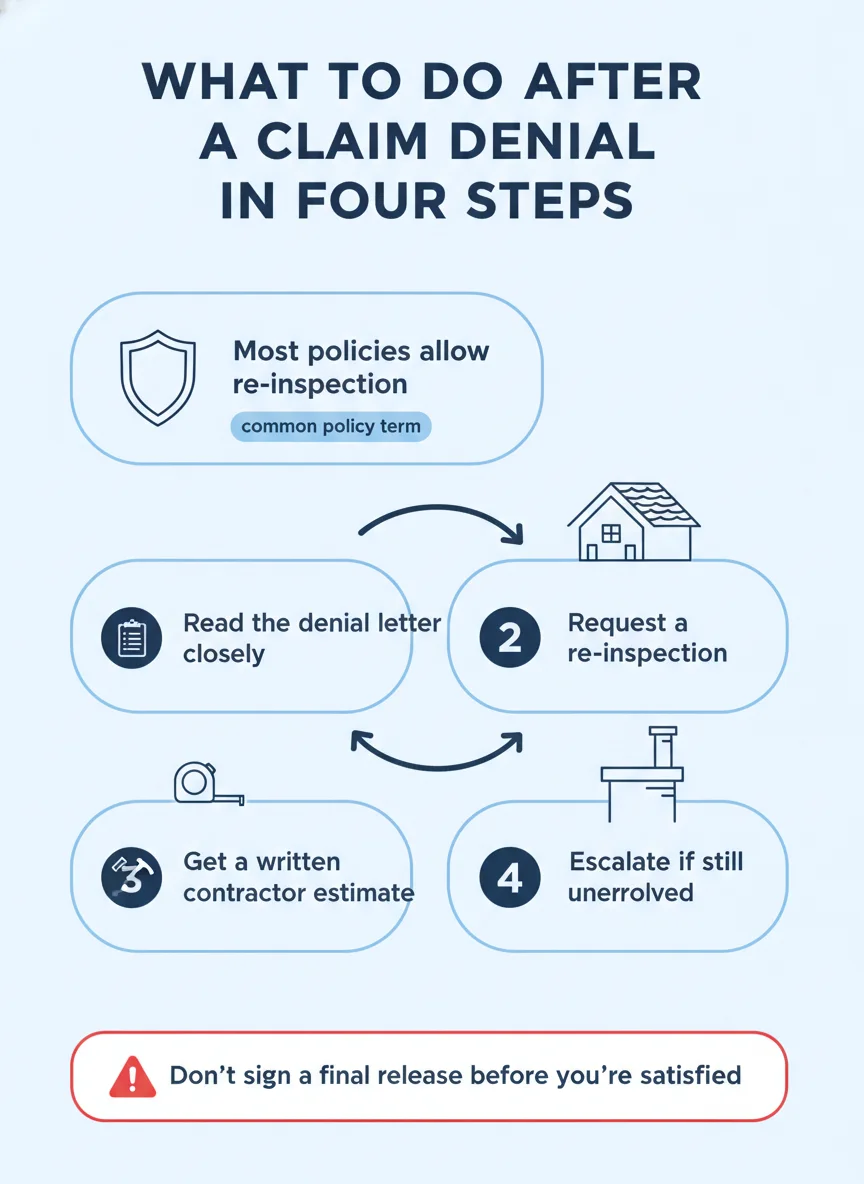
- Read the denial letter: Find the exact stated reason for denial or the line items excluded from the estimate, since that language tells you what evidence to gather next.
- Document everything yourself: Take dated photos from the ground and, where safe, get a contractor's written assessment of the damage and its likely cause.
- Request a re-inspection: Ask your insurer for a second on-site inspection and arrange for your contractor to be present and walk the roof alongside the adjuster.
- Get a written contractor estimate: A detailed estimate covering every slope, material, and line item gives you a concrete number to compare against the insurer's scope.
- Submit a supplement: If the gap is about missing scope rather than a flat denial, a formal supplement request with your documentation is usually the fastest path to a corrected number.
- Consider the appraisal clause: If the dispute is purely about the dollar amount of the loss and talks have stalled, review your policy's appraisal process as a formal next step.
- Escalate if unresolved: A public adjuster, an attorney, or a complaint with your state insurance department are options if the dispute is still open after the steps above.
What You'll Typically Find on Re-Inspection
When a re-inspection reverses the original finding
A second inspection with your contractor present often turns up exactly what the first one missed, a shaded slope with scattered impact marks, flashing that was never checked, or granule loss that reads differently once someone points it out and explains the pattern. These findings, documented with photos and measurements, are what a supplement or an appeal is built on.
In cases where the original inspection genuinely found no storm damage, a re-inspection can confirm that finding too. That's a legitimate outcome, and it's one more reason to have your own contractor's assessment on record before you push for a second visit, so you know what you're walking into.
When the dispute is really about scope, not denial
A lot of 'denied' claims are actually underpaid claims in disguise, where the insurer agrees damage exists but estimates it using a smaller scope than the roof needs. This shows up as a quote covering repair on one or two slopes when the damage pattern and matching-material requirements call for a full shingle roofing replacement instead.
Comparing your insurer's estimate line by line against a contractor's written estimate is the fastest way to spot this. Differences in square footage, material grade, or missing line items like flashing and ventilation are specific, correctable gaps rather than a flat no.
What You Can Handle Yourself and What Needs a Professional
Homeowners can absolutely handle the early documentation steps themselves: photographing visible damage from the ground, keeping copies of every letter and estimate from the insurer, and reading the actual policy language around re-inspection and appraisal. None of that requires hiring anyone, and doing it early strengthens whatever comes next.
Getting on the roof itself, measuring every slope, and producing a detailed written estimate is where a licensed contractor's documentation carries real weight with an insurer. A contractor can also attend a re-inspection and point out damage directly to the adjuster, which is harder to dismiss than a phone description.
Negotiating the settlement amount or filing a formal appraisal demand is a different lane again, one where a public adjuster or an attorney is the appropriate professional, not a roofing contractor. Keeping these roles separated, contractor for documentation and scope, public adjuster or attorney for negotiation, keeps the dispute moving instead of stalling on the wrong person's desk.
Getting a Fair Outcome Takes Documentation, Not Luck
A denial letter or a lowball number feels final when it lands in the mailbox, but it's usually just the first round of a process that has several more steps built into it. Homeowners across Branson, Springfield, and the surrounding towns who push back with clear documentation and the right escalation tool tend to end up much closer to the actual cost of repair.
If you want a second set of eyes on a denied or underpaid claim, pairing your documentation with a meeting with the insurance adjuster prepared ahead of time, or getting a written estimate from a contractor in Branson, is a solid next move. Full Life Roofing Construction can walk a disputed roof with you and put the damage in writing.
Frequently asked questions
Why would a roof insurance claim get denied?
Most denials come down to the insurer classifying the damage as wear and tear, cosmetic only, or pre-existing rather than storm-caused. A written denial letter should state the exact reason, and that reason is what you'll need to address with new evidence.
What does it mean if my claim was underpaid instead of denied?
An underpaid claim usually means the adjuster's estimate missed damaged slopes, used lower-cost materials than your policy covers, or left out items like flashing or ventilation. A supplement request with documentation can correct the scope and the number.
What is a supplement in a roofing insurance claim?
A supplement is a formal request to add items or costs the original adjuster's estimate missed. It's submitted with photos, measurements, or a contractor's written estimate showing what should have been included the first time.
When should I bring in a public adjuster?
A public adjuster can help when a claim is denied or significantly underpaid and the homeowner wants someone working solely on their behalf to negotiate with the insurer. They work for a fee and aren't a fit for every claim, so weigh it against the size of the dispute.
Can a roofing contractor help if my claim is denied?
A contractor can document damage, provide a detailed written estimate, and meet an adjuster on-site during a re-inspection, but a contractor isn't a public adjuster or an attorney and can't negotiate your policy on your behalf. Keep those roles separate as you work the claim.