
The Morning After a Storm in the Ozarks
Wind and hail move through the Branson and Springfield area a handful of times each year, and the damage they leave behind isn't always obvious from the driveway. A roof can take a hit and still look fine from thirty feet up, while the real story is sitting in the grass, clinging to a gutter corner, or hiding in the attic where only daylight gives it away.
Checking your property the next morning, while the storm is still fresh in your mind, is the single best thing you can do for your home. It takes maybe twenty minutes, and it puts you ahead of small problems before they turn into water stains on the ceiling or a soaked attic floor. This checklist walks through exactly what to look at, in the order that makes sense, so nothing gets missed.
Why Ground-Level Clues Matter So Much
Most storm damage doesn't announce itself. A shingle that's cracked or lost its granules can sit quietly for months before a leak finally shows up inside the house, by which point the underlayment and decking may already be compromised. Catching the early signs on the ground means catching the problem while it's still a simple repair.
What Shingles in the Yard Tell You
If you find pieces of shingle, or a dusting of dark granules, in your yard or flower beds after a storm, that material came from somewhere on your roof. Granule loss exposes the asphalt layer underneath to UV and moisture, which accelerates wear even if the shingle itself is still in place.
Check downspout outlets and the base of your gutters too, since granules wash down with the rain and tend to collect there even when you can't see anything unusual on the roof itself. A noticeable pile is worth a closer look from a professional.
Dented Soft Metals as an Early Warning
Hail dents soft metal before it dents asphalt shingles, which makes vent caps, flashing, and gutter corners a useful early warning system. If you see dimpling or dents on these surfaces, there's a good chance the shingles took a similar beating even if it's harder to see on the ground.
Air conditioner fins and mailbox tops are good secondary spots to check for the same reason, they're soft, they're exposed, and they show hail impact clearly. A quick comparison between your AC unit and your roof's apparent condition can tell you a lot before anyone climbs a ladder.
| Area | What to look for | What it usually means |
|---|---|---|
| Yard and beds | Granules, shingle fragments, torn flashing pieces | Material has come loose from the roof surface |
| Soft metals | Dimples or dents on vents, caps, gutter corners | Hail impact strong enough to affect shingles too |
| Gutters and downspouts | Dents, sagging sections, clogged outlets | Water may not drain properly in future rain |
| Siding and screens | Pockmarks, cracked panels, torn or dented screens | Wind-driven hail or debris hit the exterior |
What's Actually at Risk Up There
A roof system is made up of several layers working together: the shingles or metal panels on top, an underlayment beneath them, flashing around penetrations like chimneys and vents, and the decking underneath all of it. Storm damage rarely hits just one layer cleanly, which is why a cracked shingle can mean a compromised underlayment too, and why a small gutter dent can mean water is no longer draining the way it was designed to.
Gutters and downspouts are part of this same system even though they don't sit on the roof slope itself. When they're damaged or clogged with storm debris, water backs up against the fascia and roof edge instead of moving away from the house, which creates a second problem on top of whatever the wind or hail already caused.
Step-by-Step: Your Morning-After Walkthrough
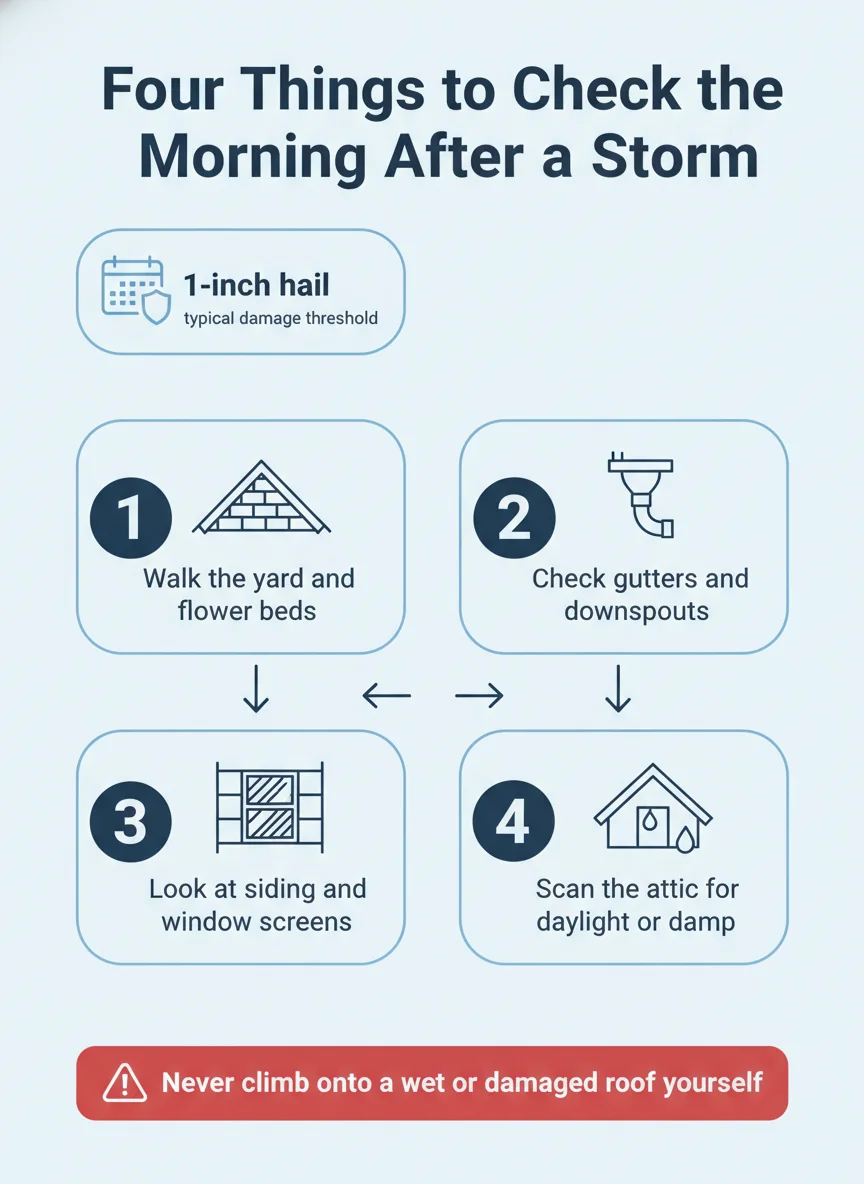
Work through your property in this order so you cover the ground-level clues before moving indoors. Bring your phone for photos as you go, since documenting conditions early is worth more than trying to remember details later.
- Walk the perimeter: Circle the house slowly, scanning the yard, driveway, and flower beds for shingle pieces, granules, or any debris that doesn't belong there.
- Check soft metals: Look at vent caps, flashing, gutter corners, and your AC unit for dents or dimpling, since these show hail impact before shingles usually do.
- Inspect gutters and downspouts: Look for dents, sagging sections, or outlets clogged with granules and debris that could keep water from draining properly.
- Scan siding and screens: Check exterior siding panels and window or porch screens for pockmarks, cracks, or tears from wind-driven hail or debris.
- Look up from a distance: Use binoculars or a zoomed phone camera from the ground to scan the roof slope for missing, lifted, or discolored shingles.
- Check the attic: Head up with a flashlight and look for any daylight coming through the roof deck, damp insulation, or water stains on the rafters.
- Photograph everything: Take clear photos of every sign you find, from the yard debris to the attic, before cleanup or more rain changes the scene.
What You'll Likely Find, and What It Means
Most homeowners fall into one of two categories after this walkthrough: either nothing looks obviously wrong, or there are a few signs worth a second opinion. Both outcomes are useful information, and neither one should be ignored just because the damage doesn't look dramatic.
When the Signs Point to Minor Damage
A few granules in the gutter or a single dented vent cap, with no daylight or dampness in the attic, often points to minor, cosmetic-level damage. That's still worth a professional look, since granule loss and small dents can shorten a roof's remaining lifespan even when there's no active leak.
In these cases, a Shingle Roofing assessment can confirm whether the affected area needs a simple repair or can be monitored for now. Either way, having it documented and checked means you're not guessing later if a problem does develop.
When the Signs Point to Something Bigger
Daylight through the attic roof deck, damp insulation, or multiple areas of missing shingles are signs that the damage goes deeper than the surface. If you also found damaged gutters or sagging downspouts, water has fewer places to go, which raises the risk of interior leaks even from a moderate rain the next time it comes through.
These situations call for a full look at both the roofing and the Gutters system together, since the two work as a pair to keep water moving away from your home. For a closer look at what hail specifically does to a roof, see how to check your roof for hail damage from the ground.
What You Can Check Yourself vs. What Needs a Pro
Everything on this checklist is designed to be done from the ground, the attic hatch, or a second-floor window, which means a homeowner can reasonably complete the whole walkthrough without any special equipment. Binoculars or a phone's zoom camera are the only tools you really need to scan the roof slope itself.
What a homeowner shouldn't do is get on a ladder to walk the roof surface after a storm, or attempt to pry up a lifted shingle to look underneath it. Both of those actions risk turning a small, repairable issue into a bigger one, and they put you at real physical risk on a surface that's wetter and less stable than usual.
Once you've gathered your photos and notes, a licensed roofer can safely walk the deck, check flashing points up close, and look at your gutter system's condition from the fascia line. That combination of your ground-level observations and a professional's close inspection gives the most complete picture of what actually happened up there.
Getting Ahead of the Next Storm
A morning-after walkthrough isn't just about this one storm, it's a habit that catches small issues before they compound. Homeowners in Ozark and across the region who get in the habit of checking after every significant wind or hail event tend to deal with smaller, cheaper fixes over the life of their roof instead of a surprise leak years down the road.
If your walkthrough turned up anything that gave you pause, from granules in the gutter to daylight in the attic, it's worth having it looked at before the next round of weather moves through. Full Life Roofing Construction can take that next look and tell you plainly what you're dealing with.
Frequently asked questions
What should I look for in my yard after a storm?
Look for shingle granules, shingle pieces, or small dents in soft metal like vent caps and gutter corners; these are the easiest ground-level clues that something above needs a closer look. Granules often collect at the base of downspouts since rainwater washes them down during the storm.
How do I know if my gutters were damaged in a storm?
Dents, dings, or sections pulled away from the fascia are the main signs, along with downspouts that have come loose or filled with debris. Standing water pooling near the foundation after a storm often means a gutter or downspout isn't draining the way it should.
Is it safe to check my own roof after a storm?
You can safely check most of what matters from the ground with binoculars or a camera with zoom, but climbing a wet, possibly damaged roof is not worth the risk. A professional has the right harness and footing to check the deck and flashing up close.
Should I take photos of storm damage even if I'm not sure it's serious?
Yes, photograph anything that looks off right away, even minor dents or displaced shingles, because conditions change and some damage is easier to document before more rain or wind moves things around. Photos also give your contractor or insurer a clear starting point.
How soon after a storm should I call a roofer?
Call within a day or two if you see any of the warning signs on the ground, in the attic, or on your gutters, even if the damage looks minor from where you're standing. Catching a small problem early is almost always easier and less disruptive than waiting for it to show up as a leak.