
Hail Season Isn't Just a Spring Problem in the Ozarks
Homes around Branson, Springfield, and the smaller towns in between see hail more often than most people expect, and it isn't limited to one season. A fast-moving storm can roll through in spring, summer, or even fall, drop hail for a few minutes, and leave behind damage that doesn't show up as a leak for months. By the time water starts coming through a ceiling, the shingle that let it in may have been compromised for a long time.
That gap between the storm and the symptom is exactly why a ground-level check matters. It won't tell you everything, but it gives you a read on whether the storm was strong enough to be a concern, and it gives you a timeline if you do end up filing an insurance claim later. Waiting until a stain appears on the ceiling means losing that timeline.
Why Hail Damages a Roof the Way It Does
Hail doesn't cut or tear a shingle the way wind does. It bruises it. Each impact compresses the asphalt mat underneath the granules, and that compression weakens the shingle's ability to shed water even if the surface still looks mostly intact. The damage is structural at a small scale, and it's cumulative, meaning a roof that takes two or three hail events over several years is in worse shape than its age alone would suggest.
What Happens to Asphalt Shingles
A hail strike on a shingle can knock loose the protective granules, exposing the black asphalt mat underneath. From the ground, this sometimes shows up as dark splotches scattered across the roof field, though on an older or already-worn roof it can be hard to distinguish from normal wear. The real concern is the bruise left behind even when granules stay put, since that soft spot is where water intrusion eventually starts.
Granule loss also ends up somewhere you can check without a ladder: your gutters and downspouts. After a hailstorm, it's common to find a gritty buildup of granules washed down into the gutter system or piled at the downspout outlet. That's a reasonably reliable sign that the hail was hitting with enough force to affect the shingle surface.
What Happens to Metal and Soft Surfaces
Metal roofing, vents, and flashing react to hail differently than shingles do. Instead of bruising, they dent. A standing seam or screw-down metal roof can usually take a hit without a functional problem, but the dents are visible, and on some finishes they can affect the coating's long-term performance. Metal roofing that's taken a hard hail hit is worth a closer look even if it still looks structurally fine.
Softer metal components are the easier tell from the ground. Roof vents, exhaust caps, and even window screens and AC unit fins dent and bend much more readily than a shingle will show visible damage. If you walk your property after a storm and notice your AC fins are pockmarked or a roof vent cap looks dimpled, that's a strong hint the hail was large enough to matter, even if the shingles themselves look untouched from where you're standing.
| Surface | What Hail Does | Visible From the Ground? |
|---|---|---|
| Asphalt shingles | Bruises the mat, knocks loose granules | Rarely, usually needs a closer look |
| Metal roofing or vents | Dents the surface | Sometimes, on low-slope or visible sections |
| Gutters and downspouts | Dents, dings, and granule buildup | Yes, easy to spot |
| AC fins, screens, siding | Dents and small tears | Yes, usually easy to spot |
The Roof System You're Actually Trying to Protect
A roof isn't just the shingles you see from the street. It's a layered system: the shingles or metal panels on top, an underlayment beneath that acts as a secondary water barrier, flashing around chimneys and vents, and the decking underneath all of it. Hail damage that compromises the top layer puts stress on everything below it, since the whole system depends on that first layer shedding water correctly.
This is also why gutters and siding often take damage alongside the roof in the same storm. They're part of the same water management system around your home, and a hailstorm strong enough to affect your shingles is usually strong enough to leave marks on these components too. Checking all of them together gives you a fuller picture than looking at the roof alone.
Step-by-Step: Checking Your Roof for Hail Damage From the Ground
You don't need a ladder for this part. The goal is to gather enough evidence to decide whether a closer, professional look is worth scheduling.
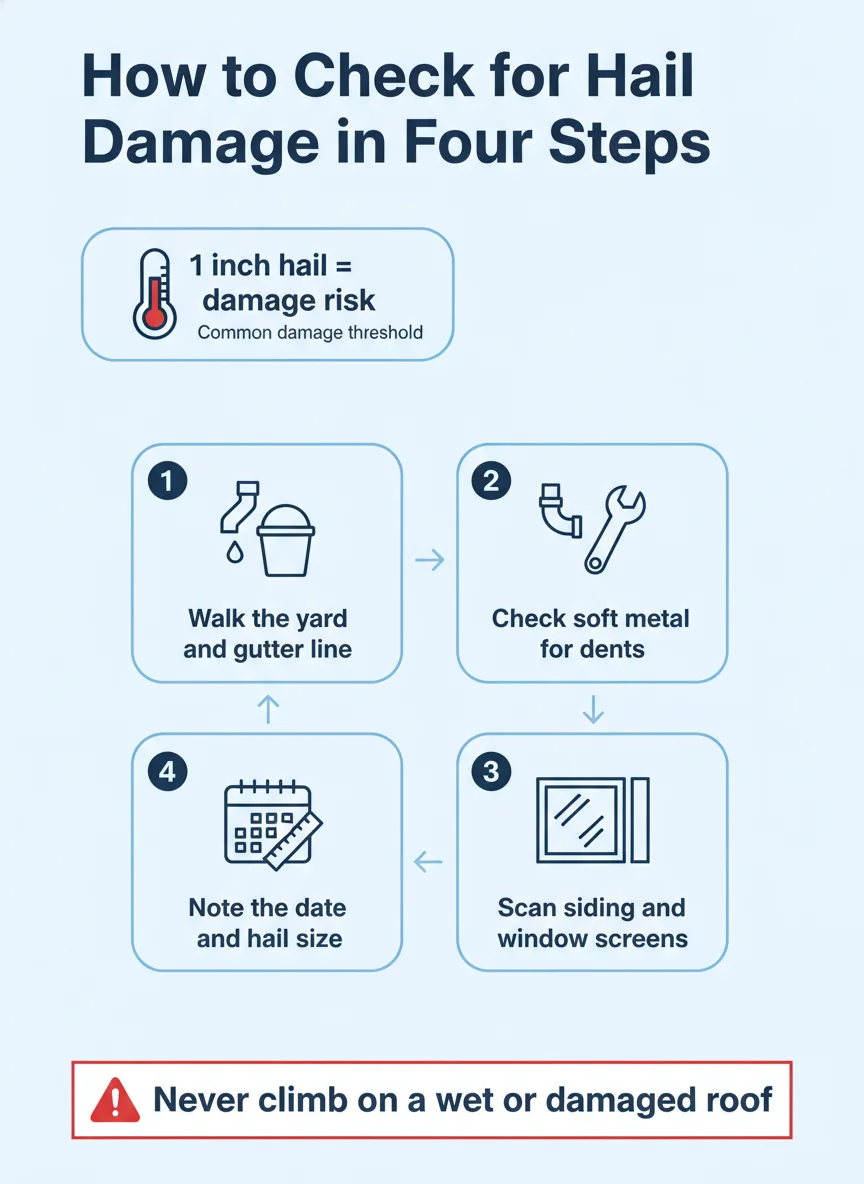
- Walk the perimeter: Circle your home slowly and look up at roof edges, valleys, and any low-slope sections you can see clearly from the yard.
- Check the gutter line: Look inside gutters and at downspout outlets for a gritty, sand-like buildup of granules washed off the shingles.
- Inspect soft metal: Check roof vents, exhaust caps, and flashing edges for small dents or dings that weren't there before the storm.
- Look at your AC unit: Dented or bent fins on an outdoor AC condenser are one of the clearest ground-level signs of significant hail.
- Check screens and siding: Torn window screens or small dings in vinyl or metal siding point to hail large enough to cause roof damage too.
- Note the hail size and date: Write down roughly how large the hail was and when the storm hit, since this matters for any insurance claim.
- Schedule a closer look: If two or more of these signs show up, it's worth having a professional check the shingles and flashing directly.
What These Signs Usually Mean
A Few Scattered Signs
If you only find one or two minor signs, like a slightly dented gutter corner or a tiny nick in a window screen, the storm may not have been severe enough to cause widespread roof damage. This doesn't mean you should ignore it entirely, especially if your roof is already older, but it may not warrant an urgent repair.
In these cases, it's reasonable to keep an eye on things over the following weeks. Watch for any new ceiling stains, listen for wind pulling at loose shingles, and factor the storm into your next scheduled roof checkup rather than treating it as an emergency.
Multiple Signs Across the Property
When you find dented gutters, dinged vents, bent AC fins, and torn screens all at once, that pattern usually means the hail was large and the storm was strong enough to affect the shingles too, even if you can't confirm it from the ground. This is the point where a closer inspection makes sense sooner rather than later.
This is also the situation where documenting the date and hail size matters most. If a claim ends up being filed, having that timeline and a record of the ground-level damage helps connect the dots between the storm and whatever a closer inspection finds on the roof itself.
What You Can Check Yourself and What Needs a Professional
Everything described above, walking the yard, checking gutters, looking at soft metal and siding, is safe and reasonable for a homeowner to do without any special equipment. These checks take fifteen or twenty minutes and give you a solid first read on whether a storm was serious.
What you shouldn't do yourself is get on the roof, especially right after a storm when surfaces are wet and debris may be loose. Bruised shingles and granule loss are also genuinely hard to spot with an untrained eye, even up close, since the damage can look like ordinary wear from a distance.
A licensed roofer brings the training to tell the difference between storm damage and age-related wear, and the right footing and tools to move across the roof surface safely. If your ground check turns up more than one or two warning signs, that's the point to bring someone in rather than guessing.
Keep an Eye on Your Roof After Every Storm
Hail damage rarely announces itself right away, which is exactly why a quick ground check after every significant storm is worth the fifteen minutes it takes. Catching the warning signs early, whether it's granules in the gutter or dents in your AC fins, gives you time to address a problem before it turns into a ceiling leak.
If your check turns up signs worth a second look, or if you're simply not sure what you're seeing, Full Life Roofing Construction can take a closer look and tell you plainly what the roof needs.
Frequently asked questions
Can you see hail damage from the ground?
You can see some signs, like dented gutters, dinged vents, and marked up window screens, but shingle damage is usually too subtle to spot without getting closer. Ground checks are a good first screen, not a final verdict.
What size hail causes roof damage?
Hail around an inch in diameter, roughly the size of a quarter, is the general point where shingle and soft metal damage becomes more likely. Smaller hail can still cause damage depending on wind speed and the age of the roofing material.
How long after a hailstorm should I check my roof?
It's worth doing a ground check within a day or two while the storm is fresh in your mind and any debris is still visible. A closer inspection can happen anytime after that, since hail damage doesn't get worse sitting on the roof the way a leak would.
Does hail damage always mean I need a new roof?
Not always. Minor granule loss or a few bruised shingles might only need a [shingle roofing](/services/shingle-roofing) repair, while widespread impact across the roof field often points toward replacement.
Will my insurance company inspect the roof for free?
Many insurers will send an adjuster out after a storm claim is filed, but policies and processes vary. Check with your insurance provider directly about their claims process for storm damage.