
Siding, installed right.
Siding is your home's first line of defense against wind and rain, and we install and repair it for homeowners across the Branson & Springfield Area alongside our roofing work.
Where a roof meets a wall is one of the most common places water finds its way into a home, and siding is the piece that either seals that transition or lets it fail. We install and repair siding for homeowners across the Branson & Springfield Area, from Sparta and Ozark through Springfield and out to Branson West. Since siding and roofing meet at every wall, valley, and dormer, we handle the flashing detail between them as part of the job, not as an afterthought. Whether you need a full re-side or repair to storm-damaged panels, our crews handle it.
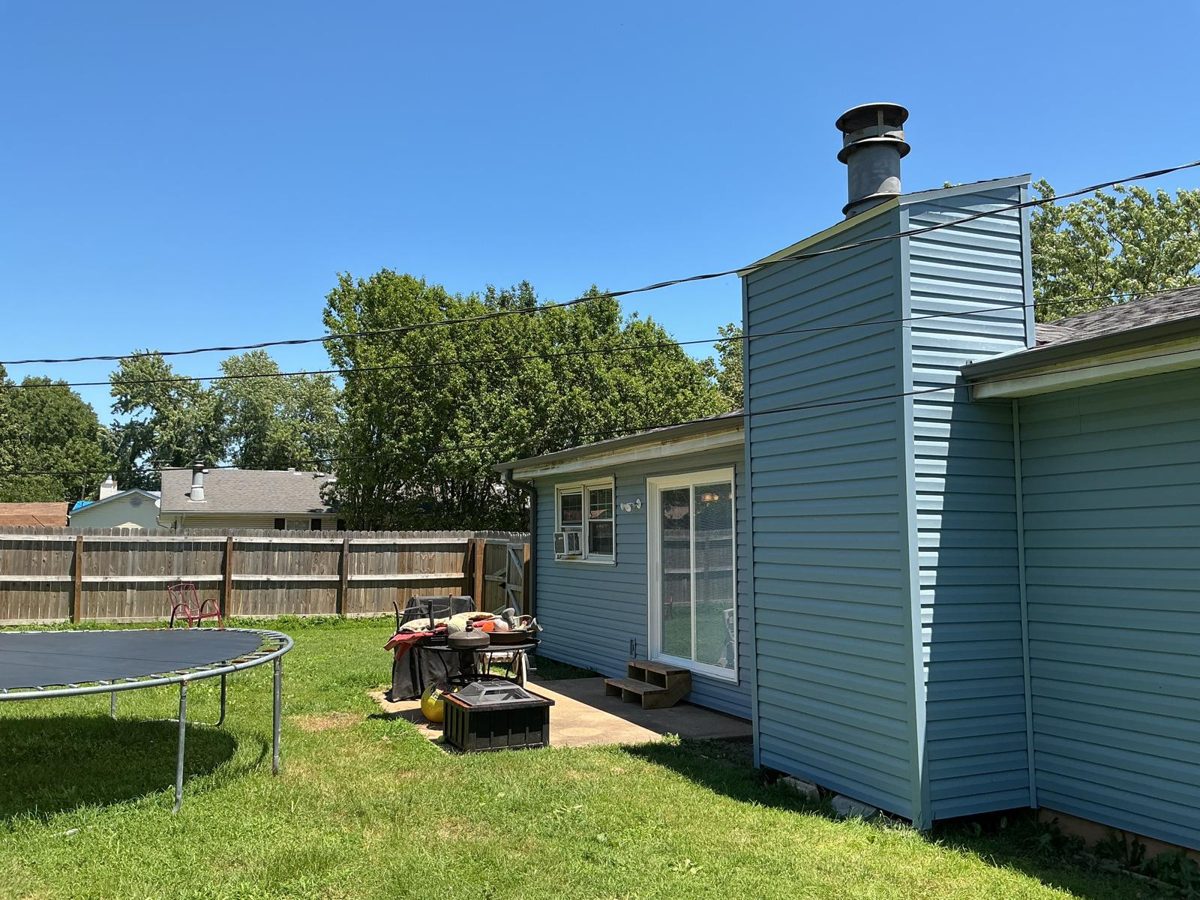
Is your siding letting moisture get behind the wall?
Moisture behind siding is usually a flashing problem before it's a siding problem, most often a missing kickout flashing where a roof slope meets a wall, sending water behind the siding instead of into the gutter. It can also come from prolonged exposure at trim and window transitions that were never sealed correctly. That hidden moisture rots wall sheathing long before it shows up as a stain or a soft spot on the outside, so by the time you notice the problem, there's usually more damage behind the wall than in front of it. We check the flashing along with the siding itself for that reason.
Warning signs to watch for
Soft or warped panels
Siding that flexes or feels soft to the touch has usually been absorbing moisture for a while, often at a seam or a poorly sealed edge.
Staining below a roof-to-wall transition
A stain or streak just below where a roofline meets a wall is a classic sign of a missing or failed kickout flashing sending water behind the siding instead of into the gutter.
Gaps or damage after a storm
Wind-driven debris and hail can crack panels or knock trim loose, and those gaps let water in even if the rest of the wall looks fine.
Fading or curb-appeal wear
Sun-faded, chalky siding isn't a structural problem on its own, but it's often paired with aging caulk and trim that no longer seal as well as they used to.
What is causing the problem
Missing kickout flashing
Where a roof slope runs into a wall, a small kickout flashing has to throw water into the gutter. Without it, water runs straight behind the siding, which is a classic cause of hidden rot.
Storm impact
Hail and wind-blown debris crack panels and loosen trim, and once a panel is compromised, water gets behind the whole section.
Poorly sealed transitions
Trim, windows, and corner joints that were never sealed properly let moisture in slowly over years rather than all at once.
Roofline flashing failures
If the roof's own flashing at the wall line has failed, no amount of siding repair fixes the leak until that's addressed first. That's something we check as part of any Shingle Roofing or Metal Roofing inspection.
What to expect during the visit
We inspect the siding panels and, just as important, the flashing transitions where the roof meets the walls. If a stain or soft spot points to hidden moisture, we check behind the siding for rot in the sheathing before closing anything back up. Storm-damaged panels get replaced to match as closely as possible, and any missing kickout flashing or trim sealing gets corrected as part of the repair, not left for next time. For larger jobs, we bring in the crew size the project calls for rather than stretching a small team across a big house.
Related services you may need
Siding damage often shows up alongside gutter and roofline issues, so it's worth having your gutters and roof flashing checked in the same visit.
The cost of waiting
A cracked panel or a small stain doesn't look like much from the driveway, but moisture behind siding works on the wall sheathing quietly for years before it becomes visible from outside. By the time paint is peeling or a panel feels soft, the rot underneath is usually more extensive than it appears. Catching it at the panel-and-flashing stage is a far smaller repair than replacing rotted sheathing and framing later.
Do you work on siding as well as roofing?
Yes, siding installation and repair is one of our core services, and we frequently handle it alongside roof work since the two systems meet at every wall and valley.
How long does a siding installation take?
Timelines depend on the size of the home and how much of the existing siding and trim needs to come off. We'll give you a specific schedule once we've looked at the job.
Can storm damage to siding be repaired instead of fully replaced?
Often, yes. If the damage is limited to a few panels or trim pieces, a matched repair is usually possible. Widespread cracking or long-term moisture damage behind multiple sections is more likely to call for a fuller replacement.
If your siding is cracked, stained, or just looking tired, give us a call and we'll take a look at both the siding and the flashing behind it. We cover the whole Branson & Springfield Area.