
Why shingle roofs in Branson wear the way they do
Branson sits in the rolling hills of the Ozarks, which means most homes here deal with more sun exposure on south and west facing slopes, along with shaded, tree-covered sections that stay damp longer after rain. That mix of intense sun and slow-drying shade puts uneven stress on a shingle roof over the years. One side bakes and dries out while the other holds moisture, and the granule loss and curling show up at different rates across the same roof.
For homeowners in Branson, Hollister, and the surrounding Branson & Springfield area, that means a roof inspection isn't just a formality. It's the only way to know whether the shaded side is holding up as well as the side that gets full sun all afternoon. A roof that looks fine from the driveway can be hiding a soft, aging section around back.
Why shingles age unevenly on hillside homes
Shingles are built to shed water and block UV light, but both jobs wear the material down over time. UV exposure dries out the asphalt and causes the surface granules to loosen and wash off in heavy rain. Once granules are gone, the shingle underneath is exposed directly to sunlight and heat, which speeds up cracking and curling.
Sun-facing slopes
South and west facing roof sections in Branson get the longest, hottest sun exposure of the day. That heat cycle, hot afternoons followed by cool nights, causes the asphalt to expand and contract repeatedly, which is one of the main drivers of shingle brittleness over a 15 to 20 year span.
These sections tend to show granule loss and curling first, often years before the shaded side of the same roof shows any wear at all. It's worth having a roofer check these areas specifically rather than assuming the whole roof ages at the same rate.
Shaded, tree-covered sections
Sections shaded by trees or hillside terrain dry out more slowly after rain, which can lead to moss, algae streaking, and trapped moisture at the shingle edges. Over time that trapped moisture works its way under the shingle tabs and into the decking, especially near valleys where water naturally collects.
These spots don't always show obvious surface wear the way sun-baked shingles do. A roofer checking for soft decking, dark streaking, or lifted tabs in these shaded zones often catches problems before they show up as a leak inside the house.
| Condition | Sun-facing slopes | Shaded/tree-covered areas |
|---|---|---|
| Main wear pattern | Granule loss, curling, brittleness | Moss, algae, trapped moisture |
| Typical timeline | Shows earlier in the roof's life | Shows later but can hide decking damage |
| What to watch for | Cracked or bald shingles | Dark streaks, soft spots near valleys |
What a shingle roofing system is actually made of
A shingle roof isn't just the visible shingles. Underneath sits an underlayment layer that acts as a water barrier, decking that ties the whole structure together, and flashing around chimneys, vents, and valleys that seals the seams where water tries hardest to get in. Ventilation, through ridge vents and soffit intake, keeps the attic from cooking the shingles from underneath.
When one part of that system fails, like a cracked flashing seal or a blocked vent, it puts extra strain on the rest. A shingle roofing job done right accounts for all of these layers, not just the top shingle course, which is why a full inspection covers more than what's visible from the ground.
Step-by-step: how to check your own shingle roof from the ground
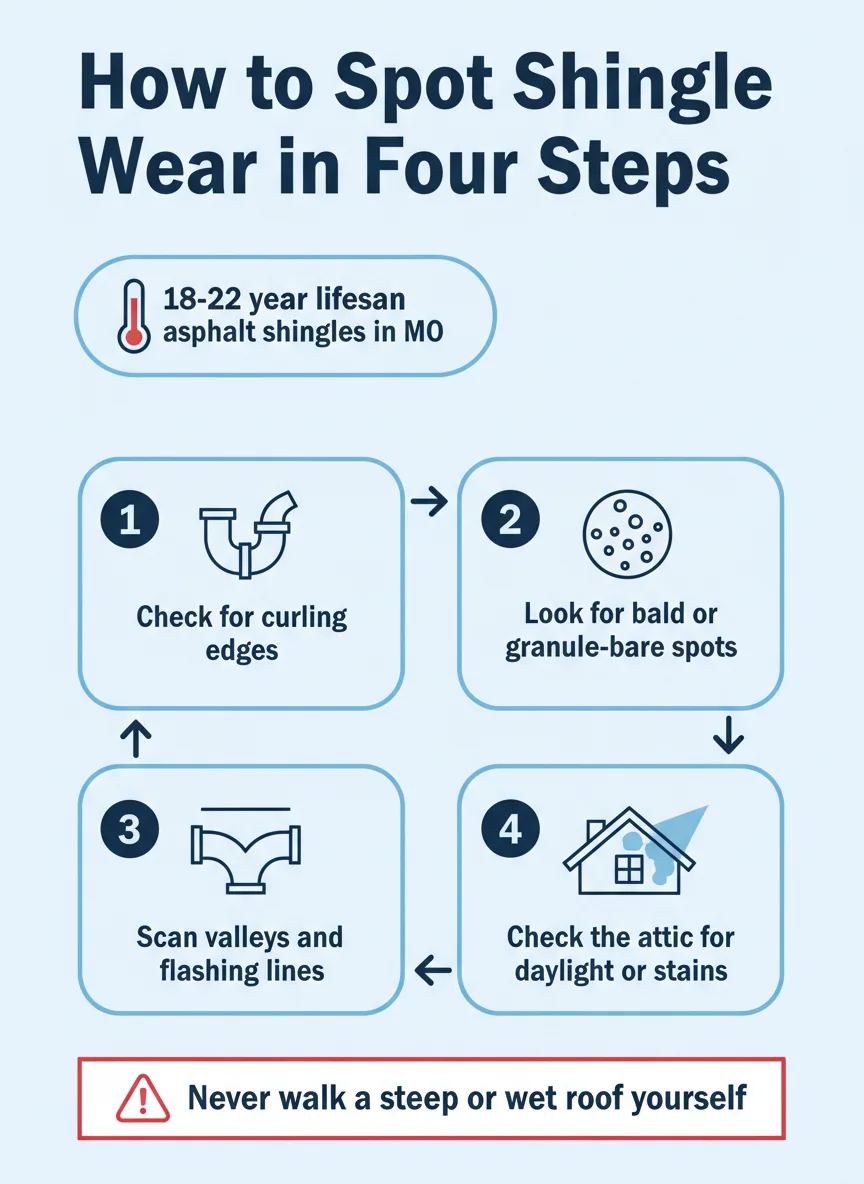
You don't need to climb up to catch the early warning signs. A pair of binoculars and a walk around the house can tell you a lot before you ever call a roofer out.
- Walk the perimeter: Look up at each slope from different angles, checking for shingles that look darker, curled, or patchy compared to the rest.
- Check the gutters: Granules collecting in the gutters or downspouts are a sign the shingles are shedding their protective surface.
- Look at valleys: Valleys collect the most water runoff and show wear, moss, or debris buildup faster than flat sections of roof.
- Scan the attic: Daylight coming through the decking, water stains, or a musty smell are signs moisture is already getting in.
- Note any sagging: A ridge line or slope that dips instead of running straight can point to decking damage underneath.
- Check flashing points: Chimneys, skylights, and vent pipes are common leak points where flashing seals can crack or pull loose over time.
What the signs actually mean once you spot them
Granule loss and curling
Granule loss on its own isn't an emergency, every shingle roof sheds some granules as it ages. But heavy, patchy loss combined with curling edges usually means that section of roof has moved past routine wear and into the zone where leaks become more likely with every storm. This is often covered in more depth in our post on old roof, curling or bald shingles.
If the curling is limited to one slope, a targeted repair may make sense. If it's spread across most of the roof, that's usually a sign the whole system is nearing the end of its service life rather than just one section needing attention.
Attic moisture and staining
Water stains on the attic decking or insulation almost always trace back to a specific failure point, whether that's a cracked flashing seal, a worn valley, or shingles that have lifted enough to let wind-driven rain underneath. Catching this early, before it spreads to the ceiling drywall below, keeps the repair smaller and cheaper.
If you're seeing staining on your ceiling already, that usually means the moisture has been building for a while. Our post on roof leak or ceiling stain walks through what that timeline typically looks like.
DIY vs calling a roofing pro
Ground-level checks, clearing debris from gutters, and watching for obvious sagging are all things a homeowner can reasonably do without a ladder. These give you an early warning system between professional inspections.
Getting on the roof itself is a different story. Steep hillside lots around Branson often mean steeper roof pitches too, and walking a shingle roof without the right footing or safety gear risks both a fall and further damage to the shingles themselves. Flashing repairs, valley work, and any decking replacement should go to a licensed roofer.
The general rule: if you can see it from the ground or the attic without climbing, you can flag it yourself. If fixing it means getting on the roof surface, that's a job for a crew with the right harnesses and experience working these slopes.
Getting ahead of it before the next season
Branson's mix of sun exposure, hillside shade, and seasonal weather swings means shingle roofs here don't age uniformly, and a once-a-year check goes a long way toward catching trouble on one slope before it spreads to the rest of the roof.
If you're noticing granule buildup in the gutters, a soft spot in the attic, or just haven't had a look in a few years, Full Life Roofing Construction serves homeowners throughout Branson and the surrounding area.
Frequently asked questions
How often should a shingle roof be checked in Branson?
Most roofers recommend a look once a year and again after any severe weather. Catching small issues, like a lifted shingle or a cracked seal, early keeps them from turning into a bigger repair.
Does the hilly terrain around Branson affect roofs?
Yes, homes on slopes or near tree cover often see more debris buildup and shaded areas that hold moisture longer. That combination can shorten shingle life if gutters and valleys aren't kept clear.
Can a shingle roof in Branson last the full expected lifespan?
With proper ventilation and maintenance, many shingle roofs reach the higher end of the typical 18 to 22 year range. Poor attic airflow or ignored repairs tend to cut that shorter.
What's the first sign a Branson roof needs replacing instead of repair?
Widespread granule loss, shingles that crack when lifted, or soft spots in the decking usually mean replacement makes more sense than another patch. A [shingle roofing](/services/shingle-roofing) estimate will spell out which situation you're in.
Do gutters matter as much as the roof itself in Branson?
They matter a lot, since clogged or undersized gutters push water back under the shingle edge and into the fascia. Pairing roof work with a [gutters](/services/gutters) check is common for homes in this area.