
Why the right questions matter more than the pitch
Any roofing salesperson can deliver a smooth pitch, but the questions you ask in return tell you far more about who you're actually hiring. A confident, established contractor will answer direct questions clearly and without hesitation, while a company cutting corners tends to get vague, change the subject, or lean on pressure instead of specifics.
This matters everywhere, but especially in a region like the Branson & Springfield area, where storm damage and seasonal wear bring plenty of contractors through looking for quick work. Knowing what to ask, and what a good answer sounds like, protects you from signing with the wrong crew.
Why some questions reveal more than others
Not every question carries equal weight. Some, like asking about a company's favorite shingle color, tell you almost nothing useful. Others get straight at whether the company is set up to actually stand behind its work if something goes wrong down the line.
Questions about accountability
Insurance, licensing where applicable, and who's actually doing the physical work are all questions about accountability. If a worker gets hurt on your property, or the job isn't finished as agreed, these are the details that determine whether you have any real recourse.
A company confident in its setup answers these instantly, often having the documentation ready before you even ask. Hesitation, deflection, or an answer like "don't worry about that" should make you pause before moving forward.
Questions about the work itself
Questions about materials, warranty terms, and what happens if weather interrupts the job get at whether the contractor has actually thought through the practical realities of the project. A company that's done the work many times over has clear, specific answers ready, not vague reassurances.
These answers also tend to reveal how the company handles problems generally, since a roof job rarely goes perfectly from start to finish. How they talk about handling a delay or an unexpected issue tells you a lot about how they'll handle one if it actually happens on your job.
| Question type | Good answer sounds like | Weak answer sounds like |
|---|---|---|
| Insurance | Specific coverage details, offers proof | "We're covered, don't worry" |
| Warranty | Clear terms, in writing, explains both types | "We'll take care of you" with nothing written |
| Crew | Direct employees, names who's doing the work | Vague about who shows up |
| Timeline | Realistic range, explains weather contingencies | Overly specific promise with no flexibility |
What a homeowner's checklist should actually include
Beyond the individual questions, it helps to think of the conversation as covering three areas: who's doing the work and are they accountable, what exactly is being installed and what's the warranty, and what happens if something unexpected comes up during the job. Covering all three gives you a much fuller picture than focusing on price alone.
A quote that only addresses price without touching on these areas is incomplete, even if the number looks good. The shingle roofing or metal roofing material you choose matters, but so does everything around the actual install.
Step-by-step: the ten questions to ask, in order
Here's a practical sequence for working through a conversation with a roofing contractor before you sign anything.
- Are you insured?: Ask specifically about general liability and worker's compensation coverage, and request documentation rather than just a verbal yes.
- Who's on the crew?: Ask whether the workers are direct employees or subcontractors, since that affects who's accountable if issues come up.
- What's the warranty?: Get clear on both the material manufacturer's warranty and the contractor's own workmanship warranty, and ask for both in writing.
- What's the payment schedule?: Ask when payments are due and be wary of any request for the full amount before work has started.
- How long have you served this area?: A company established in your region has more accountability and a track record you can actually verify.
- What happens if weather delays the job?: A realistic answer acknowledges weather as a normal part of roofing rather than promising a fixed date no matter what.
- Can I get references?: Ask for a couple of past customers you can contact directly, ideally from your own area.
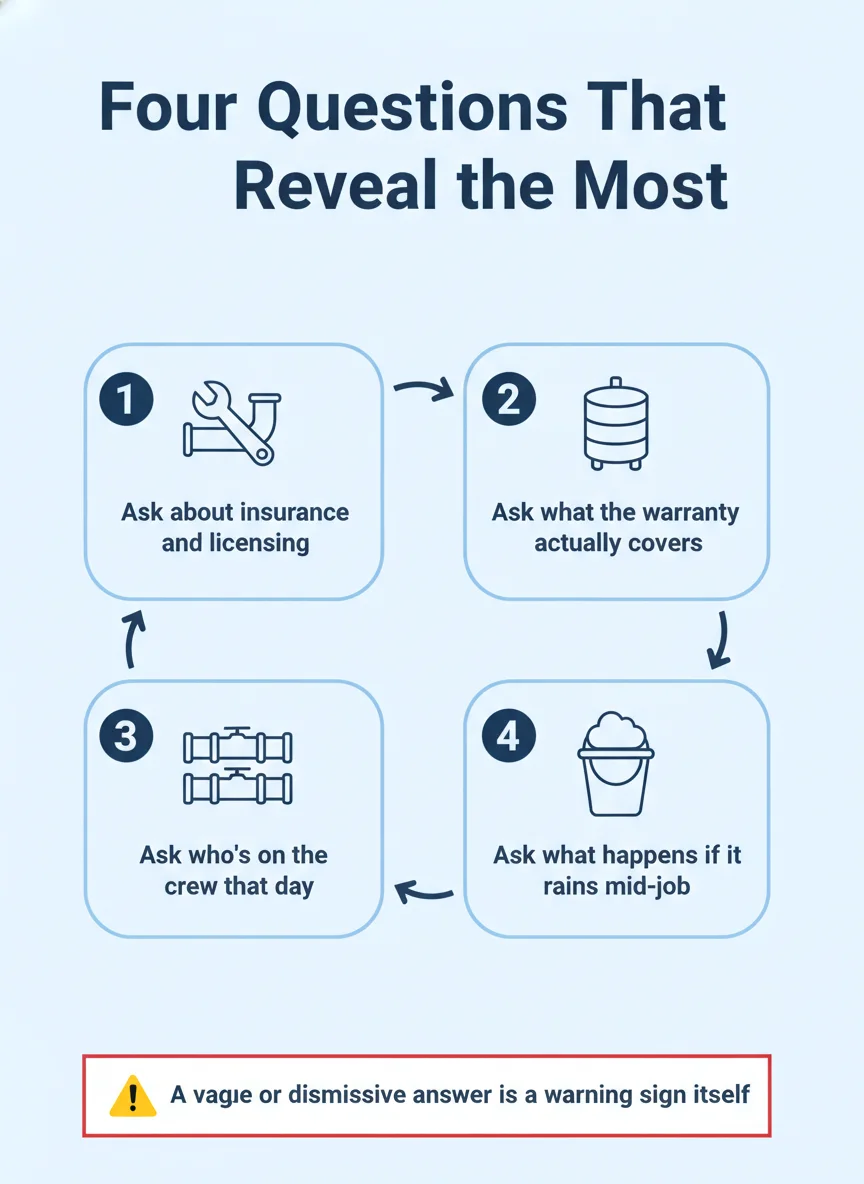
What good answers actually sound like in practice
On insurance and warranty
A strong answer on insurance sounds specific: naming the type of coverage and offering to provide documentation without being asked twice. On warranty, a good answer separates the manufacturer's material warranty from the contractor's workmanship coverage and explains what voids each one, ideally backed up with something in writing you can keep.
If either answer feels rushed or overly reassuring without specifics, that's worth noting. "We've got you covered" is not the same as a documented policy number or a written warranty term.
On timeline and payment
A solid answer on timeline acknowledges that weather can shift the schedule and gives you a realistic range rather than an overly specific promise that ignores the possibility of rain or wind delays. On payment, a fair schedule usually ties payments to progress on the job rather than requesting everything upfront before a single shingle is installed.
These answers won't sound flashy, and that's actually a good sign. Contractors overselling certainty on either point are often more focused on closing the sale than managing the realities of the job.
What you can vet yourself vs what needs the contractor's answer
Checking a company's reviews, confirming how long they've served your area, and asking for references are all things you can do entirely on your own before a contractor even sets foot on your property. This background work costs you nothing but time.
The technical questions, what warranty terms actually apply to your specific roof, what materials fit your home, and what the crew found during an inspection, require a direct conversation with the contractor since these details are specific to your property and situation. This is the part of the process where a good roofer walks you through their findings rather than handing you a generic answer.
Do the background research first, then use these ten questions to see how the contractor holds up in a direct conversation. The combination gives you a much clearer picture than either step alone.
Putting it into practice
Asking these ten questions before you sign anything takes maybe fifteen minutes, and the answers tell you more about a roofing company than any advertisement or online review ever could. A contractor confident in their work answers directly, in writing where it counts, without pressure to decide on the spot.
Full Life Roofing Construction is happy to walk through any of these questions directly with homeowners across the Branson & Springfield area before work ever begins.
Frequently asked questions
What's the most important question to ask a roofing contractor?
Asking about insurance coverage tends to reveal the most, since a company that's evasive about liability or worker's comp is often cutting corners elsewhere too. It's a simple question with a yes or no answer, and hesitation is telling.
Should I ask a roofer for references?
Yes, asking for a few past customers you can actually contact, ideally in your area, is reasonable and any established company should have them ready. Reviews online are helpful too, but a direct reference lets you ask specific questions about the experience.
How do I know if a roof warranty is any good?
A good warranty is explained clearly in writing, separating what the material manufacturer covers from what the contractor's own workmanship warranty covers. If a contractor can't explain the difference or won't put terms in writing, that's a sign the warranty may not mean much in practice.
Is it normal for a roofer to ask for payment upfront?
Some deposit for materials is common, but paying the full amount before any work begins is not standard practice and increases your risk if the job isn't finished. Ask directly about the payment schedule before signing anything.
What should I ask about the roofing crew itself?
Ask whether the crew doing the physical work is employed directly by the company or subcontracted, since that affects accountability if something goes wrong. It's also fair to ask how experienced the specific crew is with the type of roof you have.