
Why gutters take a beating in the Ozarks
Between spring downpours and the tree cover common around Branson, Forsyth, and the surrounding hills, gutters here do a lot of work. A system that's undersized, pitched wrong, or just worn out doesn't handle heavy rain the way it should, and the water has to go somewhere. Usually that somewhere is over the front edge or down behind the gutter itself.
The trouble is that gutter problems rarely announce themselves clearly. Overflow during a storm looks like a minor annoyance in the moment, but the water running down the same spot on the fascia board over and over is what eventually causes the real damage. By the time you notice soft or peeling wood, the issue has usually been building for a while.
What's actually causing the overflow
Gutters are a simple system in theory: catch water off the roof, carry it along a slight slope, and send it down a downspout away from the foundation. When any one part of that chain fails, water finds the path of least resistance, which is usually straight over the edge.
Clogged, undersized, or badly pitched gutters
Leaves and debris are the obvious culprit, but even a perfectly clean gutter can overflow if it was undersized for the roof area it drains or if the slope toward the downspout is too shallow. Both issues mean water simply moves through the system slower than it's arriving during a heavy rain.
A gutter that's pitched wrong often shows standing water even after a storm has passed, which is a good visual clue that the slope, not just debris, is part of the problem.
Failed hangers or rotted fascia behind the gutter
Hangers hold the gutter to the fascia board and keep it at the right pitch. When hangers pull loose or rust out, the gutter sags, pools water in low spots, and stops draining evenly, which leads to overflow even in a system that isn't clogged.
If the fascia behind the gutter is already soft, hangers have less to grip, which speeds up the sagging and creates a cycle where each problem makes the other worse.
| Symptom | Likely Cause | Where to Look |
|---|---|---|
| Water sheeting over the front | Undersized or clogged gutter | Along the length during rain |
| Sagging or dipping sections | Failed or loose hangers | Low points in the gutter run |
| Soft or peeling wood above windows/doors | Fascia rot from overflow | Directly behind the gutter |
| Water pooling after rain stops | Bad pitch toward downspout | Standing water in the trough |
The parts working together
A gutter system has more moving parts than most homeowners realize. The gutter trough itself catches water, hangers or brackets secure it to the fascia at the right slope, downspouts carry water down and away, and a drip edge at the roofline is supposed to direct water into the gutter instead of behind it.
The fascia board sits between the roof edge and the gutter, and it's often the first piece of wood to take damage when any other part of the system fails. Because it's mostly hidden behind the gutter, fascia rot can progress for a long time before it's visible from the ground.
Step-by-step: what a gutter and fascia visit looks like
A typical visit runs one to two hours and covers the whole system, not just the section that's visibly overflowing.
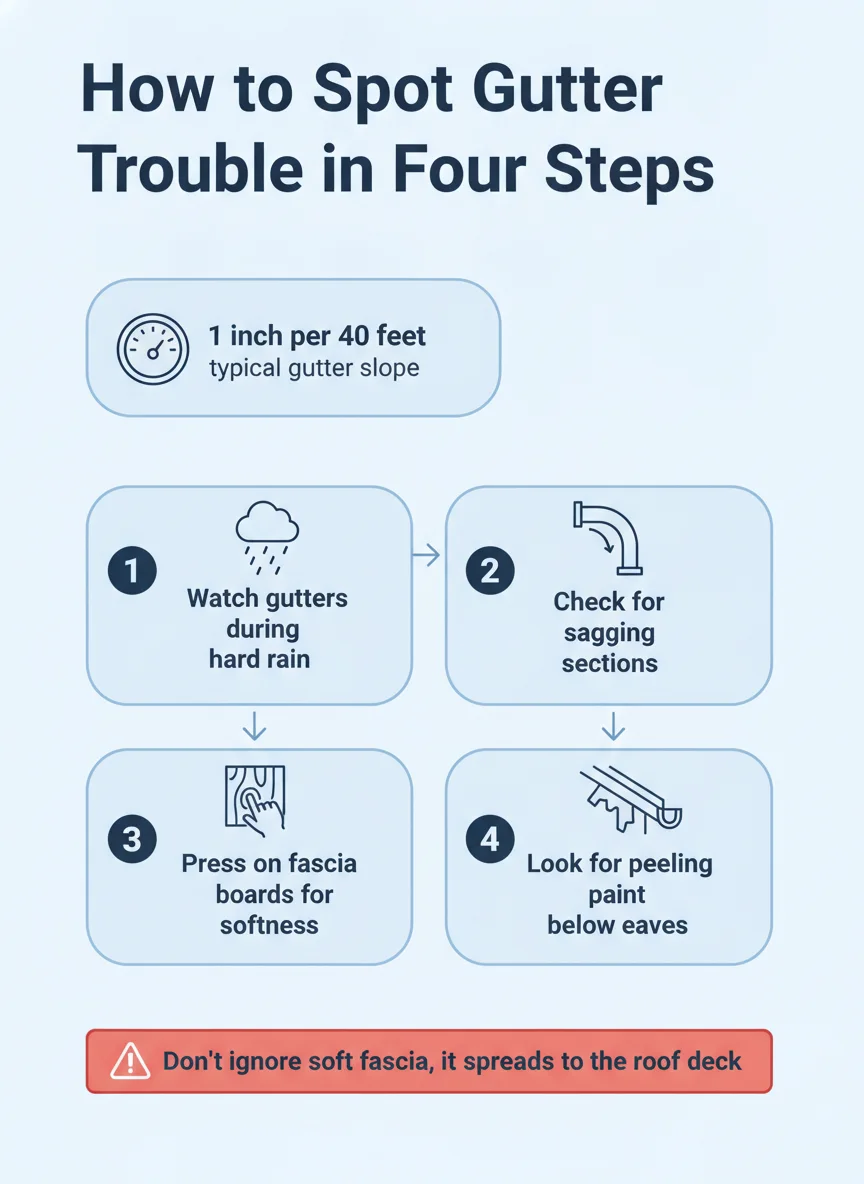
- Ground-level walk: We look at the gutter line from below first, noting sagging, staining on the siding, and any obvious separation at seams or corners.
- Ladder inspection: We check the gutter troughs for debris, standing water, and pitch, and confirm hangers are secure along the full run.
- Fascia check: We press on the fascia board behind the gutter in several spots to feel for soft or spongy wood, a clear sign of rot.
- Drip edge review: We check whether a drip edge is present and doing its job of directing water into the gutter rather than behind it.
- Downspout flow test: Where possible, we run water through the downspouts to confirm they're clear and draining away from the foundation.
- Findings and options: We explain what's causing the overflow or rot and walk through repair versus replacement based on what we found.
What the findings usually mean
If it's overflow without visible fascia damage
Overflow caught early, before it's reached the fascia, is usually the easier fix. It typically comes down to clearing debris, correcting pitch, or replacing a gutter section that's undersized for the roof area it's handling.
Addressing overflow at this stage is what keeps the fascia from becoming a second problem down the line, so it's worth acting on even when the damage looks minor.
If fascia rot is already visible
Soft or peeling wood behind the gutter means water has been sitting against it for a while, and it usually won't stop getting worse on its own. In most cases the gutter needs to come down to repair or replace the damaged fascia properly.
Left unaddressed, fascia rot can spread toward the roof deck and soffit, turning what started as a gutter issue into a larger repair. If you're already seeing water inside the house near the roofline, it's worth reading about roof leaks and ceiling stains as well.
DIY vs. calling a pro
Clearing debris out of gutters by hand, especially on a single-story home with a stable ladder, is a task many homeowners handle themselves. It's also reasonable to press on visible fascia from a ladder to check for obvious softness.
Correcting gutter pitch, replacing hangers, and any fascia repair should go to a professional, since getting the slope wrong creates the exact overflow problem you're trying to fix, and fascia work often means partially removing the gutter system to do it right.
A licensed Gutters contractor can also tell you quickly whether a section needs repair or the whole run is due for replacement, which isn't always obvious from the ground.
Getting ahead of the next storm
Gutter problems rarely go away on their own, and the longer overflow runs against the same stretch of fascia, the more expensive that repair gets. Catching sag, bad pitch, or early soft spots before the next heavy rain is usually the difference between a straightforward fix and a bigger one.
Homeowners around Forsyth and the surrounding towns dealing with overflow or soft fascia can have the whole system checked in one visit. Full Life Roofing Construction handles gutter repair and fascia work as part of the same trip.
Frequently asked questions
Why are my gutters overflowing even though they're not full?
Overflow usually means the gutter is undersized, clogged, or pitched wrong rather than simply full of debris. Water can spill over the front edge even in a gutter that looks mostly empty if the slope doesn't carry it to the downspout fast enough.
What causes fascia boards to rot behind gutters?
Fascia rot is typically caused by water overflowing or backing up behind the gutter over an extended period. Failed hangers, missing drip edge, or a gutter pulling away from the roofline all let water sit against the wood instead of running through the system.
Can I repair fascia without replacing the gutters?
Sometimes, if the rot is limited and caught early, but the gutter usually needs to come off to repair the fascia properly. It often makes sense to address both at once since the same water exposure caused both problems.
How do I know if my gutters need to be replaced instead of cleaned?
If overflow continues after a thorough cleaning, or if you see sagging, separated seams, or pulled hangers, the system likely needs repair or replacement rather than just a cleaning. Persistent overflow after cleaning is the clearest sign.
How long does a gutter inspection or repair visit take?
A typical visit runs one to two hours, covering the gutters, hangers, fascia, and drip edge condition. More extensive fascia repair can take longer depending on how much wood needs to be addressed.