
Roofing in a Wooded, Hilly Part of the Ozarks
Merriam Woods sits right in the middle of the terrain that defines this part of Missouri, hilly, heavily wooded, and close enough to Branson and Springfield that homeowners here deal with the same broad weather patterns as the rest of the region. What makes local roofs a little different comes down to tree cover and topography more than anything unusual about the climate itself.
Full Life Roofing Construction is based right here in Merriam Woods, which means daily familiarity with how homes in this specific area tend to age and what shows up first when a shingle roof starts to wear. Shingle roofing remains the most common choice for homes in town, and understanding what local conditions do to that roofing helps homeowners plan ahead instead of reacting to a leak.
Why Tree Cover Changes How a Roof Ages
A shingle roof under heavy tree cover ages differently than one out in the open, mostly because of shade and debris rather than direct storm exposure. Both factors are common in a town like Merriam Woods, where mature trees are part of the landscape on most properties.
Shade and Moisture Retention
Shingles under consistent shade dry out more slowly after rain than shingles on a roof with full sun exposure. That extra moisture retention can encourage algae or moss growth over time, which isn't just cosmetic, trapped moisture under growth can gradually degrade the shingle surface underneath it.
This doesn't mean shaded roofs age poorly across the board, plenty of tree-covered roofs perform well for their full expected lifespan. It just means periodic checks for moss or algae growth are worth doing, especially on north-facing slopes that get the least direct sun.
Debris in Valleys and Around Vents
Roof valleys, the angled seams where two roof planes meet, are natural collection points for falling leaves and small branches, and homes surrounded by mature trees see this more than most. Debris that sits in a valley holds moisture against the shingles longer than the rest of the roof and can eventually work its way under the shingle edge.
The same goes for areas around roof vents and low-slope sections, where debris tends to accumulate rather than wash off during rain. Clearing valleys and vent areas a couple times a year, especially after leaf drop, helps prevent this from becoming a bigger issue.
| Local factor | Effect on shingle roof | What helps |
|---|---|---|
| Heavy tree cover | Slower drying, moss and algae risk | Periodic roof cleaning and trimming |
| Debris in valleys | Trapped moisture, premature wear | Clearing valleys after leaf drop |
| Hilly terrain | Varied wind exposure by lot | Checking edges and ridges regularly |
| Overhanging branches | Physical wear from contact | Trimming branches back from roofline |
What's Under the Shingles That Local Homes Rely On
Underneath the visible shingle layer, a roof depends on underlayment for secondary water protection, flashing at every penetration and valley, and a ventilation system that moves air through the attic. In a wooded setting, ventilation matters even more than usual, since it helps offset some of the extra moisture retention that comes with consistent shade.
Roof valleys deserve particular attention on tree-covered lots because that's where flashing and shingle overlap work hardest to keep water moving off the roof despite debris buildup. A valley that's kept clear and properly flashed handles heavy rain far better than one that's been collecting leaves for a season or more.
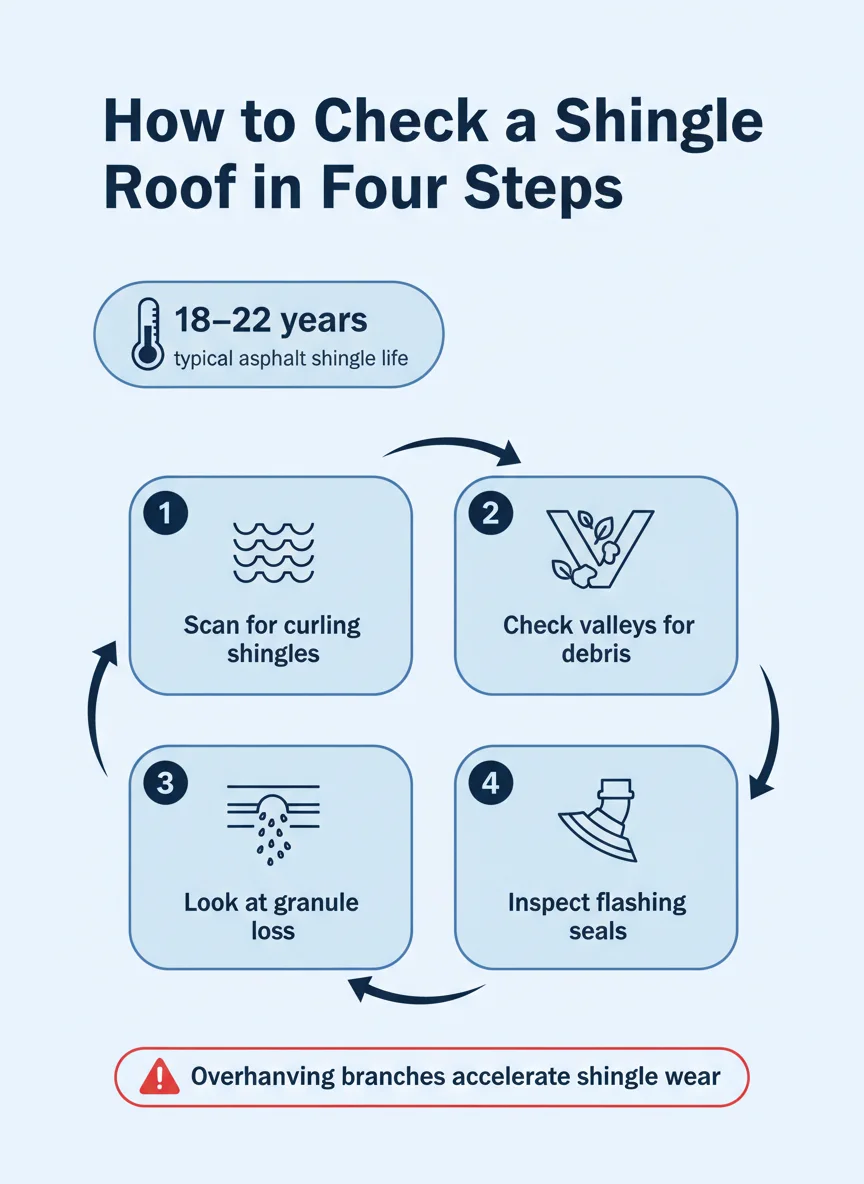
Step-by-Step: Checking a Shingle Roof in a Wooded Setting
Homeowners in Merriam Woods can catch a lot of tree-related wear early with a simple seasonal routine.
- Clear valleys after leaf drop: Remove accumulated leaves and small branches from roof valleys each fall to prevent trapped moisture from wearing shingles early.
- Check for moss or algae: Look at shaded, north-facing slopes for green or dark streaking, which signals moisture retention worth addressing.
- Trim back overhanging branches: Cut back limbs that touch or hang close to the roof, since repeated contact wears down shingle granules over time.
- Inspect vent areas for debris: Clear leaves and debris from around roof vents so they can continue moving air properly through the attic.
- Look at granule loss: Check gutters for accumulated granules, which can indicate shingles are wearing down faster than expected.
- Watch for ceiling stains after rain: Note any new staining after a heavy rain, especially near valleys, which often points to a developing leak.
What These Signs Usually Point To
If You Notice Moss or Dark Streaking
Moss or algae streaking on shaded shingles usually means moisture is sitting on the roof surface longer than it should. It's more of a maintenance issue than an emergency in most cases, but left unaddressed for years it can shorten the effective life of the shingles underneath it, especially if the growth is thick enough to trap water against the surface.
Cleaning it off with the right method, rather than pressure washing, which can strip granules, is usually enough to slow further growth. If the streaking keeps returning quickly after cleaning, that can be a sign the surrounding tree cover needs some trimming to let more sunlight and airflow reach that section of roof.
If Valleys Are Wearing Faster Than the Rest of the Roof
A valley that shows more wear, granule loss, or discoloration than the rest of the roof is usually the result of repeated debris buildup and the moisture that comes with it. This is common enough on tree-covered lots that it's worth checking valleys specifically rather than assuming the whole roof is aging evenly.
If a valley has already developed a leak, that's a sign the debris buildup has been going on for a while, since valleys are typically better protected by flashing than the rest of the roof. At that point it's worth having a licensed roofer look at both the shingles and the flashing underneath before assuming a simple cleaning will solve it.
What Homeowners Can Do and When to Call a Roofer
Clearing debris from roof valleys and around vents, trimming back overhanging branches, and watching for moss or ceiling stains are all reasonable tasks for a homeowner to keep up with, especially at ground level or with basic gutter cleaning tools. These small habits go a long way toward offsetting the extra wear that comes with heavy tree cover.
Getting on the roof itself to clean moss, inspect flashing in valleys, or assess granule loss up close is better left to a professional, since roof surfaces on hilly, tree-shaded lots can stay damp and slippery longer than roofs in the open. Improper cleaning methods can also strip protective granules and shorten shingle life rather than extend it.
If a seasonal check turns up moss that keeps coming back, a valley that's showing more wear than the rest of the roof, or any ceiling staining after rain, that's the point to bring in a licensed roofer for a closer look. Catching these local, tree-related issues early usually means a repair rather than a full replacement.
Keeping a Shingle Roof Solid in Merriam Woods
Merriam Woods homes get a lot of benefits from the tree cover that defines the area, shade, privacy, and a genuinely nice place to live, but that same tree cover asks a little more of a shingle roof than a wide-open lot would. A little seasonal attention to valleys, vents, and shaded slopes keeps that tradeoff working in the homeowner's favor.
For homeowners weighing whether a specific problem area needs a repair or whether it's time to think about full replacement, our guide on shingle roofing repair or replace walks through that decision in more depth. Full Life Roofing Construction is based right here in Merriam Woods and works on shingle roofs throughout the surrounding area.
Frequently asked questions
How long does a shingle roof last in Merriam Woods?
Asphalt shingles typically last 18 to 22 years across the industry, though tree cover, roof pitch, and how well a roof is ventilated can push that number in either direction. Homes with heavy shade or debris buildup in valleys sometimes see wear develop sooner than that range.
What roofing issues are common in Merriam Woods specifically?
Homes in wooded, hilly areas like Merriam Woods tend to deal with debris buildup in valleys and around vents, along with shingle wear from consistent shade and moisture retention. Regular clearing of leaves and branches helps offset those conditions.
Do I need a full roof replacement or just a repair?
It depends on how widespread the damage is and how old the roof already is. A roof nearing the end of its expected lifespan with multiple problem areas usually makes more sense to replace, while isolated issues on a newer roof are often a straightforward repair.
Does Full Life Roofing Construction work in Merriam Woods?
Yes, Full Life Roofing Construction is based in Merriam Woods and serves homeowners there along with the wider Branson and Springfield area. Being local to the area means familiarity with the terrain and tree cover homes here typically deal with.
What should I look for before calling a roofer in Merriam Woods?
Look for curling or missing shingles, debris buildup in roof valleys, and any staining on ceilings that could indicate a leak. Taking a few photos of what you notice makes the conversation with a roofer more productive when you do call.