
Storms Move Through the Ozarks Fast, and Roofs Take the Hit
Homes across Branson, Springfield, and the surrounding towns see their share of severe weather, from fast-moving thunderstorms with strong straight-line wind to hail that can range from pea-sized to much larger. Roofs bear the brunt of it, since they're the first line of defense against both impact and wind uplift.
What makes storm damage tricky is that it doesn't always look dramatic right after the fact. A roof can take a real hit and still look mostly normal from the driveway, which is exactly why so many homeowners skip a check after a storm passes and end up dealing with a leak weeks or months later.
Why Hail and Wind Damage Different Parts of a Shingle
Hail and wind cause damage in different ways, and knowing the difference helps explain why one storm can leave a roof looking fine while another does real harm even with less obvious impact.
Hail Bruising and Granule Loss
Hail hits a shingle like a small hammer, and depending on the size and speed of the hailstone, it can knock loose the protective granules embedded in the shingle surface or leave a soft bruised spot underneath. That granule layer is what shields the shingle from UV exposure, so losing it accelerates wear even where the shingle didn't crack.
Granule loss is one of the more common signs we look for, both on the roof and collected in gutters, since a heavy hail event can knock loose enough granules to notice right away. A bruised shingle might not leak today, but it's weaker and more likely to fail early.
Wind-Lifted, Creased, or Missing Shingles
Strong wind gets underneath a shingle's edge and either tears it off completely or lifts it just enough to crease the seal strip without fully removing it. A creased shingle can look like it's still doing its job while actually letting water sneak underneath during the next rain.
Missing shingles are the obvious case, but the creased and lifted ones are often the sneakier problem, since they're easy to miss from the ground and don't announce themselves the way a bare patch of decking does.
| Damage Type | How It Looks | How It Fails |
|---|---|---|
| Hail bruising | Small dark soft spots, granule loss | Weakens shingle, speeds up UV wear |
| Wind-lifted shingle | Creased or slightly raised edge | Breaks the seal, lets water in over time |
| Missing shingle | Visible gap in the roof surface | Exposes decking directly to weather |
Impact Damage to Shingles and Possibly the Decking
In a bad enough hail event, damage isn't limited to the shingle surface. Repeated impacts in the same area can weaken the decking underneath, especially on an older roof where the shingles and structure beneath them have already lost some of their original strength.
This is part of why a thorough inspection checks more than just the shingle surface. A roofer looking at storm damage is also thinking about how the roof's overall condition and age factor into how much impact it can absorb without deeper problems.
Step-by-step: What Happens During a Storm Damage Inspection
A documented storm inspection typically takes one to two hours, focused on checking every roof plane and recording exactly what's found.
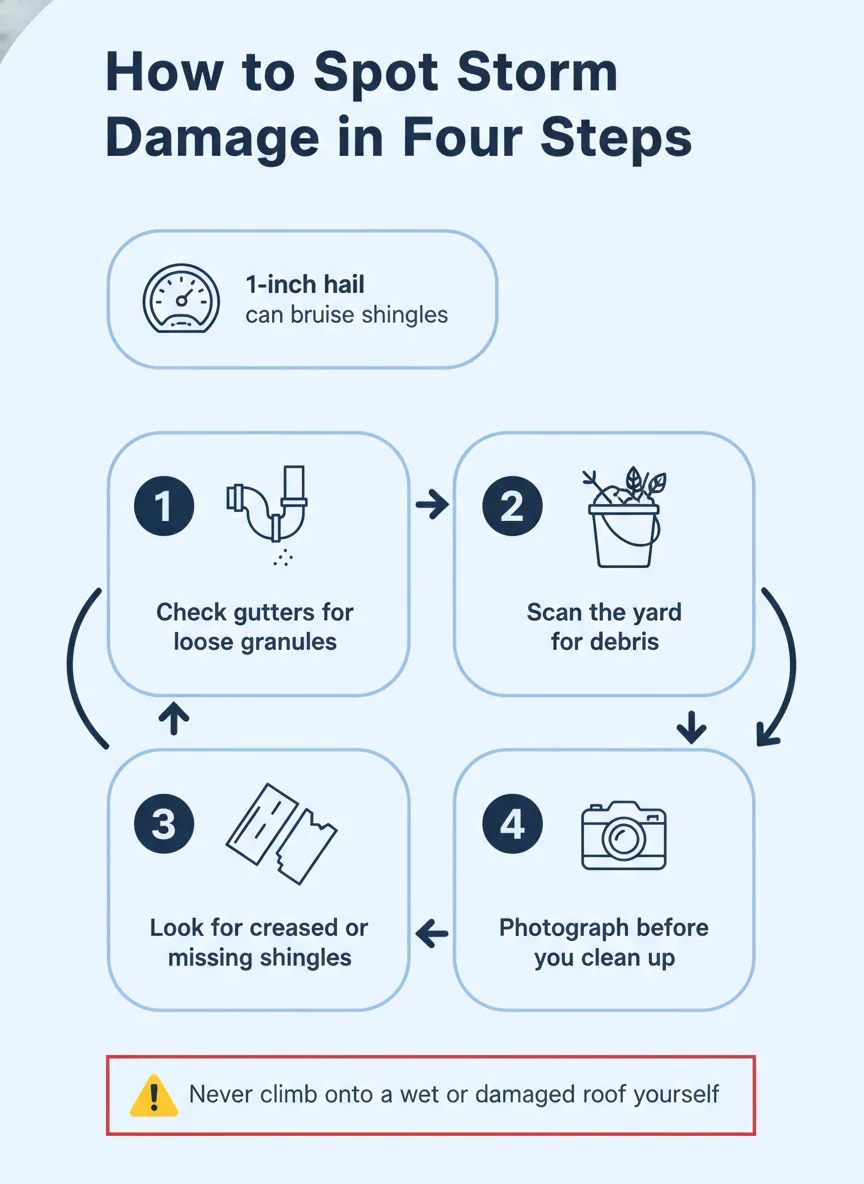
- Ground-level walk: We start by checking the yard, gutters, and downspouts for granules, hail dents in soft materials, and other clues about storm severity.
- Full roof walk: We check every slope of the roof, not just the side facing the storm, since wind and hail can hit a roof from more than one direction.
- Photo documentation: We photograph any bruising, creasing, or missing shingles up close so there's a clear visual record of the damage found.
- Check flashing and penetrations: We look at chimneys, vents, and valleys since these spots often take extra stress in high wind.
- Explain what we found: We go over the findings with you plainly, including which damage affects the roof's performance and which is cosmetic.
What Storm Damage Actually Means for Your Roof
When It's Mostly Cosmetic
Some granule loss and minor bruising don't threaten the roof's ability to keep water out right away, though they do shorten how long the shingles will last overall. In these cases we'll tell you straight that repair isn't urgent, but that it's worth keeping an eye on.
Cosmetic damage is still worth documenting, especially if more severe damage shows up nearby, since it helps build a full picture of what the storm did to the roof as a whole.
When It Affects the Roof's Performance
Creased shingles, missing sections, or bruising heavy enough to compromise the shingle mat are a different story. These spots are actively vulnerable to leaks and tend to get worse with the next rain or wind event rather than staying the same.
When we find this kind of damage, we'll walk you through what a repair involves, and whether it makes sense to address the affected section or look at the roof more broadly depending on its age and condition.
DIY vs Calling a Pro
You can do a lot from the ground safely. Walk the yard for granules and debris, check gutters and downspouts, and take note of anything unusual like dented vents or damaged siding, since that's often a sign the roof took a similar hit.
Getting up on the roof after a storm is a different matter entirely. Wet or damaged shingles are more slippery and less stable underfoot, and spotting subtle damage like bruising or creasing takes a trained eye that knows what it's looking at.
A professional inspection also gives you documentation that holds up, with clear photos and a plain explanation of what's cosmetic versus what needs repair. That's worth more than a homeowner's guess, especially if you're trying to decide how urgently to act.
After the Storm Passes
Storm damage doesn't always show up the day it happens. Sometimes it's a slow leak weeks later that finally reveals a shingle that got creased in a wind event nobody thought twice about at the time.
If a storm has come through your area recently, it's worth having the roof checked before you assume everything's fine, especially on homes with metal roofing or older shingle roofs that have already weathered a few seasons. If you're also noticing a stain inside, our guide on ceiling leaks covers what that usually means. Full Life Roofing Construction inspects storm damage across Branson, Springfield, and the surrounding towns.
Frequently asked questions
How do I know if my roof has hail damage?
Hail damage often shows up as small dark bruises on shingles where granules have been knocked loose, and you may also notice extra granules collecting in your gutters or at downspouts. Some hail damage isn't visible from the ground, which is why a close inspection matters.
Does wind damage always mean missing shingles?
No, wind damage can also mean shingles that got creased or lifted but stayed in place, which weakens their seal without leaving an obvious gap. These lifted shingles are more prone to leaking and more likely to blow off in the next storm.
Should I file an insurance claim before or after the inspection?
It's usually best to have the damage documented by a roofer first so you know what you're actually dealing with before starting a claim. A clear, photographed inspection gives you accurate information to work from either way.
How soon after a storm should I get my roof checked?
Sooner is better, since damaged shingles left exposed can let water in during the next rain even if there's no visible leak yet. Getting an inspection scheduled soon after a storm also means any damage is easier to document while it's fresh.
Can a roof look fine from the ground but still have storm damage?
Yes, this is actually common. Granule loss, bruising, and creased shingles are often only visible up close, which is why a ground-level look usually isn't enough to rule out damage after a serious storm.