
Aging Roofs Are Common Across Older Homes in the Region
A lot of homes throughout Branson, Springfield, and the surrounding towns are old enough that their original roof is well past the point of looking fresh. Asphalt shingles handle a lot over the years, sun, rain, ice, and wide temperature swings, and eventually that wear catches up with them regardless of how well they were installed.
The signs of an aging roof don't usually show up all at once. They creep in gradually, a curled edge here, a bald patch there, until one day the whole roof looks tired even though nothing dramatic ever happened to it. Recognizing those early signs gives you time to plan a replacement on your own schedule instead of being forced into one.
Why Shingles Curl and Go Bald as They Age
Asphalt shingles are built with a mat coated in asphalt and topped with protective granules, and both of those layers break down over time from repeated heat and cooling cycles plus UV exposure.
Shingles at the End of Their Service Life
As shingles reach the tail end of their expected lifespan, the asphalt itself starts to dry out and lose flexibility. That's what causes the edges to curl upward or the tabs to cup, since the material can no longer lay flat the way it did when it was new.
This kind of wear tends to show up roof-wide rather than in one isolated spot, since the whole roof was installed at the same time and has seen the same weather exposure over the years.
Granule Loss Exposing the Shingle Mat
The granule layer on top of a shingle protects it from direct UV exposure, and as that layer wears thin, the asphalt underneath starts breaking down faster. You'll often see shiny or dark bald patches where the granules have worn away completely.
Once the mat itself is exposed, deterioration speeds up noticeably, since the shingle has lost its main defense against sun damage. This is one of the clearer signs that a roof has moved from aging to actually needing replacement.
| Sign | What It Means | Urgency |
|---|---|---|
| Curling edges | Asphalt losing flexibility with age | Plan a replacement soon |
| Bald patches | Granule loss exposing the shingle mat | Get it checked, wear is accelerating |
| Cracking underfoot | Shingles becoming brittle | Avoid walking the roof, schedule an inspection |
What's Happening to the Shingle Itself
A shingle is really a layered material, a fiberglass or organic mat, asphalt coating for waterproofing, and a top layer of mineral granules for UV protection and appearance. Each layer plays a role, and once one starts failing, the others tend to follow.
That's why an aging roof often shows several symptoms at once, curling, granule loss, and brittleness. They're all downstream of the same underlying breakdown of the shingle's materials, just showing up in different ways depending on which part of the roof gets the most sun or heat.
Step-by-step: What Happens During a Lifespan Inspection
A lifespan inspection usually takes about an hour, focused on how widespread the wear is and what it means for the roof going forward.
- Check shingle condition: We walk the roof checking for curling, granule loss, and brittleness across each slope, since wear can differ by exposure direction.
- Note the roof's age: We factor in how old the roof is, since that context helps explain whether the wear we're seeing is typical or premature.
- Check for hidden issues: We look for soft spots or signs of moisture that might mean the decking underneath has already been affected.
- Check attic ventilation: Poor ventilation traps heat and can speed up wear, so we check whether that's a factor in what we're seeing.
- Give you a straight read: We'll tell you plainly whether you're looking at a few more years of life left or whether it's time to plan a replacement.
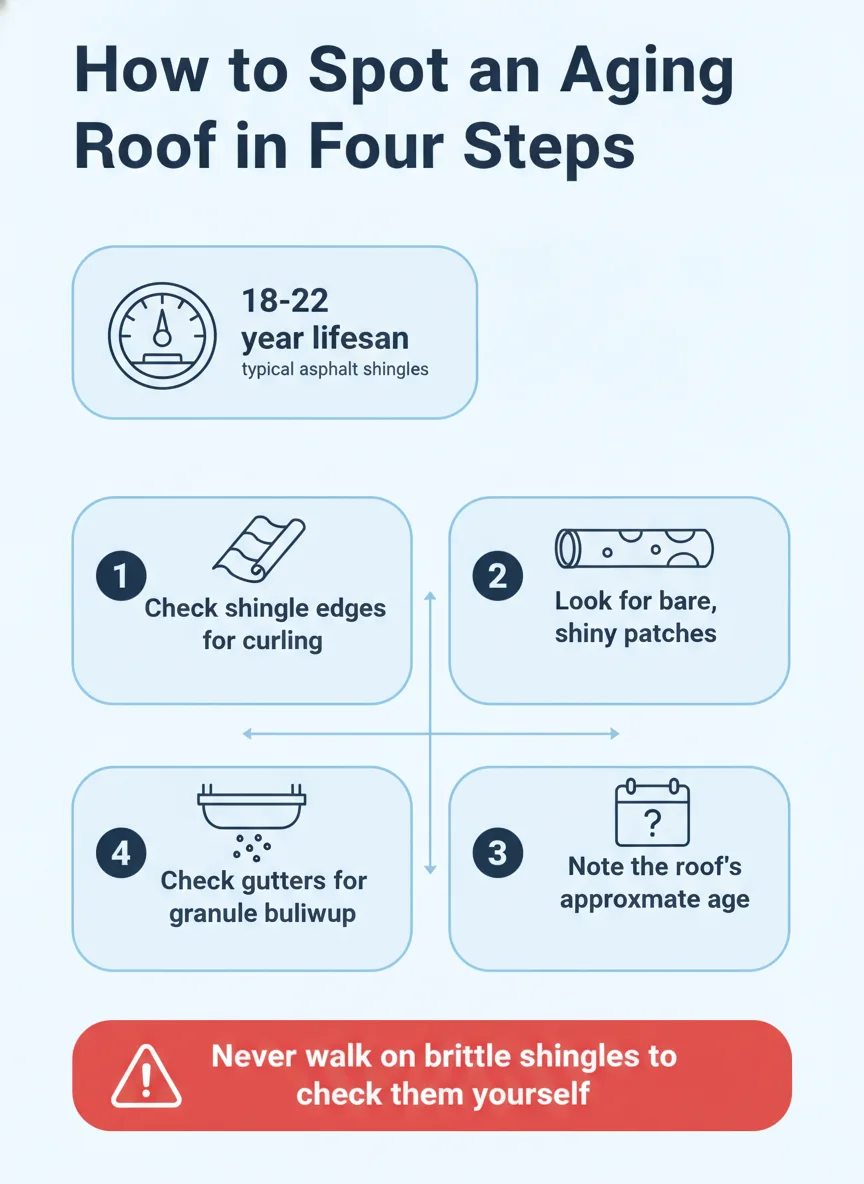
What Curling and Bald Shingles Tell Us About the Whole Roof
Localized Wear on One Slope
Sometimes the wear is heavier on one side of the roof, usually the side that takes the most direct afternoon sun. In these cases, the rest of the roof may still have some life left even while that one slope is aging faster.
This uneven wear is worth noting because it affects timing. A homeowner might get a few more years out of the shaded slopes while the sunniest side needs attention sooner.
Roof-Wide Wear
When curling and granule loss show up evenly across the whole roof, that's a sign the shingles are simply reaching the end of their expected service life together, which is the more common pattern on a roof that's getting up in years.
In this case, a full replacement usually makes more practical sense than patching individual sections, since the rest of the roof isn't far behind whatever section prompts the repair.
DIY vs Calling a Pro
You can spot a lot of this from the ground with a good look or a pair of binoculars, curling edges, obviously bald patches, or granules piling up in your gutters after a rain. Noting roughly how old your roof is also helps frame what you're looking at.
Getting on the roof to check brittleness or walk the surface is a different matter, since aging shingles can crack or break underfoot in a way that damages them further or puts you at risk. That kind of close inspection is best left to someone experienced with older roofs.
A professional read on lifespan also carries more weight when you're deciding on timing. A roofer who's seen a lot of aging roofs can tell you whether you've got a season or two left or whether it's smarter to plan the replacement now, before wear turns into a leak or storm damage becomes a bigger risk.
Planning Ahead Instead of Reacting
An aging roof rarely fails all at once. It gives you signs first, curling shingles, bald patches, granules in the gutter, and each one is a chance to plan a replacement on your own timeline rather than scrambling after a leak shows up mid-storm.
If your roof is showing these signs, it's worth getting a straight read on how much life it has left, whether you're weighing shingle roofing again or considering metal roofing for the next go-round. Homeowners in Hollister and nearby towns dealing with a leak already might also want our guide on ceiling stains. Full Life Roofing Construction walks homeowners through that decision without any pressure to rush it.
Frequently asked questions
What causes shingles to curl at the edges?
Curling usually happens when shingles reach the end of their service life and the asphalt starts losing flexibility, often made worse by heat cycling over many summers. It can also happen faster on a roof with poor attic ventilation trapping heat underneath.
Is granule loss always a sign I need a new roof?
Not always, some granule loss is normal in the first year or two after installation as loose granules wash off. But steady, ongoing granule loss on an older roof usually means the shingles are wearing thin and losing their protective layer.
How long do asphalt shingles usually last?
Asphalt shingles typically last around 18 to 22 years depending on the material, installation quality, and how much sun and weather exposure the roof sees. Roofs on the higher-heat side of a home or with poor ventilation often wear out sooner.
Can I replace just the curling shingles instead of the whole roof?
Sometimes, if the curling is limited to one section and the rest of the roof is in decent shape. But widespread curling across the whole roof usually points to age-related wear that's affecting all the shingles at a similar rate, which makes a full replacement the more practical option.
Do bald or curling shingles mean my roof is about to leak?
Not necessarily right away, but they mean the shingles have lost much of their protective ability and are more vulnerable to wind, rain, and further damage. It's a sign to get ahead of a replacement before a leak forces the issue.