
Why shingle roofs in Forsyth face their own set of conditions
Forsyth sits close to Table Rock Lake, and that proximity to water brings a level of humidity that inland homes in the region don't deal with quite as much. Higher moisture in the air means shaded roof sections, especially north-facing slopes or spots under tree cover, tend to stay damp longer after a rain. Over years, that moisture holds onto pollen, dirt, and organic debris, which is exactly what moss and algae need to take hold.
For homeowners in Forsyth and nearby Kimberling City or Branson West, this means a shingle roof might show different wear patterns than one further inland. It's not a reason to worry, but it is a reason to have the roof looked at with those specific conditions in mind rather than a generic checklist.
How lake proximity and weather swings wear a shingle roof
Shingles are designed to handle both UV exposure and water runoff, but the balance between those two stresses shifts depending on a home's setting. Near the lake, the added humidity and cooler shaded pockets change how fast certain kinds of wear show up compared to a roof baking in full, dry sun all day.
Moisture retention on shaded slopes
North-facing roof sections and any part of the roof shaded by trees near the water tend to dry more slowly after rainfall. That slower drying time is what allows moss and algae streaking to establish over a few seasons. Left unchecked, moss holds water directly against the shingle surface, which speeds up granule loss underneath it.
This kind of wear is often more cosmetic at first, dark streaking or a patch of green moss, but it's worth addressing before it spreads, since moss roots can work their way under shingle tabs and lift them slightly over time.
Wind exposure on open lots
Homes on more open lots near the lake, without much tree cover to break the wind, can see stronger gusts across the roof surface, particularly during spring and fall weather changes. Wind lifts shingle edges just slightly with each gust, and repeated flexing over time weakens the adhesive seal strip that holds each shingle down.
This is one of the more common issues covered in our post on hail or wind damage after a storm, which walks through what wind-related lifting typically looks like up close.
| Condition | Shaded/lakeside slopes | Open, wind-exposed lots |
|---|---|---|
| Main wear pattern | Moss, algae, moisture retention | Lifted shingle edges, weakened seal strips |
| Typical timeline | Builds gradually over seasons | Can happen suddenly during storm events |
| What to watch for | Green or dark streaking | Shingles that flap or look uneven |
What's actually under the shingles
A shingle roof is a layered system. Underneath the visible shingles sits a water-resistant underlayment, then the decking that the whole structure is fastened to, with flashing sealing the seams around chimneys, vents, and valleys. Proper attic ventilation, through ridge and soffit vents, keeps heat and moisture from building up underneath the whole assembly.
Near the lake, that ventilation matters even more, since trapped humid air in a poorly vented attic combines with outside moisture to speed up decking rot from underneath. A shingle roofing replacement done right addresses ventilation alongside the shingles themselves.
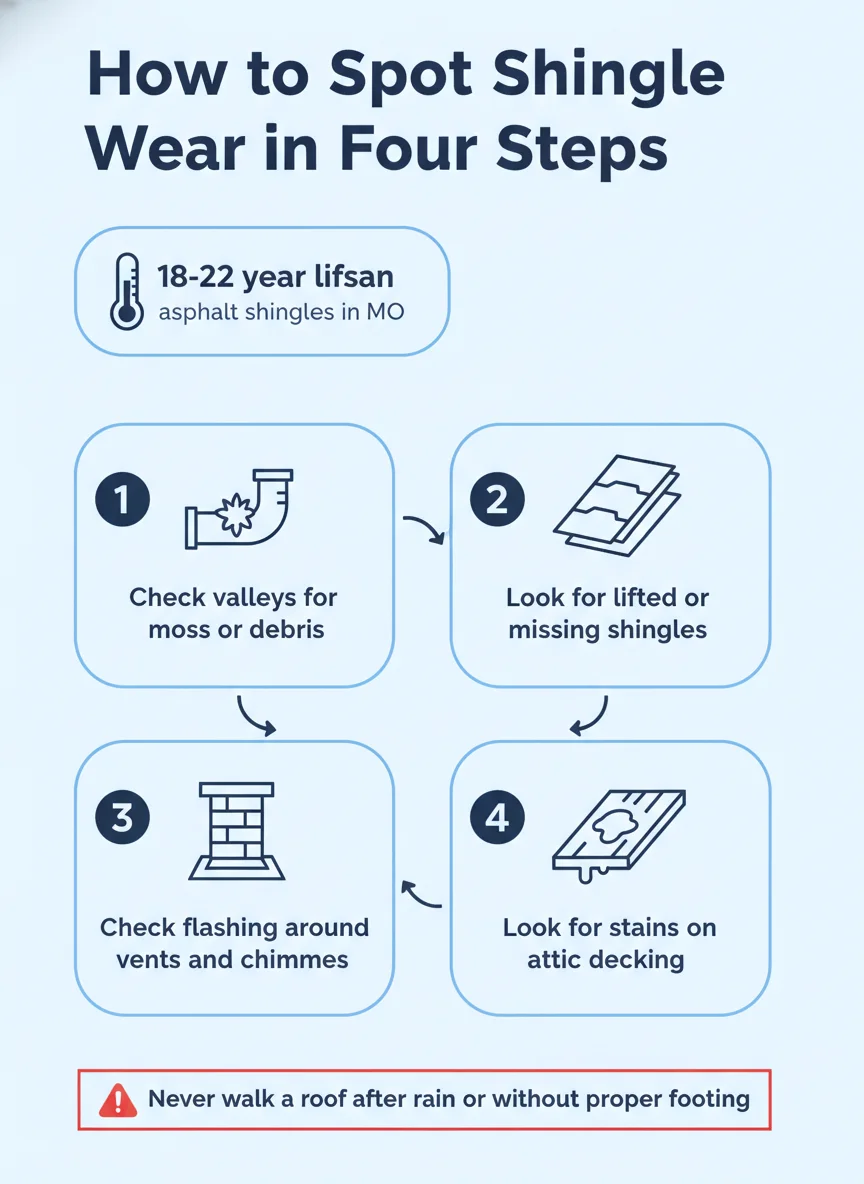
Step-by-step: checking a Forsyth roof for lake-related wear
A homeowner can catch a lot of this early with a simple walk around the property and a look from the ground, no ladder required for the first pass.
- Check north-facing slopes: Look specifically at shaded sections for green or dark streaking, which points to moss or algae starting to establish.
- Look for lifted edges: Walk the perimeter after any windy stretch and check for shingle tabs that look raised or out of line with the rest.
- Inspect the gutters: Granules building up in gutters signal the shingle surface is wearing faster than normal in that section.
- Check the attic: Look for musty smells, damp insulation, or daylight through the decking, all signs moisture is getting past the shingles.
- Note debris buildup: Leaves and organic debris trapped in valleys hold moisture and speed up moss growth if not cleared regularly.
What these signs mean once you find them
Moss and streaking
Moss and algae streaking are usually early-stage cosmetic issues rather than immediate structural threats, but they're worth acting on since moss can hold enough moisture to lift shingle tabs over time. A roof wash or targeted cleaning can address surface growth, but if it's returning every season, it may point to a shaded area that needs better airflow or tree trimming nearby.
If the moss has been established for several seasons without treatment, it's worth having a roofer check the shingles underneath it directly, since prolonged moisture contact can accelerate granule loss in that spot specifically.
Lifted or missing shingles after wind
A shingle that's lifted but still attached is an early warning sign, not yet a leak, but a spot that's vulnerable the next time wind or rain hits from the same direction. A missing shingle is a more immediate issue since it exposes the underlayment directly to the weather.
Either situation is worth a call sooner rather than later. Our post on hail or wind damage after a storm covers how to tell the difference between cosmetic wind wear and damage that needs immediate repair.
DIY vs calling a roofing pro
Ground-level checks and gutter clearing are reasonable for a homeowner to handle on their own, and they catch a good share of early warning signs around a lakeside property. Trimming back tree limbs that shade a roof section can also cut down on future moss growth.
Anything involving getting on the roof itself, including moss removal, flashing repair, or replacing individual shingles, is better left to a licensed crew. Wet, mossy shingles are especially slippery, and repairs done without the right technique can shorten the life of the shingles around the repair area.
The line to watch: if you can see and describe the problem from the ground, you can flag it. If fixing it means stepping onto the roof surface, that's a job for a professional with the right safety setup for lakeside terrain.
Keeping a Forsyth roof ahead of lake conditions
Forsyth's setting near Table Rock Lake means a shingle roof here deals with a slightly different combination of humidity, shade, and wind than homes further inland, and staying ahead of moss growth and wind-lifted shingles keeps small issues from becoming bigger repairs.
If your roof is showing streaking, lifted shingles after a windy stretch, or just hasn't been checked in a while, Full Life Roofing Construction serves Forsyth and the surrounding lake area.
Frequently asked questions
Does being near Table Rock Lake affect a shingle roof in Forsyth?
Yes, homes closer to the water tend to see higher humidity, which can slow drying time after rain and encourage moss or algae growth on shaded slopes. It doesn't change the shingle material itself, but it does affect how quickly certain wear shows up.
How long should a shingle roof last in Forsyth?
Most asphalt shingle roofs in Missouri last between 18 and 22 years with normal maintenance. Homes with good attic ventilation and regular gutter cleaning tend to land on the higher end of that range.
What causes moss to grow on a roof in Forsyth?
Moss tends to grow in shaded, moisture-retaining areas, which is common on north-facing slopes or sections near tree cover close to the lake. It can trap water against the shingle surface if left to spread.
Is a shingle roof or metal roof better for a home near the lake?
Both hold up well in this area, but the right choice depends on your budget, how long you plan to stay in the home, and your preference on appearance and maintenance. A [metal roofing](/services/metal-roofing) estimate alongside a [shingle roofing](/services/shingle-roofing) quote can help you compare directly.
When should I have my Forsyth roof inspected?
A yearly check plus a look after any severe wind or hail event covers most homes well. Catching a lifted shingle or a cracked seal early keeps small issues from becoming leaks.