
Why Gutter Choice Matters Around Branson and Springfield
Gutters are one of those systems homeowners rarely think about until water starts showing up somewhere it shouldn't. Across the Branson and Springfield area, heavy spring downpours and steep-pitched roofs common in the Ozarks put real demands on a gutter system. When gutters are undersized, poorly sloped, or leaking at the seams, water ends up pooling near the foundation, soaking fascia boards, or spilling over onto siding and landscaping.
Choosing between seamless and sectional gutters is one of the first decisions homeowners face when it's time to replace an aging system. Both styles have a place, and the right pick depends on your roofline, your budget, and how much maintenance you want to take on. Full Life Roofing Construction installs gutter systems across the region, and understanding the tradeoffs upfront helps you have a more informed conversation with whoever you hire.
How Each Gutter Style Is Built
The core difference comes down to manufacturing. Seamless gutters are extruded on-site from a coil of aluminum, cut to the exact length of each roofline run, so there are no joints along straight sections, only at corners and downspouts. Sectional gutters come as pre-cut lengths, usually ten feet, that get connected with slip joints and sealant on-site.
Seamless Gutter Systems
Seamless gutters are custom-formed to fit your home, which means fewer places for water to escape and a cleaner look along the roofline. Because they're made on-site with specialized equipment, they typically cost a bit more upfront than sectional systems, but many homeowners find the reduced leak risk and lower long-term maintenance worth it.
The main tradeoff is repair. If a seamless section gets damaged, say by a falling branch, you generally need to replace that whole run rather than swap out a single piece. That's a small price for most homeowners compared to the leak resistance seamless systems offer over their lifespan.
Sectional Gutter Systems
Sectional gutters are widely available, often less expensive to install, and easier to repair since damaged pieces can be swapped individually. They're a reasonable option for outbuildings, additions, or homes on a tighter budget.
The downside is maintenance. Every joint is a potential leak point, and sealant at those connections breaks down over years of freeze-thaw cycles and UV exposure. Sectional systems generally need more frequent inspection to catch small leaks before they turn into fascia or soffit damage.
| Factor | Seamless Gutters | Sectional Gutters |
|---|---|---|
| Leak points | Only at corners and downspouts | At every joint along the run |
| Upfront cost | Generally higher | Generally lower |
| Repairs | Full run replacement if damaged | Individual sections can be swapped |
| Best fit | Whole-house, long-term installs | Smaller runs or tighter budgets |
What a Gutter System Is Actually Doing for Your Home
A gutter's job sounds simple, catch rainwater and move it away from the house, but the system behind that has several parts working together. The gutter itself channels water toward downspouts, which carry it down and away, usually with extensions or splash blocks directing it further from the foundation. Hangers and fasteners hold the whole run at a slight pitch so water flows toward the downspout instead of pooling.
When any one part fails, the rest of the system compensates poorly. A clogged downspout backs water up the whole run. A sagging hanger creates a low spot where debris and standing water collect. That's why gutter problems often show up as fascia rot or foundation moisture rather than an obvious gutter failure, the symptom shows up somewhere else. Our gutters overflowing or fascia rot guide covers those warning signs in more detail.
Step-by-Step: Choosing the Right Gutter for Your Home
Deciding between seamless and sectional gutters, or even whether it's time to replace them at all, comes down to a handful of practical checks.
- Walk the roofline: Look at how many corners, valleys, and long straight runs your home has, since seamless systems shine on longer stretches.
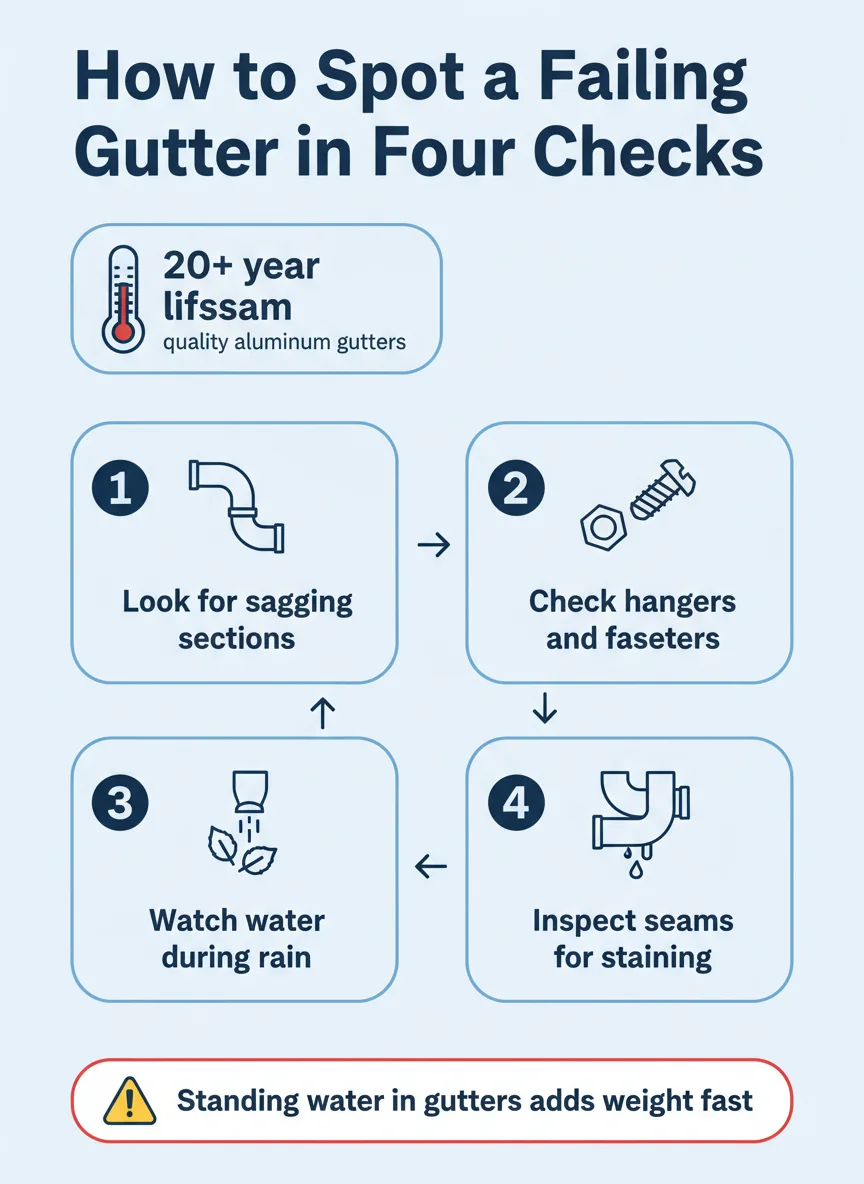
- Check current gutter condition: Look for sagging, separated joints, or peeling paint on fascia, all signs the current system is already letting water through.
- Consider your maintenance habits: If you rarely get around to yearly cleaning, gutter guards paired with either system can reduce how often debris builds up.
- Match gutter size to roof area: A larger roof surface sheds more water per storm and may need a wider gutter profile or additional downspouts.
- Get a look at the fascia: Soft or discolored fascia boards behind the gutter usually mean water has already been getting past the current system.
- Ask about downspout placement: Downspouts should route water well away from the foundation, not just off the edge of the roof.
What Homeowners Usually Notice First
Signs a Sectional System Is Failing
Homeowners with sectional gutters usually notice small drips at the joints first, often visible as a thin water line or rust streak on the outside of the gutter. Left alone, that same joint keeps leaking every time it rains, slowly staining siding or soaking the fascia board directly behind it.
Another common sign is sagging between hangers, which shows up as a gutter that visibly dips instead of running in a straight line. That dip collects standing water and debris even when the rest of the system is clear, and it's a good indicator the whole run may need attention.
Signs a Seamless System Needs Attention
Seamless gutters fail less often at seams, so trouble usually shows up at the corners or downspout connections instead. Water spilling over the front edge during a moderate rain often means the gutter is undersized for the roof it's draining, not that the material itself has failed.
Overflow near a specific downspout, rather than along the whole run, often points to a clog rather than a structural problem. Clearing debris and checking the downspout extension is worth doing before assuming the whole system needs replacing.
What Homeowners Can Handle and What Needs a Pro
Cleaning debris out of gutters and checking for obvious sagging is something most homeowners can do themselves with a stable ladder and some caution, especially on single-story homes. Reattaching a loose hanger or clearing a clogged downspout are also reasonable DIY tasks for anyone comfortable on a ladder.
Full gutter installation, whether seamless or sectional, is a different matter. Getting the pitch right along the entire run, sizing the system correctly for your roof area, and forming seamless gutters on-site all require equipment and experience most homeowners don't have on hand. A run that's even slightly out of pitch will pool water instead of draining it.
Two-story homes and steep rooflines also raise the stakes on safety. If your gutter work involves anything beyond ground-level access or a simple single-story cleaning, it's worth bringing in a licensed contractor who does this work regularly rather than risking a fall or a poorly pitched install.
Making the Right Call for Your Home
There's no single right answer between seamless and sectional gutters, the better choice depends on your home's roofline, your budget, and how much upkeep you're willing to do. What matters most is that whichever system you choose is sized correctly and pitched properly from day one.
If your current gutters are sagging, leaking, or overflowing during normal rain, that's usually a sign it's time to look at a replacement rather than another round of patching. Full Life Roofing Construction installs gutter systems across the Branson and Springfield area and can walk you through which style fits your home.
Frequently asked questions
What's the difference between seamless and sectional gutters?
Seamless gutters are formed in one continuous piece to match your roofline, while sectional gutters are assembled from shorter pre-cut pieces joined together. Fewer joints on a seamless run generally means fewer spots where water can find its way out over time.
Do seamless gutters really leak less than sectional ones?
Yes, in general, because leaks most often start at seams and joints, and seamless systems have far fewer of them. Sectional gutters can still perform well when installed and sealed correctly, but they need more attention to the joints over the years.
How long do gutters last in Missouri weather?
Quality aluminum gutters commonly hold up for two decades or more when they're sized right and cleaned regularly. Freeze-thaw cycles, heavy spring rain, and falling leaves are the main factors that shorten a gutter system's life in this region.
Can I install sectional gutters myself?
Homeowners sometimes install short sectional runs on a garage or shed, but whole-house gutter systems involve pitch, hanger spacing, and downspout placement that are easy to get wrong. A poorly pitched run can send water toward the foundation instead of away from it.
Do gutter guards make a real difference?
Gutter guards can cut down on how often you need to clear debris, especially under trees, but no guard eliminates cleaning entirely. They work best as a maintenance aid rather than a permanent fix for a gutter system that's already undersized or poorly sloped.