
Winter Puts a Different Kind of Stress on an Ozarks Roof
Winter in the Branson and Springfield area brings a mix of freezing temperatures, occasional snow, and the freeze-thaw cycles that are tough on any roofing system. Unlike a summer storm that tests a roof in one dramatic event, winter wears on a roof slowly, through repeated freezing and thawing that stresses flashing seals, shrinks and expands materials, and makes aging shingles more brittle.
A roof that goes into winter with a few small issues unaddressed often comes out the other side with bigger ones. The good news is that most winter prep is straightforward, and it's far easier to handle in the fall than to deal with a leak during a January cold snap. Getting ahead of it now protects both the roof itself and the ceilings and walls underneath it.
Why Cold Weather Is Harder on a Roof Than It Looks
Materials expand and contract with temperature, and a roof goes through that cycle constantly through a Missouri winter, warming during sunny afternoons and dropping sharply at night. That repeated movement puts strain on seams, seals, and aging materials in ways that summer heat alone doesn't.
Flashing and Freeze-Thaw Cycles
Flashing around chimneys, skylights, and vent pipes is sealed with materials that can shrink slightly in cold weather, opening tiny gaps that weren't there in summer. Water that gets into those gaps and then freezes expands, widening the gap further, which is why flashing problems often get noticeably worse over a single winter if they aren't caught in fall.
This is one of the more overlooked parts of winter prep because flashing issues aren't always visible from the ground. A quick check in fall, before the first freeze, catches problems while a simple reseal or flashing repair is still enough to fix them. Our guide on chimney, skylight, or vent flashing covers the warning signs in more detail.
Brittle Shingles Under Cold Stress
Asphalt shingles naturally lose some flexibility as they age, and cold temperatures make that stiffness more pronounced. A shingle that would flex under light pressure in summer can crack under the same pressure in winter, whether from foot traffic, falling branches, or even ice sliding off a higher section of roof.
This is one more reason winter isn't a great time to discover roof problems for the first time. Shingles already showing curling or cracking in fall are more likely to fail outright once the cold sets in, so it's worth addressing them before temperatures drop rather than after.
| Roof area | Fall check | Winter risk if skipped |
|---|---|---|
| Gutters | Clear debris, check pitch | Ice backup under roof edge |
| Flashing | Inspect seals around penetrations | Freeze-thaw widens small gaps into leaks |
| Shingles | Look for curling or cracking | Brittle shingles crack under cold stress |
| Attic | Check ventilation and insulation | Uneven snowmelt and refreeze at eaves |
How Ventilation Ties Everything Together
A roof's ventilation system, typically ridge vents at the top and soffit vents at the eaves, keeps air moving through the attic year-round. In winter, that airflow keeps the attic closer to the outdoor temperature, which matters because a warm attic melts snow unevenly on the roof above it, sending meltwater down to the colder eaves where it can refreeze.
That freeze-refreeze cycle at the eaves is a common source of winter roof problems, since ice that forms there can back up under shingles as it melts and refreezes repeatedly. Good attic insulation paired with proper ventilation reduces how much heat escapes into the attic in the first place, which is often a more effective fix than dealing with ice after it's already formed.
Step-by-Step: Winterizing Your Roof
Most winter prep is best done in fall, while temperatures are still mild enough for a thorough check and any needed repairs.
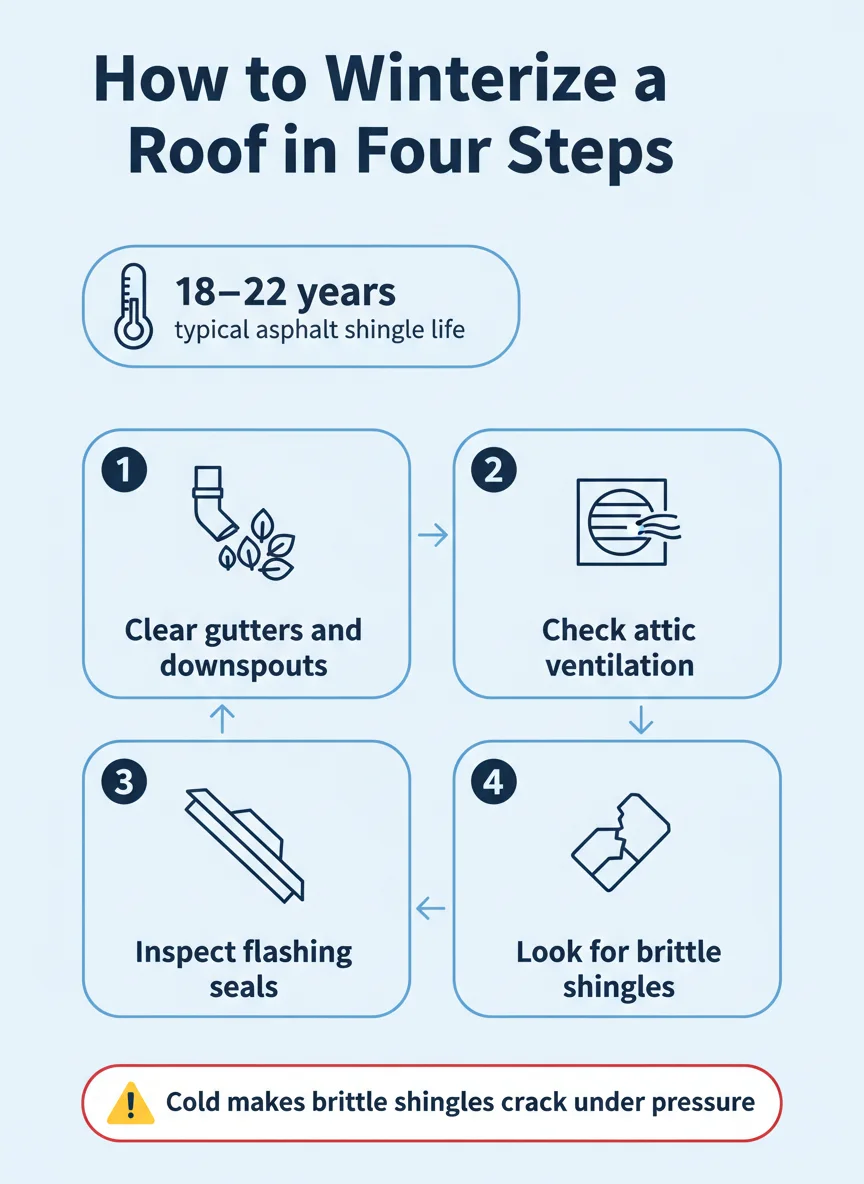
- Clear gutters and downspouts: Remove leaves and debris so gutters can drain freely instead of freezing solid and backing water up under the roof edge.
- Check attic insulation levels: Look for thin or uneven insulation that could let warm air escape into the attic and cause uneven snowmelt on the roof.
- Inspect ridge and soffit vents: Make sure vents aren't blocked by insulation or debris, since good airflow keeps the attic closer to outdoor temperature.
- Look at flashing around penetrations: Check chimneys, skylights, and vent pipes for gaps or separation that could widen once freeze-thaw cycles begin.
- Scan shingles for curling or cracking: Note any shingles already showing wear, since cold weather makes brittle shingles more likely to crack outright.
- Trim branches near the roofline: Cut back limbs that could break under snow or ice weight and land on the roof during a winter storm.
What Winter Damage Usually Looks Like
Signs of Ice Backup at the Eaves
Ice buildup along the lower edge of the roof, sometimes visible as a ridge of ice at the eaves, usually means warm attic air is melting snow higher up while the eaves stay cold. That meltwater refreezes at the edge and can eventually work its way under shingles, leading to leaks that show up as ceiling stains well after the snow has melted.
If you notice icicles forming heavily along one section of roof but not others, that's often a clue to where attic ventilation or insulation is uneven. Addressing the ventilation issue is usually more effective long-term than just knocking down ice each time it forms.
Signs Flashing Has Failed Over Winter
A ceiling stain that appears near a chimney or skylight after a winter thaw usually points to flashing that let water in during freeze-thaw cycles. Because the leak may only show up when ice is actively melting, it can be easy to miss until spring, when the damage has already had time to spread into insulation or drywall.
Catching this early means checking flashing again once temperatures rise in early spring, even if everything looked fine in fall. Winter can loosen seals that held up fine during the initial check, so a second look after the cold season is a reasonable habit.
What You Can Handle Yourself Before Winter
Clearing gutters, checking attic insulation from inside, and doing a visual scan of the roof from the ground are all reasonable tasks for most homeowners in fall. These don't require climbing on the roof itself and can catch a lot of the obvious warning signs before cold weather arrives.
Flashing repair, shingle replacement, and any work that requires getting on the roof surface itself are better left to a licensed roofer, especially once temperatures start dropping. Cold makes shingles more brittle and roof surfaces more slippery, both of which raise the risk of a DIY repair causing more damage than it fixes.
If your fall check turns up curling shingles, loose flashing, or attic moisture, addressing it before the first hard freeze is far more effective than waiting until a winter leak forces the issue. A licensed contractor can usually make repairs quickly in fall weather that would be far more difficult once temperatures drop.
Heading Into Winter With a Roof That's Ready
Winter prep doesn't need to be complicated, but it does need to happen before the cold sets in rather than after a problem shows up. Clearing gutters, checking ventilation, and inspecting flashing are all manageable tasks that make a real difference in how well a roof holds up through freeze-thaw cycles.
If your roof check turns up anything concerning, or if it's simply been a while since anyone looked closely at your flashing and ventilation, Full Life Roofing Construction serves homeowners throughout the Branson and Springfield area and can take a look before winter weather arrives.
Frequently asked questions
What should I do to prepare my roof for winter?
Clear your gutters, check attic ventilation, and inspect flashing around chimneys and vents before the first hard freeze. These three areas are where cold weather most often turns a minor issue into a bigger repair.
Does cold weather actually damage shingles?
Yes, shingles that are already aging become more brittle in cold temperatures, which makes them more likely to crack or break if stepped on or hit by falling debris. Shingles nearing the end of their expected 18 to 22 year lifespan are especially vulnerable in winter conditions.
Why does attic ventilation matter more in winter?
Attic ventilation helps regulate temperature and moisture under the roof deck, which matters in winter because trapped warm air can cause uneven snowmelt and refreezing at the eaves. Good airflow keeps the attic closer to outdoor temperature and reduces that cycle.
Can I clean my gutters in cold weather?
Yes, clearing gutters before the first freeze is one of the most useful things a homeowner can do, since clogged gutters that freeze can back water up under the roof edge. It's best done while temperatures are still above freezing and debris hasn't frozen in place.
How do I know if my flashing needs attention before winter?
Look for gaps, rust, or separation where flashing meets the roof around chimneys, skylights, and vent pipes. Flashing that's already loose or cracked is more likely to let water in during winter's freeze-thaw cycles, so it's worth addressing before cold weather sets in.