
Why Shingle Grade Matters for Missouri Homes
If you've started shopping for a new roof anywhere in the Branson and Springfield area, you've probably run into three terms fast: three-tab, architectural, and designer shingles. They all look similar in a brochure photo, but the difference shows up in how the roof performs over the next couple decades and how much it changes your home's curb appeal.
Missouri roofs deal with a real mix of weather, hot humid summers, cold winters, and plenty of wind in between. The shingle grade you choose plays a direct role in how well your roof shrugs off that wear, which is why it's worth understanding the differences before you sign off on a shingle roofing project rather than after.
What Actually Separates the Grades
The core differences come down to how the shingle is built, not just how it's marketed. Manufacturers vary the number of layers, the weight of material per square, and the surface granule coating to create distinct product tiers.
Three-Tab Shingles
Three-tab shingles are made from a single layer of material with cutout slots that create three evenly spaced tabs across each strip. When installed, they produce a flat, uniform, repeating pattern across the roof.
They're lighter and generally the most budget-friendly option in the shingle lineup. The tradeoff is a thinner profile and typically a lower wind rating compared to laminated shingles, since there's no second layer reinforcing the tab.
Architectural (Laminated) Shingles
Architectural shingles, sometimes called laminated or dimensional shingles, are built from two or more layers fused together. That extra layer adds thickness, weight, and a shadow-line effect that gives the roof depth instead of a flat look.
The added material generally translates into a sturdier shingle with better wind performance in published manufacturer ratings, which is a big part of why they've become the standard choice for most replacements across the region.
| Grade | Build | Typical Look |
|---|---|---|
| Three-tab | Single layer, cutout tabs | Flat, uniform pattern |
| Architectural | Two or more laminated layers | Dimensional, shadow-line texture |
| Designer | Heaviest layering, specialty shapes | Mimics slate or wood shake |
Where Designer Shingles Fit In
Designer shingles sit at the top of the lineup. They're built with the heaviest layering and often use specialty shapes or cuts designed to replicate the look of natural slate or cedar shake without the weight or maintenance those materials require.
These are the shingles most homeowners choose when curb appeal is the priority, often on a home with architectural details, like a steep front gable or a historic style, where a flat three-tab roof would look out of place. The heavier build also tends to carry strong wind and impact ratings on the manufacturer spec sheet.
Step-by-Step: How to Compare Shingle Options for Your Roof
Walking through a shingle decision is easier when you break it into a short checklist rather than trying to compare every sample at once.
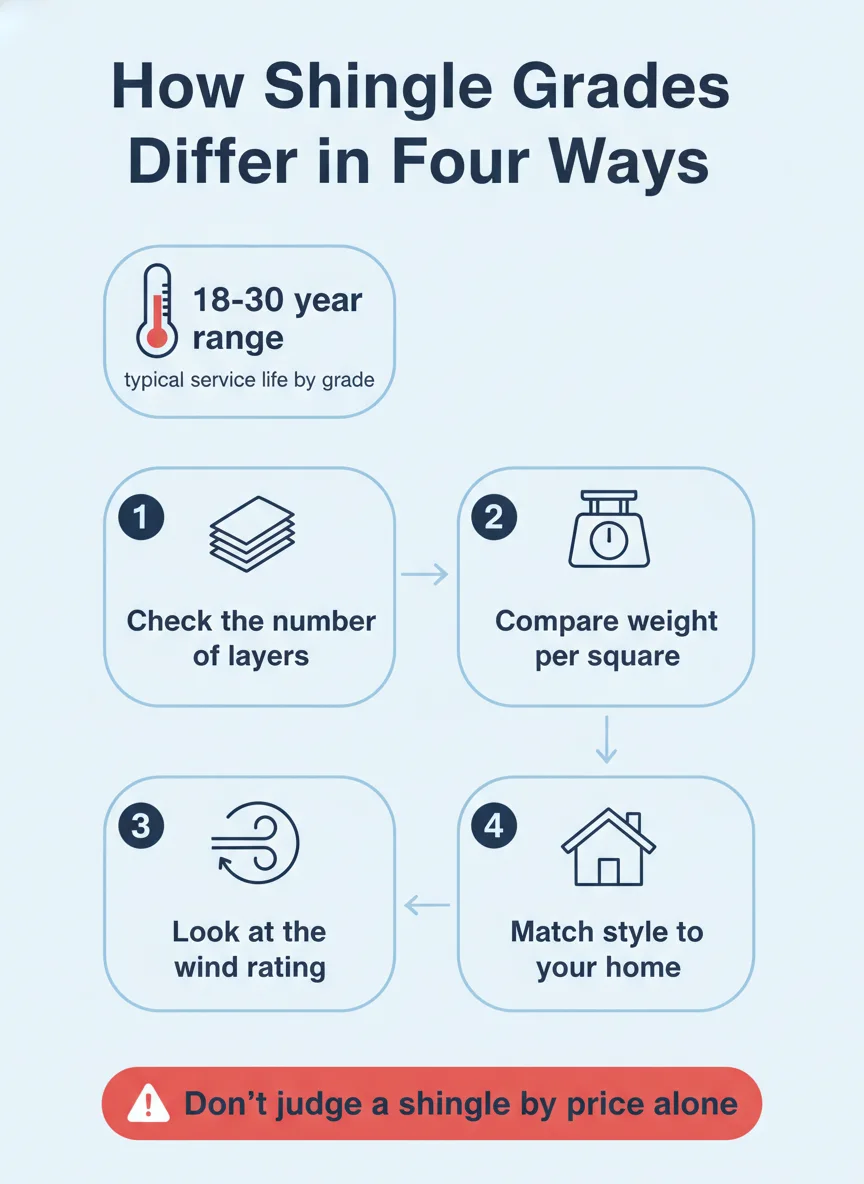
- Check the layer count: Ask whether the sample is single-layer or laminated. That one detail tells you whether you're looking at three-tab or architectural territory.
- Compare weight per square: Heavier shingles generally mean more material and more durability, though installation quality still matters just as much.
- Look at the wind rating: Published wind ratings vary by grade and manufacturer, so compare the spec sheet rather than assuming all shingles perform the same.
- Match the style to your home: A steep, detailed roofline often suits a dimensional or designer shingle, while a simpler roofline may not need the upgrade.
- Ask about warranty terms: Warranty length and coverage can shift by grade, so get the specifics in writing before you decide.
- Walk the roof plan with your contractor: A contractor can show you how each grade will actually look on your specific roof pitch and layout, not just on a sample board.
What You'll Notice Once the Shingles Are Installed
On a Three-Tab Roof
A three-tab roof reads clean and uniform from the street, with a flatter profile that can look dated on homes with more architectural detail. It's a straightforward, no-frills option that still gets the job done on simpler rooflines.
Because the shingle is thinner, curling and granule loss can show up sooner in a hot, sun-heavy climate compared to a laminated product, which is one reason it's become less common in new installs.
On an Architectural or Designer Roof
Laminated shingles create visible depth and shadow lines that catch the light differently across the roof plane. From the curb, it reads as a noticeably more finished, higher-end look even on an otherwise modest home.
Designer shingles push that further with specialty shapes that can convincingly echo slate or shake from a distance, which is often the deciding factor for homeowners weighing resale value or historic-style matching.
What You Can Decide Yourself vs. What Needs a Pro
Picking a shingle color and general style is something you can absolutely do on your own time, browsing samples at home or online before narrowing it down.
Where you'll want a licensed roofing contractor is matching the grade to your actual roof structure. Pitch, decking condition, and local wind exposure all affect which shingle makes sense, and a contractor can flag issues a sample board never will.
Installation itself is not a DIY project for any shingle grade. Improper nailing patterns or ventilation gaps can undercut even the best shingle's published lifespan, which is why professional installation matters as much as the shingle choice itself.
Bringing It Back to Your Roof
Shingle grade is one of the bigger decisions in any roofing project, and it's worth understanding before quotes start coming in rather than after. Whether you land on three-tab, architectural, or designer shingles often comes down to your home's style, your roof's exposure, and how long you want the roof to perform.
If you're still weighing options, it can help to read up on what drives the cost of shingle roofing in MO or compare notes on repair or replace before you decide. Full Life Roofing Construction can walk you through samples for your specific home when you're ready to talk through options.
Frequently asked questions
What's the difference between three-tab and architectural shingles?
Three-tab shingles are a single flat layer with cutouts that create a uniform, repeating pattern, while architectural shingles are laminated with two or more layers for a thicker, dimensional look. That extra layer also tends to hold up better against wind and gives most homes a more upscale appearance.
Are designer shingles worth the extra cost?
It depends on what you're after. Designer shingles mimic the look of slate or wood shake and carry a heavier, more dimensional profile than architectural shingles, so they're a style upgrade more than a durability requirement, though many also carry strong wind and impact ratings.
Do architectural shingles really last longer than three-tab?
Generally yes, architectural shingles are built with more material and tend to outlast three-tab shingles in most published manufacturer and trade estimates. Actual lifespan still depends on installation quality, attic ventilation, and local weather exposure.
Can I mix shingle grades on the same roof?
You can, but it's uncommon because mismatched grades create visible lines in thickness and shadow lines where sections meet. Most homeowners pick one grade for the whole roof and save mixing for accent areas like a porch roof.
Which shingle grade is most common on homes today?
Architectural shingles are the most widely installed grade on residential roofs today, having largely replaced three-tab shingles in new construction and replacements. Three-tab shingles are still around but are increasingly reserved for budget-driven jobs or specific architectural matches.