
When a Roof Opens Up Fast in the Branson and Springfield Area
A sudden opening in a roof, whether from a fallen limb, a wind-lifted section, or a chunk of flashing torn loose, turns a normal day into an emergency fast. Water doesn't wait for business hours, and in the Branson and Springfield area, a line of storms can roll through and leave a hole in a roof before anyone's had a chance to react. What you do in the first 24 hours matters just as much as who eventually does the permanent repair.
The goal in that window is simple: protect the inside of the home, document what happened, and get a temporary cover on the opening until a crew can make it out. None of that requires special training, but it does require moving with a plan instead of panic. The steps below are the same ones a roofing crew would want a homeowner to take before they arrive on site.
Why Fast Action Protects More Than the Roof
An open roof doesn't just let rain into the attic, it lets rain into insulation, drywall, flooring, and anything stored in the space below. Water travels along framing members and follows gravity in directions that aren't always obvious from where the hole is, which is why interior damage often shows up farther from the opening than people expect.
What Happens in the First Few Hours
Once water gets past the roof deck, it soaks into insulation and ceiling material almost immediately. Wet insulation loses its effectiveness and takes time to dry out completely, and a soaked ceiling can sag or stain even after the leak itself is stopped. The faster the opening is covered, the less material ends up compromised.
Mold growth is also a real concern, since damp drywall and framing can start supporting mold within a day or two in the right conditions. That's part of why insurance companies generally expect homeowners to take reasonable steps to limit further damage rather than wait for a full repair to begin.
What a Tarp Actually Does
A properly secured tarp sheds water away from the opening and buys time until a crew can get the area dried out and repaired correctly. It is not a fix, and it's not meant to survive indefinitely, it's a stopgap that keeps a bad situation from getting worse while a shingle roofing or metal roofing repair gets scheduled.
A tarp also doesn't address what caused the opening in the first place, whether that's a broken section of decking, torn flashing, or missing material. Once the tarp is in place, the real work of assessing the damage and planning the repair still has to happen, ideally within a few days rather than weeks.
| Situation | What's Needed | Timeline |
|---|---|---|
| Small opening from a limb strike | Tarp over the affected section | Repair within days |
| Larger wind-lifted section | Tarp plus temporary bracing | Assessment first, then repair |
| Flashing torn from chimney or vent | Targeted tarp or temporary seal | Usually a quicker fix |
| Widespread damage across the roof | Full tarp coverage, possible interior drying | Full inspection before repair plan |
What's Actually Involved in a Tarp Job
A tarp job sounds simple, but doing it right takes more than throwing a sheet of plastic over a hole. The tarp has to extend well past the damaged area in every direction, since wind-driven rain will find any gap at the edge. It also has to be anchored to solid framing, not just the damaged decking, or the next windstorm will pull it loose.
Crews typically use boards or furring strips to pin the tarp edges down rather than relying on nails straight through the material, which tend to tear out under wind load. On a steep or wet roof, this work also requires fall protection and the right footing, which is exactly why it's not a do-it-yourself project in most cases.
Step-by-Step: The First 24 Hours
Here's the order of operations that keeps damage to a minimum and sets up a smooth repair once a crew arrives.
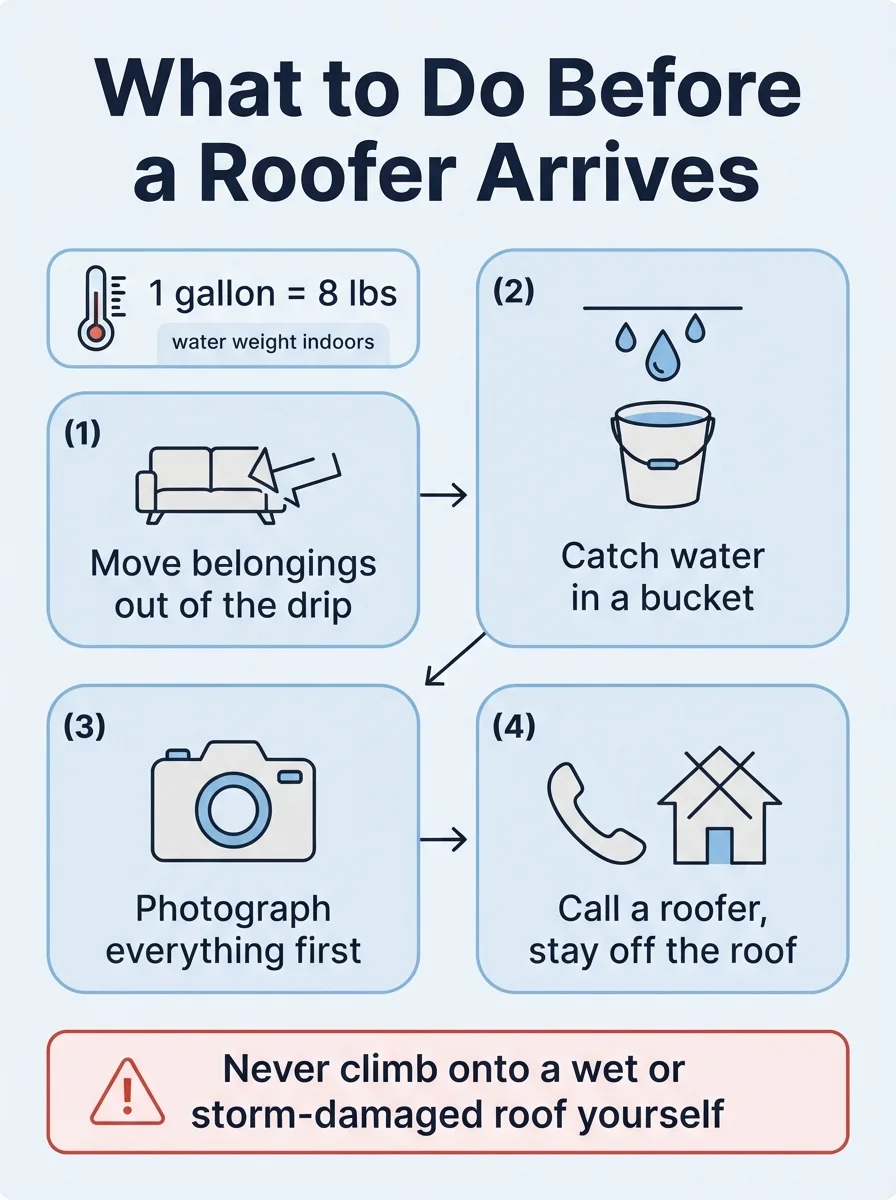
- Move belongings clear: Get furniture, electronics, and anything valuable out from under the leak or covered with plastic sheeting if it can't be moved.
- Catch the water: Set buckets, bins, or towels under the drip and check them regularly so they don't overflow onto flooring.
- Photograph everything: Take wide shots and close-ups of the damage, both inside and outside, before anything is moved or covered, for insurance purposes.
- Call a roofer: Get a crew on the schedule as soon as possible so a tarp can go up and the repair can be assessed properly.
- Stay off the roof: Leave climbing up and inspecting the damage to someone with the right equipment and experience, especially in wet or windy conditions.
- Note the time and cause: Write down roughly when the damage happened and what caused it, since this detail helps with both the repair plan and any insurance claim.
- Keep receipts: Hold onto any receipt for a tarp, bucket, or other emergency supply purchased, since these are often reimbursable.
What You'll Find Once the Tarp Is Off
Once a crew pulls the tarp back to make the real repair, the extent of the damage usually becomes clearer than it looked from the ground. A limb strike that looked like one broken shingle from the yard might reveal cracked decking underneath, and a lifted section of roofing can expose nail holes and torn underlayment that need to be addressed before anything new goes down.
Surface Damage vs. Structural Damage
Surface damage is limited to the roofing material itself, shingles, metal panels, or siding that got torn or punctured without compromising what's underneath. This is generally the more straightforward repair, since the decking and structure are still sound.
Structural damage goes deeper, affecting the decking, rafters, or trusses underneath the roofing material. This usually takes longer to repair properly and may require additional framing work before new roofing material can go back on.
Hidden Water Damage
Even a quick response doesn't always catch everything, since water can wick sideways along framing before it shows up as a stain. It's worth checking the attic space near the damage a few days after the repair to confirm there's no lingering dampness or discoloration that got missed the first time around.
If a ceiling stain shows up days or weeks after a storm with no obvious new leak, it's worth a separate look, since that's often a sign of a slow leak building for a while rather than new damage.
What a Homeowner Can Handle vs. What Needs a Pro
Everything inside the home, from moving furniture to catching water to photographing the damage, is squarely in the homeowner's hands and should happen right away. None of that requires a ladder or any special equipment, just a clear head and a bit of urgency.
Anything above the gutter line is a different story. Climbing onto a damaged roof to inspect it, let alone tarp it, risks turning a roofing emergency into a medical one. A licensed crew carries the harnesses, ladders, and experience to move around a damaged roof safely, and they know how to anchor a tarp so it actually holds through the next round of wind.
The assessment that follows the tarp job also benefits from a trained eye. What looks like a small hole from inside the attic can hide a much larger problem in the decking or framing, and a pro will know what to check and in what order to make sure nothing gets missed before the real repair starts.
Getting Back to a Dry, Repaired Roof
The first 24 hours after storm or tree damage set the tone for everything that follows, from how much interior repair is needed to how smoothly an insurance claim moves. Acting fast on the things within reach, catching water, moving belongings, documenting the damage, puts a homeowner in a much better position once a crew shows up to handle the rest.
Homeowners anywhere from Branson to Ozark dealing with sudden roof damage can call Full Life Roofing Construction to get a tarp up and a repair plan started.
Frequently asked questions
What should I do first if my roof is leaking right now?
Move anything valuable out from under the leak and set out a bucket or container to catch the water before you do anything else. Once the immediate mess is contained, photograph the damage and call a roofer to get a tarp over the opening.
Is it safe to put a tarp on my roof myself?
It's not recommended, especially in wind, rain, or on a steep or wet roof surface. A tarp has to be anchored correctly to survive the next round of weather, and a fall from roof height is a serious risk that isn't worth saving a service call.
How long can a tarp stay on a roof before it needs a permanent fix?
A tarp is meant as a short-term measure, not a long-term solution, since UV exposure and wind work it loose over time. Plan to have the actual repair or replacement scheduled as soon as a contractor can get out.
Will my homeowners insurance cover emergency tarping?
Many policies do cover reasonable steps taken to prevent further damage after a covered event, but coverage details vary by policy. Check with your insurance provider directly and keep every receipt and photo from the process.
Should I try to move the tree limb or debris myself?
Only move debris on the ground that isn't tangled with power lines or resting against the structure in a way that could shift suddenly. Anything still touching the roof or electrical service should be left for professionals.