
Why Missouri Homeowners Deal With This Process So Often
Homes across the Branson and Springfield area see their share of wind and hail events over the course of a year, and a damaged roof is one of the most common reasons homeowners file a property insurance claim. For most people, this only happens once or twice in the time they own a home, which means the process feels unfamiliar right when you need to move fast.
Understanding the general order of events ahead of time takes a lot of the stress out of it. A claim isn't one phone call and a check in the mail, it's a sequence of steps involving you, your insurance carrier, an adjuster, and a contractor, each with its own role. Knowing what happens at each stage helps you ask better questions and avoid delays that are easy to cause by accident.
How Does a Roof Insurance Claim Actually Move Forward?
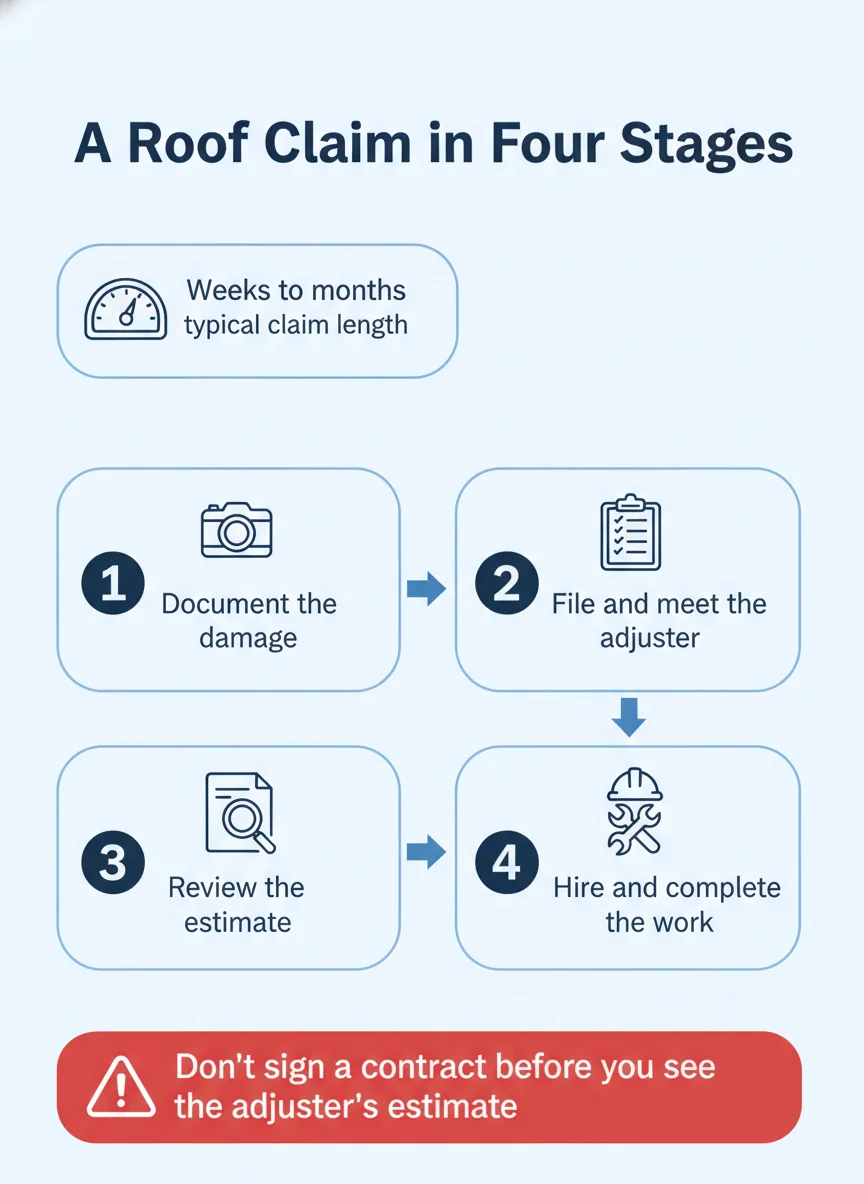
A claim moves forward in stages: you document the damage, you report the claim to your carrier, an adjuster inspects the roof and issues an estimate, and then a contractor completes the work based on that estimate. Each stage depends on the one before it, so delays early on push the whole timeline back.
Documenting the Damage
Before you call anyone, take photos and video of visible damage from the ground, including anything you can see on the roof, around vents, and near the gutters. Note the date of the storm if you know it, and jot down any leaks or interior signs of water intrusion you notice in the days after, since those details matter when you talk to the adjuster.
If you're not sure whether what you're seeing is storm damage or just wear, a roofer can take a closer look before you file, which helps you decide whether a claim is worth pursuing. Having a written description or photos from a contractor on file can also support your claim later.
Reporting the Claim
Once you've got your documentation together, you report the claim to your insurance carrier, usually by phone or through their online portal. They'll assign a claim number and typically schedule an adjuster visit within a set window, though exact timing varies by carrier and how busy they are.
This is also a good time to review your policy for your deductible amount and whether your coverage is ACV or RCV, since that affects how the payout will be structured later in the process. Keep your claim number handy, you'll reference it in every call from here forward.
| Stage | Who's Involved | What Happens |
|---|---|---|
| Documentation | You | Photos, notes, and sometimes a contractor's written assessment |
| Adjuster visit | You and the insurance adjuster | On-site inspection and a damage estimate |
| Contractor review | You and your roofing contractor | Estimate comparison and scope confirmation |
| Build and payout | Contractor and insurance carrier | Work completed, final invoice submitted, depreciation released |
What the Adjuster's Estimate Actually Covers
The adjuster's estimate is the insurance company's assessment of what it will cost to repair or replace the damaged roof, broken down by materials and labor. It typically accounts for your deductible and specifies whether the payout is structured as ACV or RCV, which changes how much of the depreciation gets paid out upfront versus after the work is done.
This estimate becomes the working document for the whole claim. A contractor you hire will often compare it line by line against what's actually needed to do the job correctly, and if there's a gap, that's usually resolved through a supplement request to the carrier rather than you paying the difference out of pocket.
Step-by-Step: From Storm to Finished Roof
Here's the general sequence most Missouri roof claims follow, start to finish.
- Document the damage: Take photos and notes as soon as it's safe to do so, both from the ground and of any interior signs of a leak.
- File the claim: Report the loss to your carrier and get your claim number, deductible, and coverage type confirmed.
- Meet the adjuster: The adjuster inspects the roof in person and generates a written estimate of the damage and repair cost.
- Choose a contractor: Pick a roofer to review the estimate with you and confirm the scope matches what the roof actually needs.
- Request any supplements: If the contractor finds additional damage or code-required work the estimate missed, that gets submitted to the carrier.
- Complete the build: Once the scope is settled, the crew schedules and completes the replacement or repair.
- Submit the final invoice: The contractor's final invoice goes back to the carrier, which typically releases any remaining recoverable depreciation.
What Should You Expect From the Adjuster Visit?
Expect the adjuster to walk the roof, take their own photos, and measure the extent of the damage before writing up an estimate. The visit itself is usually brief, often under an hour, but the estimate can take additional time to arrive afterward.
If You Have a Contractor Present
Some homeowners prefer to have their chosen roofing contractor on-site during the adjuster visit. This isn't required, but it means any disagreement about scope or missed damage gets flagged on the spot instead of discovered later during a separate contractor estimate.
A contractor familiar with metal roofing and shingle roofing systems can also point out damage to flashing, vents, or gutters that's easy to miss from a quick walk-around, which helps make sure the estimate reflects the full scope of the repair.
If the Estimate Seems Low
If your contractor's assessment of what the roof needs doesn't match the adjuster's estimate, that gap is typically addressed through a supplement request rather than an argument. The contractor documents the discrepancy with photos and a written scope, and the carrier reviews it and often issues an adjusted payout.
This back-and-forth is a normal part of the process and doesn't mean anything has gone wrong. It just means the first estimate didn't catch everything, which happens more often than homeowners expect.
What Can You Handle Yourself, and When Do You Need a Pro?
Documenting damage and filing the initial claim are things any homeowner can do without help. Taking clear photos, keeping notes on dates, and having your policy details on hand before you call your carrier all speed up the early stages without requiring a contractor yet.
Once the adjuster's estimate is in hand, though, reviewing it against the roof's actual condition is where a licensed roofing contractor earns their keep. Scope review, supplement requests, and making sure the materials and labor line up with what the roof needs are technical enough that most homeowners benefit from having someone who does this regularly involved.
The actual repair or replacement work itself should always go to a licensed, insured roofing crew, both for safety reasons and because the quality of the install is what your warranty and your roof's long-term performance depend on. This isn't a stage to shortcut to save time.
Getting Through the Process Without the Guesswork
A roof claim can feel overwhelming the first time you go through one, but it follows a predictable order: document, file, inspect, estimate, build, and close out. Knowing what stage you're in and what comes next makes it a lot easier to stay on top of calls, paperwork, and scheduling without losing weeks to confusion.
If a storm has left you staring at a damaged roof anywhere from Branson to Springfield, it helps to have a local pair of eyes on it early. For more on recognizing damage before you even file, see how to check your roof for hail damage from the ground. Full Life Roofing Construction works with homeowners throughout the claim process, from documentation through the final build.
Frequently asked questions
How long does a roof insurance claim take in Missouri?
Most claims move from the initial report to a final roof in a matter of weeks to a couple of months, though the exact pace depends on your carrier's workload, the size of the loss, and how quickly paperwork moves between you, the adjuster, and the contractor. Claims filed during a busy storm season tend to take longer simply because adjusters are stretched thin.
What is the difference between ACV and RCV on a roof claim?
ACV, or actual cash value, pays out the depreciated worth of your roof at the time of the loss, while RCV, or replacement cost value, covers what it actually costs to replace it. Many policies pay ACV upfront and release the remaining depreciation, called recoverable depreciation, once the work is finished and you submit the final invoice.
Do I have to pay my deductible on a roof claim?
Yes, your deductible is your responsibility and is built into how the insurance payout is calculated. It's worth checking your policy for the exact amount, since deductibles vary by carrier and sometimes by type of loss.
Can I choose my own roofing contractor for an insurance job?
In most cases, yes, the choice of contractor is yours even though the insurance company is paying for the work. It's worth picking a contractor who's comfortable working from an insurance estimate and communicating directly with your adjuster if questions come up.
Does the age of my roof affect my insurance claim?
It can, since some policies adjust coverage or payout structure based on the roof's age, and a worn roof may show pre-existing wear that an adjuster separates from storm damage. It's worth reviewing your policy's age-related terms before a storm hits so there are no surprises during a claim.