
Gutter guards, less climbing.
Guard and screen options that cut down on clogging, matched to your roof so water still makes it into the gutter, not over it.
Full Life Roofing Construction installs gutter guards and screens for homeowners across the Branson & Springfield Area who are tired of climbing a ladder every season to clear leaves and debris out of their gutters. Guards cut down on how often a gutter needs to be cleaned, but not every guard works with every roof, and the wrong type can shed water over the edge instead of letting it into the gutter. We look at the roof pitch, the surrounding trees, and the gutter's current condition before recommending a guard system, since a guard installed over a gutter that's already pitched wrong just hides the real problem.
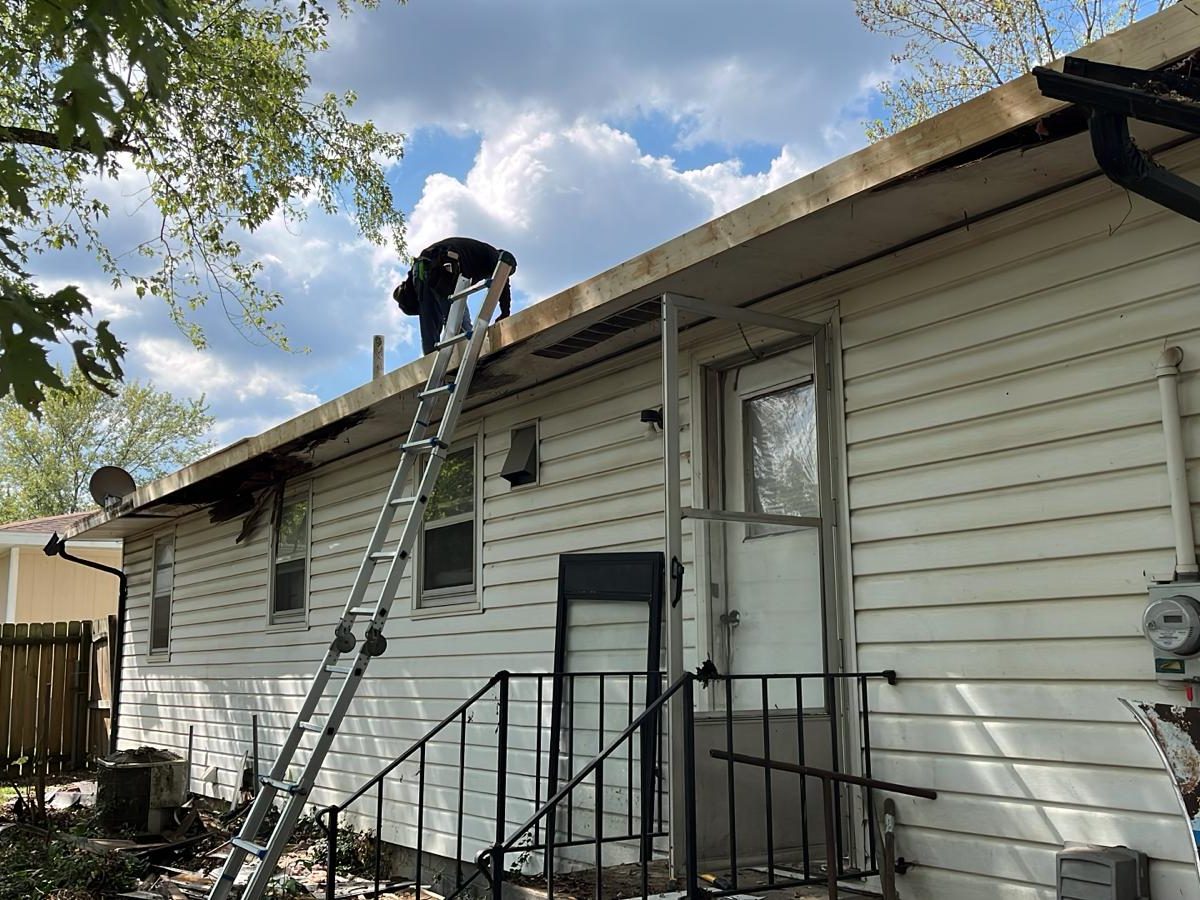
Are you climbing a ladder every fall to clear out your gutters?
That's the main reason homeowners look at gutter guards, and for a lot of properties it's a reasonable fix, but guards don't solve every clogging problem on their own. A mesh or screen guard cuts down on leaves and larger debris, but fine grit, pine needles, and shingle granules can still work through some guard types over time. On homes surrounded by mature trees in the Branson & Springfield Area, the right guard significantly reduces cleaning frequency, but the gutter still needs an occasional check, especially after a heavy storm.
Signs it is time for guards
Cleaning the gutters more than once or twice a year
Frequent buildup, especially from nearby trees, is the clearest sign guards would cut down on maintenance. If leaves and debris pile up fast, a screen or guard keeps most of it out before it settles in the channel.
Overflow that clears up right after cleaning
If gutters run fine right after you clean them but clog again within a season, debris is the issue rather than sizing or pitch, which is exactly what guards are built to reduce.
Pests or standing debris in the gutters
Nests, standing leaf litter, and mosquito breeding in stagnant water in the gutter are common when debris sits for long stretches. Guards keep that material from accumulating in the first place.
A home surrounded by mature trees
Properties with heavy tree cover see debris buildup fastest and benefit the most from guards, since the volume of leaves and needles coming off overhanging branches outpaces regular cleaning schedules.
What drives the decision
Roof pitch and water speed
A steep roof moves water fast, and some guard types let that fast-moving water shoot right past the gutter instead of into it. The guard has to match how the roof actually sheds water.
Tree type and debris size
Fine debris like pine needles or seed pods gets through some mesh sizes that block full leaves. The type of tree cover around the house affects which guard style actually keeps material out.
Existing gutter pitch and condition
A guard installed over a gutter that's already sagging or pitched wrong just covers up a drainage problem instead of fixing it.
Fascia condition underneath
Guards get fastened to or near the same fascia board the gutter hangs from, so if that board is soft, it needs attention before guards go on top of it.
What to expect during the visit
On the visit, we look at the roof pitch, the tree cover around the property, and the current condition of the gutters and fascia before recommending a guard type. If the gutters are already sagging or pitched incorrectly, we'll flag that first, since guards installed over a failing gutter just hide the problem rather than solve it. Once the gutters are in good shape, we install the guards along the full run, fitting them to the existing gutter profile so water still makes it into the channel rather than sheeting over the front edge. We'll walk through what kind of maintenance, if any, the guards still need going forward.
Related services you may need
Guards work best on a gutter system that's already sound, so if your gutters are sagging or the fascia behind them has softened, Gutter Repair or Fascia & Soffit Repair should happen first. If you're planning a new Gutter Installation, adding guards at the same time is often simpler than retrofitting them later.
The cost of waiting
Skipping guards doesn't cause damage on its own, but it means the clogging and overflow that guards are meant to prevent keeps happening every season. Debris left sitting in a gutter holds moisture against the fascia longer, adds weight to hangers, and speeds up the wear that eventually turns into a repair. For homes with heavy tree cover, that cycle repeats every fall and spring, and each round of overflow chips away a little more at the gutter and the wood behind it.
Do gutter guards stop all clogging?
No, guards reduce clogging significantly but don't eliminate maintenance entirely. Fine debris like grit or pine needles can still work through some guard types, so an occasional check is still worth doing, especially after a bad storm.
Will gutter guards work on any type of roof?
Not automatically, the right guard depends on your roof's pitch and how fast water moves off it. A guard that works well on a low-slope roof can let water shoot past the gutter entirely on a steep one, so it's matched to the roof rather than a one-size fit.
Can I add gutter guards to my existing gutters?
In most cases yes, as long as the existing gutters are in good condition. If the gutters are already sagging, clogged with old debris, or pitched incorrectly, that gets addressed first so the guards aren't installed over a system that's already failing.
If you're ready to spend less time on a ladder clearing out your gutters, call Full Life Roofing Construction to talk through guard options for your home. We serve homeowners across the Branson & Springfield Area.
- Reliable, efficient gutter systems that protect your home from water damage.